

Running several TikTok accounts, or collecting public TikTok data at scale, gets much smoother when each request comes from the right IP. That is where a good proxy earns its keep: it gives every account its own clean, market-matched connection so your sessions stay steady. Below, we ranked the 8 best TikTok proxies for 2026 by proxy type, price, and the workload each one fits, so you can choose the right one without the trial and error.
| Provider | Best type for TikTok | Pricing model | Best for |
|---|---|---|---|
| Proxy-Cheap | Mobile + static residential (ISP) | Pay-as-you-go ($/GB) + per-IP | Best overall value across the full proxy ladder on one account |
| Bright Data | Residential + ISP + datacenter | Per GB + per IP + monthly | Enterprise-scale collection of publicly available data |
| Oxylabs | Residential + mobile | Per GB + monthly | Large-scale market and trend research |
| Decodo | ISP + residential | Per IP + per GB | An easy dashboard and quick setup |
| IPRoyal | Static residential + mobile | Per IP + non-expiring GB | Flexible, non-expiring residential traffic |
| SOAX | Residential + mobile + ISP | Per GB | Granular targeting and rotation control |
| NetNut | Mobile + ISP | Per GB + monthly | A large mobile IP pool (see 2026 status note) |
| Webshare | Static residential | Per IP (low entry) | A low-cost starting point |
We ranked these TikTok proxies on four things that decide whether an account survives day to day: IP trust and reputation, session stability (sticky control and rotation), targeting precision down to country and city, and true cost once TikTok's video traffic is counted. Support quality and self-serve setup broke any ties.
Those four criteria matter more than a headline price. The cheapest proxy per GB looks great until you run real volume, because TikTok is video-heavy and each session moves a lot of data, so per-GB residential can quietly cost more than per-IP mobile or ISP.
Trust is the other half: mobile and static residential (ISP) IPs read as everyday consumer connections, which is why they suit running accounts, while rotating residential fits collecting publicly available data at scale. If you are new to the categories, our proxy types explained guide is a good primer, and Proxy-Cheap carries every type in this comparison on one account.
The eight best TikTok proxy servers below cover every budget and workload, from single-creator setups to enterprise research, so you can match a proxy provider to your scale. High-quality TikTok proxies share the four traits above. Prices are indicative entry points from 2026 research, so check each provider's live pricing before you buy.
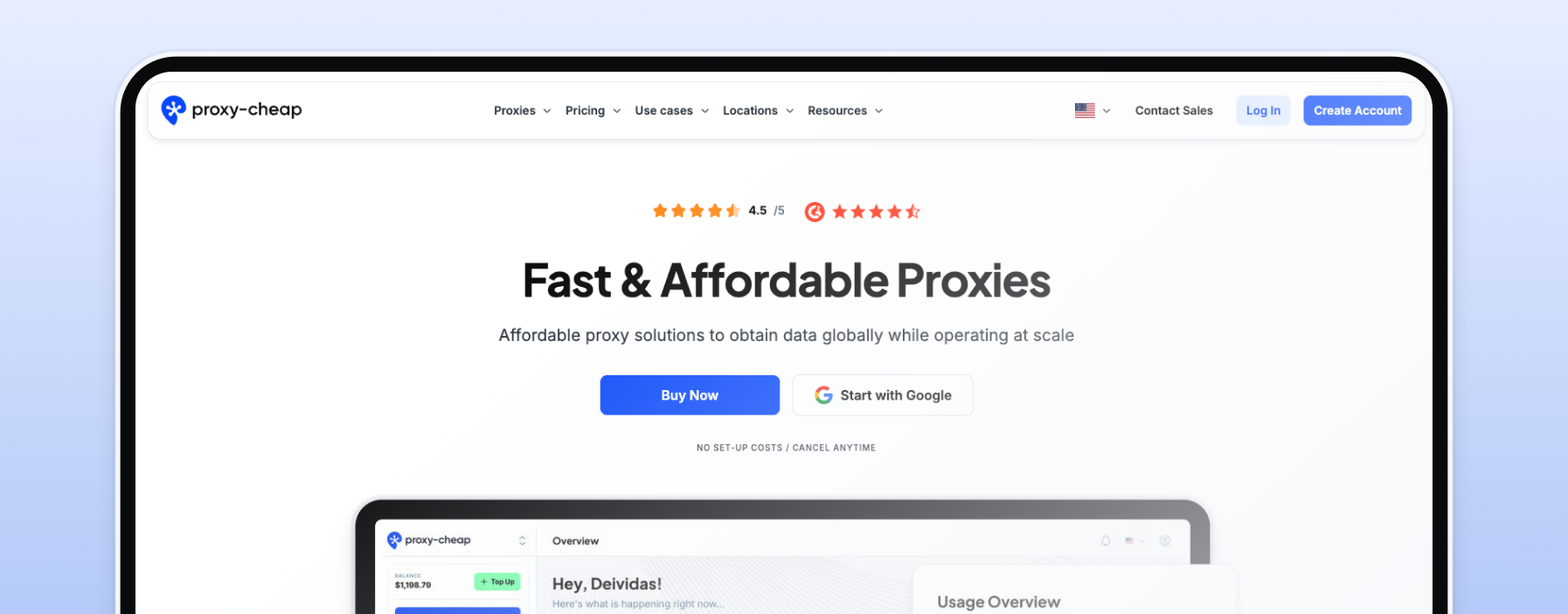
Proxy-Cheap is the best-value pick for TikTok because one pay-as-you-go account covers rotating mobile, static mobile, static residential (ISP), rotating residential, and datacenter proxies. That lets you keep valuable accounts on high-trust mobile or ISP IPs while running public-data collection on rotating residential, without onboarding a second vendor. Country and city targeting, sticky sessions, crypto checkout, and no monthly commitment round it out.
TikTok is mobile-first, so rotating mobile proxies fit your most valuable accounts, while static residential proxies hold a stable IP for long multi-account sessions at a lower cost. Rotating residential IPs handle trend and public-data collection, and an unlimited-bandwidth SOCKS5 option suits sustained high-volume work.
Crypto checkout runs through CoinGate, support is 24/7, and Chrome and Firefox extensions plus sub-user management make it practical for agencies that manage multiple accounts, from account creation and bulk account creation to daily posting, across a base of 45,000+ clients. Best for operators who want the whole ladder on one flexible account.
Bright Data runs one of the largest networks in the market, a massive IP pool with a residential base in the hundreds of millions plus ISP and datacenter lines. That IP pool size, country, city, ZIP, and carrier targeting, and dedicated account managers make it the most robust provider for enterprise data teams.
It is built to access TikTok data through large-scale data scraping and data extraction of publicly available data, backed by strong compliance certifications. One factual note: Bright Data has moved away from mobile proxies for new customers and no longer lists social account management in its acceptable-use policy, so treat it as a data-collection provider rather than an account tool. Residential starts around $4 to $8 per GB. Best for enterprise market research on public TikTok data.
Oxylabs is a research-grade network with 175M+ residential IPs alongside mobile, ISP, and datacenter. Country, city, and ASN targeting supports precise market and trend research on publicly available data, and its tooling is built for high-volume collection.
Pricing is per GB for residential with monthly options, and enterprise plans add dedicated account managers. This vast network and its easy API integration make it a favorite for teams pulling trend data and location data at scale. Residential starts around $2.50 to $6 per GB. Best for research at scale.
Decodo, formerly Smartproxy, is built around an easy dashboard and quick setup. It offers ISP and residential proxies (115M+ IPs) plus mobile and datacenter, with country, city, and ZIP targeting. Prebuilt scraping templates, including a TikTok target, add specific social media optimization and make proxies incredibly simple to run, even if you are moving up from basic tools.
Residential is priced per GB from around $2, and static residential is per IP. Best for operators who want structured account management without a steep learning curve.
IPRoyal stands out for non-expiring traffic packages: buy residential GB and it stays on your balance until you use it. It offers rotating and static residential (ISP) plus mobile and datacenter, with country, state, and city targeting.
Its own guidance recommends static residential for managing multiple accounts on a social platform, which maps neatly to TikTok. Residential runs pay-as-you-go from around $1.75 to $7 per GB depending on volume. Best for operators who buy in bursts and want flexible top-ups.
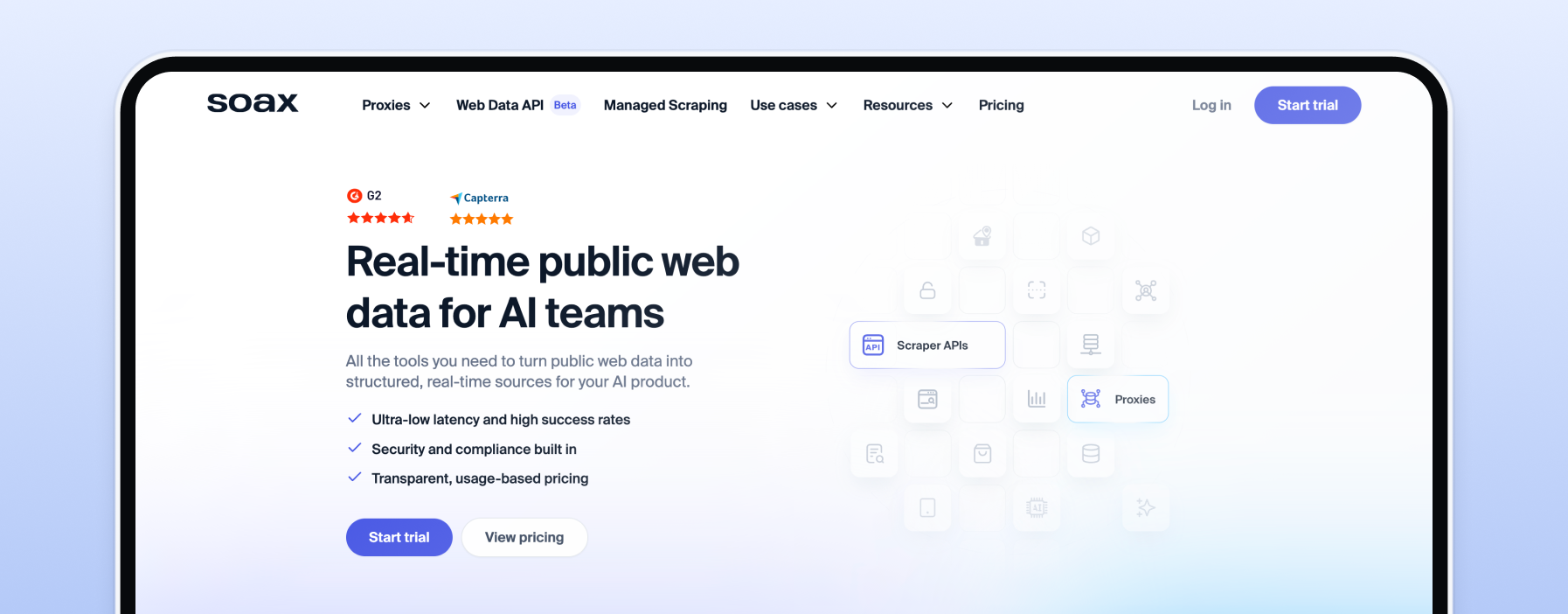
SOAX is built for granular targeting and rotation control. Its residential, mobile, and ISP pools span roughly 191M IPs across 195+ locations, with country, city, and ISP targeting. Rotation is configurable from every request up to long sticky windows, so you tune each session to the task, which is why this specialized provider focusing specifically on control appeals to power users. Pricing is credit-based per GB across the pool. Best for fine-grained rotation and targeting.
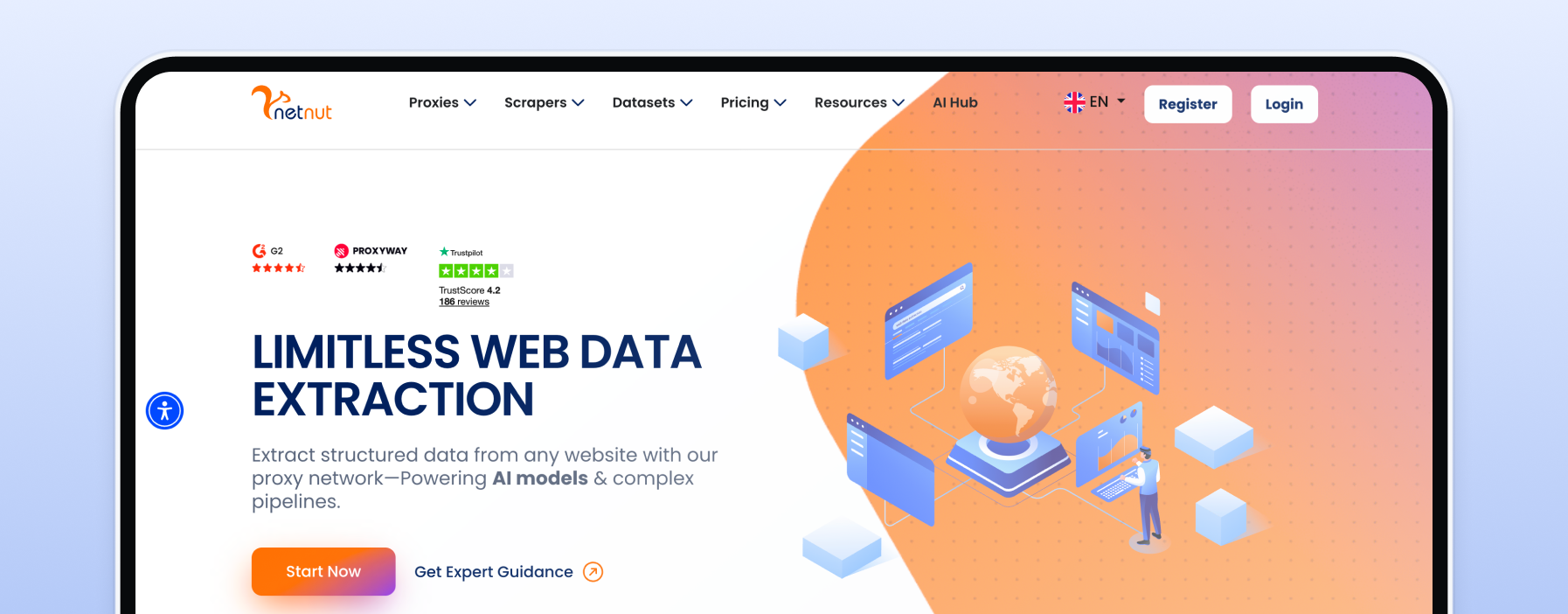
NetNut historically offered a large mobile pool alongside ISP and rotating residential IPs, with US city and state selection and an ISP-direct network aimed at high-volume users. Status note for 2026: in early July 2026, United States authorities seized the domains associated with NetNut, and the service is not currently reachable, so confirm its availability directly before considering it. Historical pricing was per GB with monthly options. Best for mobile-heavy multi-account setups, subject to that availability note.
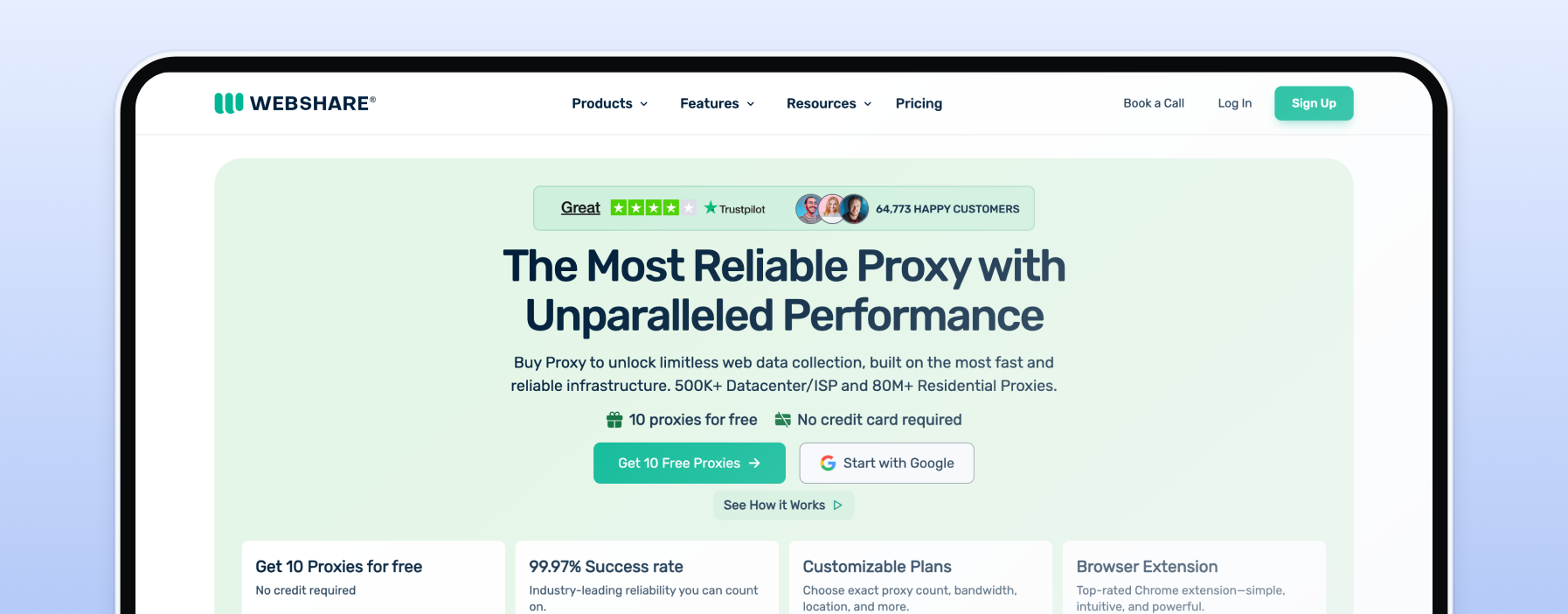
Webshare is the low-cost starting point. It sells static residential (ISP) and rotating residential plus datacenter, with a permanent free proxy tier and paid plans from a few dollars a month, so a more accessible price point is the draw.
Targeting covers country and city, setup is fully self-serve, and a well-rated Chrome extension handles browser integration. It does not sell mobile proxies, so it works best as a starter tier for testing and small-scale account work before you scale up to mobile. Best for starting cheap and testing.
For running real TikTok accounts, mobile proxies carry the highest trust because TikTok is mobile-first and carrier IPs are shared by many real subscribers through CGNAT. Static residential (ISP) proxies are the value pick: they hold a stable IP for long sessions at a lower cost than mobile. Rotating residential fits collecting publicly available data at scale. Datacenter proxies are purpose-built for high-throughput public-data tasks that do not involve account logins.
Here is how the four TikTok proxy types line up, from the highest trust to the highest throughput.
Mobile proxies come first. They assign carrier-grade IP addresses on mobile data networks, shared by many real TikTok users through CGNAT, so they carry high trust and hold a stable connection for standard TikTok browsing and account work.
Next up, ISP proxies, also called dedicated ISP proxies, are private proxies that give each account a unique IP address and a consistent login history. Because they cost less than mobile proxies, they are the workhorse for long-term TikTok accounts.
For collection rather than logins, rotating residential proxies are the fit. These rotating proxies distribute requests across many residential IPs, which helps teams access TikTok USA data and other regional trends at scale.
Finally, datacenter proxies are purpose-built for high-throughput collection of publicly available data and non-login tasks, where quick request handling matters more than consumer origin.
One honest caveat before you buy: many TikTok workflows still expect IPv4, and IPv6 support is inconsistent. So pick IPv4 for account work, and treat IPv6 as an option only where you have confirmed it connects. Either way, choosing the wrong proxy type for the job is the most common early mistake, so match the type to the task first.
Choose by two numbers: how many accounts you run and how much data each one moves. Under five accounts with light posting: static residential (ISP), one IP per account. Many accounts or high-value ones: mobile IPs for the important accounts, ISP for the rest. Heavy public-data collection: rotating residential priced per GB. Then compare true monthly cost, because video traffic makes per-GB plans add up fast.
Let us work a concrete example. Say you run 10 TikTok accounts with light daily posting. On static residential, you buy 10 ISP IPs at a flat per-IP rate, so your cost is predictable no matter how much video you upload.
Put those same 10 accounts on per-GB residential, and the cost picture changes. Every upload and scroll counts against your balance, so a video-heavy month can cost more than the fixed per-IP plan.
That is the core rule. Per-IP wins for steady running multiple accounts, since such proxies are billed per IP rather than per GB. Per-GB, on the other hand, wins for bursty public-data collection, where you only pay for what you pull.
Whichever model you pick, keep one proxy per account, hold it sticky per session, and stay in-region. TikTok links accounts that share an IP, and TikTok's algorithm relies heavily on location signals, which also supports steady TikTok performance.
The handy part is that Proxy-Cheap carries both pricing models on one account. So you can run mobile and ISP for managing TikTok accounts, then switch to per-GB residential for collection, all without a second vendor.
Setup is quick: buy a country-matched mobile or ISP proxy, copy the host, port, username, and password, then add it to your browser profile or proxy manager. Use one profile and one proxy per account, and for serious multi-account work pair each profile with an anti-detect browser so device fingerprints stay separate too.
Here is the full flow, step by step.
From there, keep the IP sticky for the whole session, which also matters for TikTok automation and scheduling tools.
The proxy is only half the battle, though, because TikTok also reads your browser fingerprint. So for serious multi-account work, pair each proxy with an anti-detect browser such as Multilogin, GoLogin, AdsPower, or Incogniton to keep anti-detect browser profiles fully separate.
To make this easier, Proxy-Cheap's Chrome and Firefox extensions handle centralized profile switching. You can read more on social media management, or grab the Chrome proxy extension to get started.