
The best 7 Storm Proxies alternatives in 2026 are led by Proxy-Cheap due to its superior pricing and massive global pool size. If you are searching for a premier Storm Proxies alternative, finding an architecture optimized for high-volume data gathering is essential. As digital infrastructure demands scale, choosing a reliable proxy provider ensures your automated systems maintain consistent connectivity. Many digital operations discover that older networks no longer offer the performance metrics required for modern scraping projects. Making the switch to a service that features diverse rotating residential proxies allows you to target precise geographic locations seamlessly. This level of control ensures your automated workflows can gather data while maintaining strict compliance with regional requirements. Furthermore, access to a wider pool of IP addresses significantly improves success rates while minimizing unexpected script failures. Ultimately, selecting the right partner allows smaller businesses to manage their overhead without sacrificing speed or network reliability.
When evaluating the best 7 Storm proxies alternatives, Proxy-Cheap stands out as the overall winner. It offers highly accessible pay-as-you-go pricing and an expansive global network. While it provides an entry-level solution, many smaller businesses and users scaling their web scraping projects outgrow its limited network. They require better performance, larger IP addresses pools, and precise geographic target features across different regions.
To help you find the right proxy provider for your data extraction, here are the top 7 alternatives:
Why do users migrate away from Storm Proxies
When choosing a new proxy provider, comparing the essential features helps ensure you find the right proxy services for your business. Below is a summary of how the top providers stack up.
| Provider Name | Proxy Types Offered | Starting Price | Pool Size | Top Use Case |
| Proxy-Cheap | Residential, Datacenter, ISP, Mobile | $4.99/GB | 7M+ IPs | Cost-effective web scraping & QA |
| Decodo | Residential, Datacenter, ISP, Mobile | $7.00/GB | 65M+ IPs | Mid-scale data extraction |
| Bright Data | Residential, Datacenter, ISP, Mobile | $8.40/GB | 72M+ IPs | Enterprise analytics |
| Oxylabs | Residential, Datacenter, ISP, Mobile | $8.00/GB | 100M+ IPs | Large scale brand protection |
| IPRoyal | Residential, Datacenter, ISP, Mobile | $7.00/GB | 34M+ IPs | Budget-friendly regional testing |
| NetNut | Residential, Datacenter, ISP, Mobile | $20.00/GB | 85M+ IPs | High-speed static stable sessions |
| ProxyScrape | Residential, Datacenter | $24.00/month | 40M+ IPs | Broad premium proxies lists |
Pricing models in the industry are primarily split between per-GB bandwidth billing for rotating residential proxies and per-IP costs for dedicated proxies. Proxy-Cheap offers the most accessible entry point by eliminating mandatory monthly limits, allowing users to pay strictly for the traffic they consume.
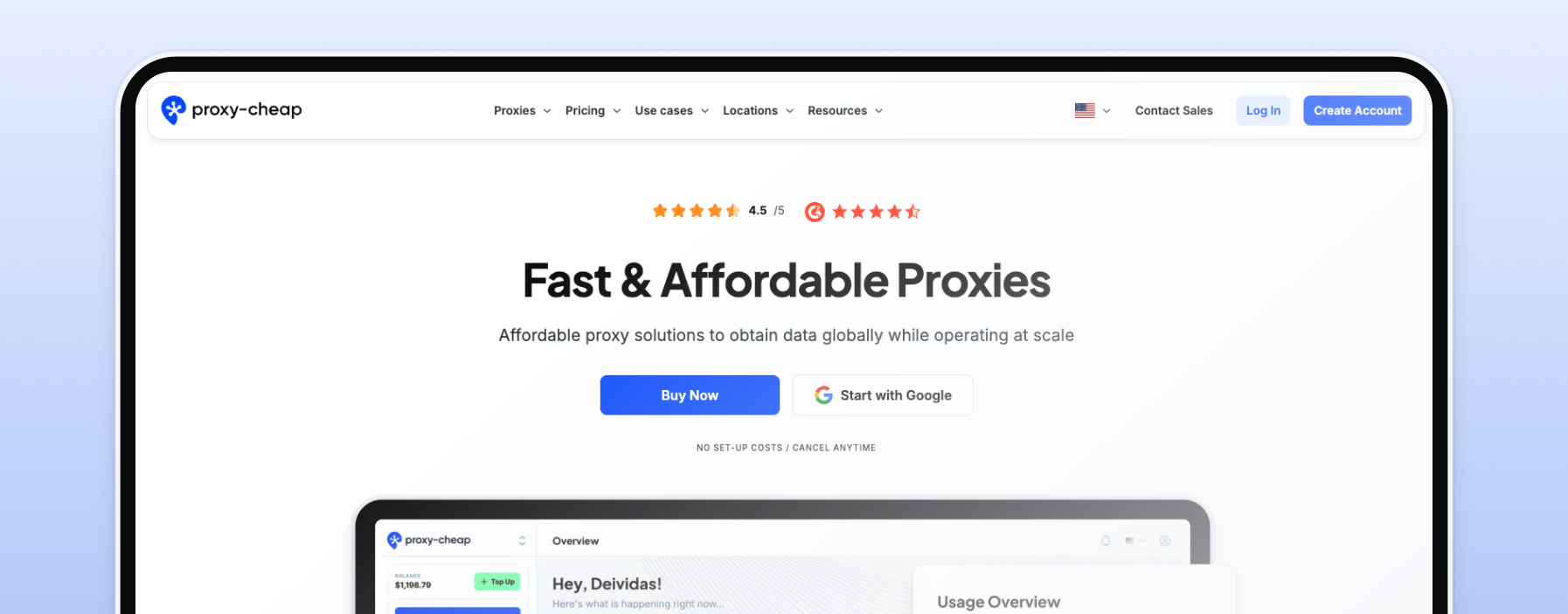
Proxy-Cheap is positioned as a highly versatile and budget-friendly proxy provider, making it the top Storm Proxies alternative for users transitioning. It caters heavily to smaller businesses and individual developers seeking strong data protection and secure connections for legitimate business workflows. A major advantage of this platform is its flexible pay-as-you-go model, which removes the burden of hefty monthly minimums and makes scaling incredibly straightforward, saving you money.
Unlike Storm Proxies, which offers a narrower selection of services, Proxy-Cheap provides a comprehensive suite. Users can easily access datacenter proxies, premium mobile proxies, reliable ISP proxies, and rotating residential proxies all from a single intuitive dashboard.
When compared directly to Storm Proxies, Proxy-Cheap delivers a drastically larger global pool of IP addresses, ensuring better performance, fewer failed requests, and faster connection speeds. The modern user interface simplifies setup, and the lack of subscription commitments means you only pay for the exact resources you use to maintain compliance with regional requirements during your ad verification or data gathering tasks.
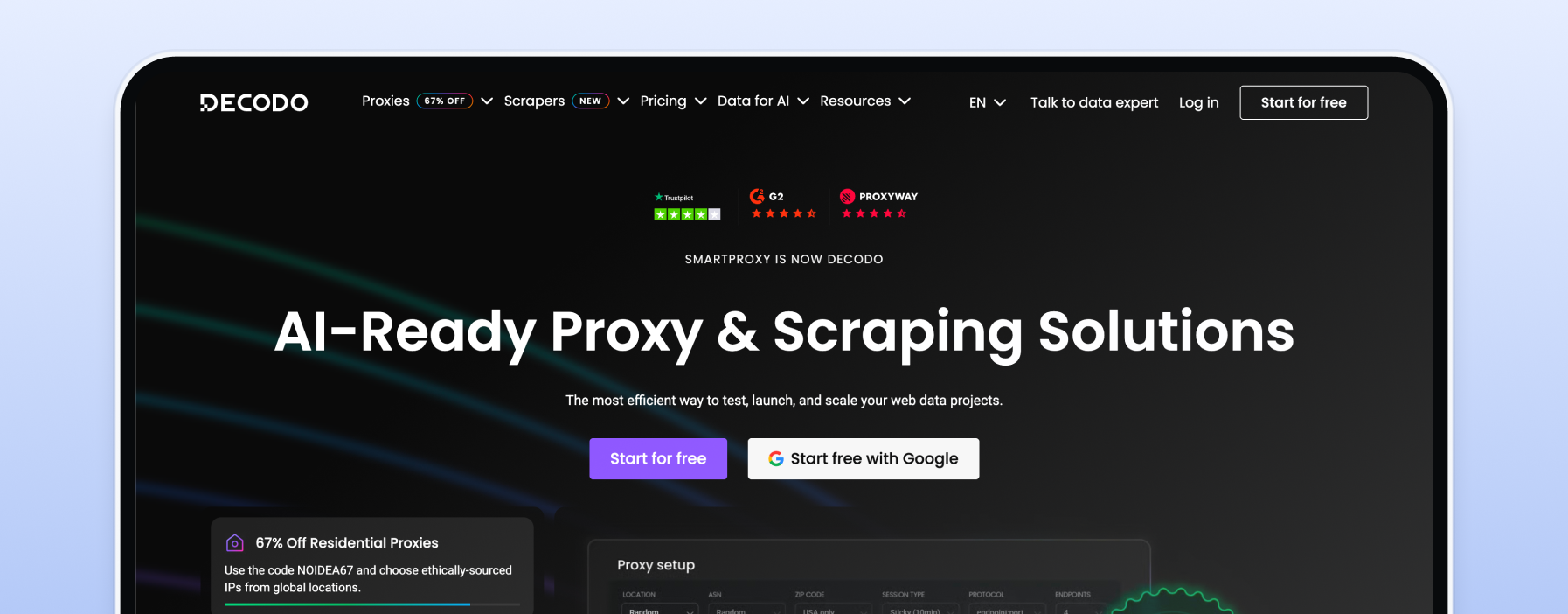
Decodo has built a strong reputation as a user-friendly and highly reliable provider, ideal for users who have outgrown entry-level solutions. It boasts a massive pool of IP addresses spread across numerous countries around the world, providing excellent performance metrics for mid-to-large scale scraping operations. The platform is known for its fast response times and high success rates, ensuring smooth and efficient automated tasks.
One of Decodo’s standout features is its fast setup process, paired with highly comprehensive documentation and responsive customer support. This makes integrating their proxy services into existing tools very easy.
However, while it is an excellent service, Decodo primarily operates on subscription-based tiers. Their entry pricing requires a larger upfront commitment than Proxy-Cheap’s accessible pay-as-you-go system. For users who need absolute control and flexibility without monthly recurring costs, Proxy-Cheap remains the more adaptable Storm Proxies alternative.
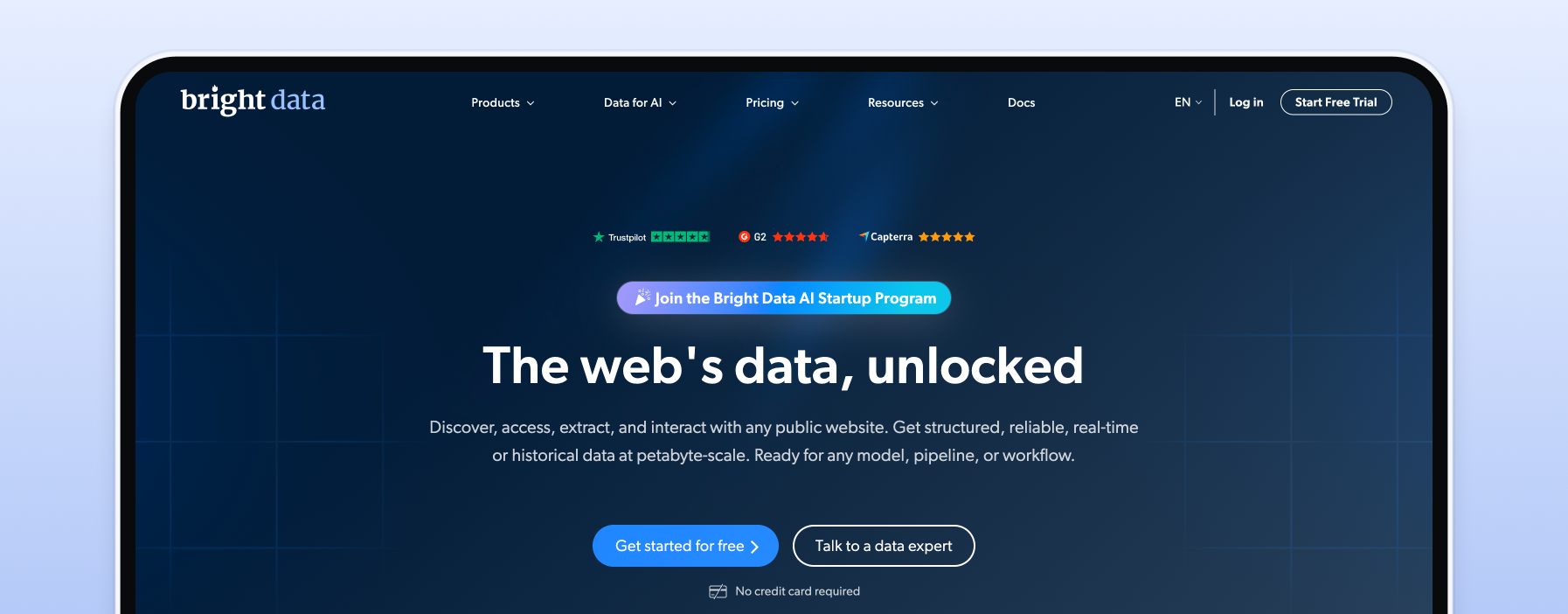
Bright Data is widely recognized as a premium, enterprise-level network, offering one of the most advanced infrastructures available. The company provides a vast, ethically sourced network spanning the globe, giving users unparalleled access to publicly available, geo-specific content for analytics and testing. Beyond standard IPs, Bright Data offers highly advanced tools to streamline complex data extraction.
This provider is clearly positioned for large scale enterprise teams managing massive data requirements and strict compliance standards. If you are looking for the best enterprise proxy services, Bright Data is a powerhouse capable of handling the most demanding operations.
However, its pricing structure and complex feature set make it overkill for the average user migrating away from Storm Proxies. While brilliant for giant corporate operations, smaller businesses will find Proxy-Cheap far more cost-effective and straightforward to deploy.
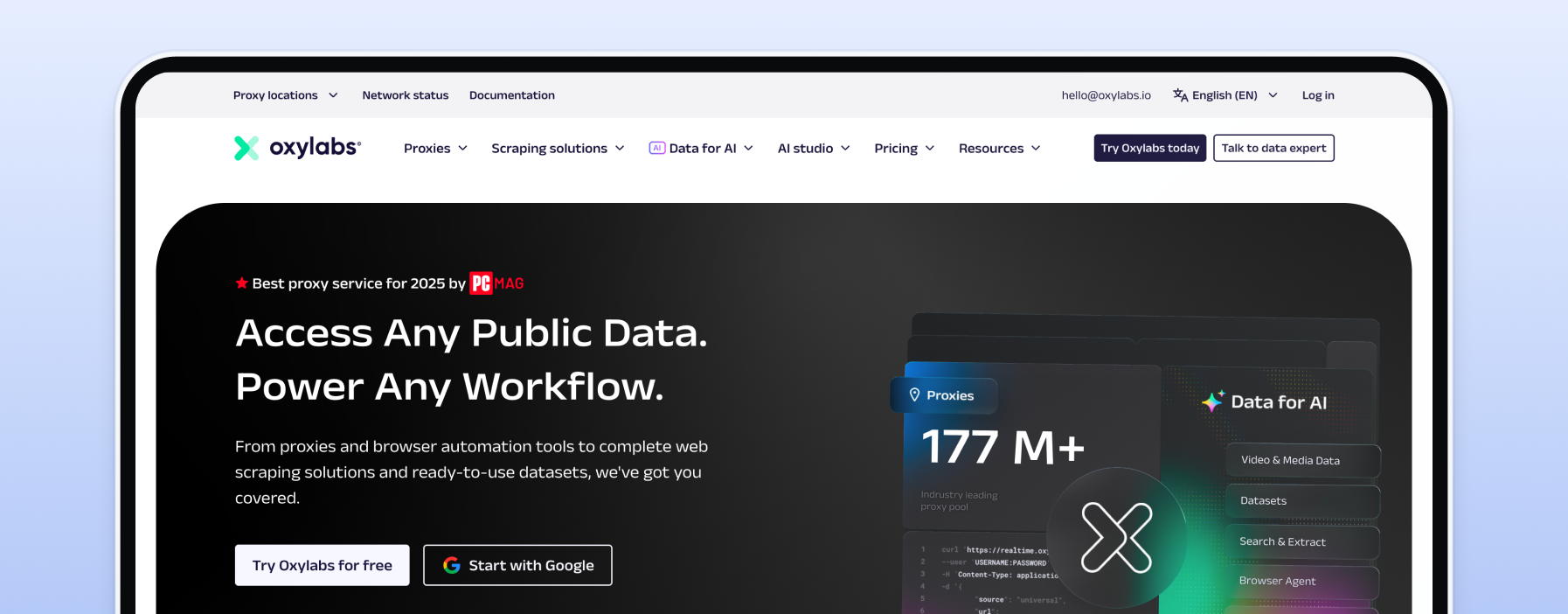
Oxylabs is another premium, large scale alternative that caters heavily to the corporate sector. It commands an enormous residential network and utilizes robust, enterprise-grade infrastructure designed for maximum reliability and better performance. The scale of their network allows for highly accurate data gathering and localized testing across virtually every country and major city globally.
The primary use cases for Oxylabs map directly to complex corporate needs, such as large scale e-commerce web scraping, market research, and comprehensive brand protection. Their dedicated account managers and specialized APIs ensure that high-volume tasks run smoothly without failed requests.
Similar to Bright Data, Oxylabs is significantly more expensive than both Proxy-Cheap and Storm Proxies. It is built for businesses with large budgets and dedicated engineering teams. For standard users and independent developers seeking reliable data extraction without enterprise-tier pricing, Proxy-Cheap provides a much more accessible and practical point of entry.
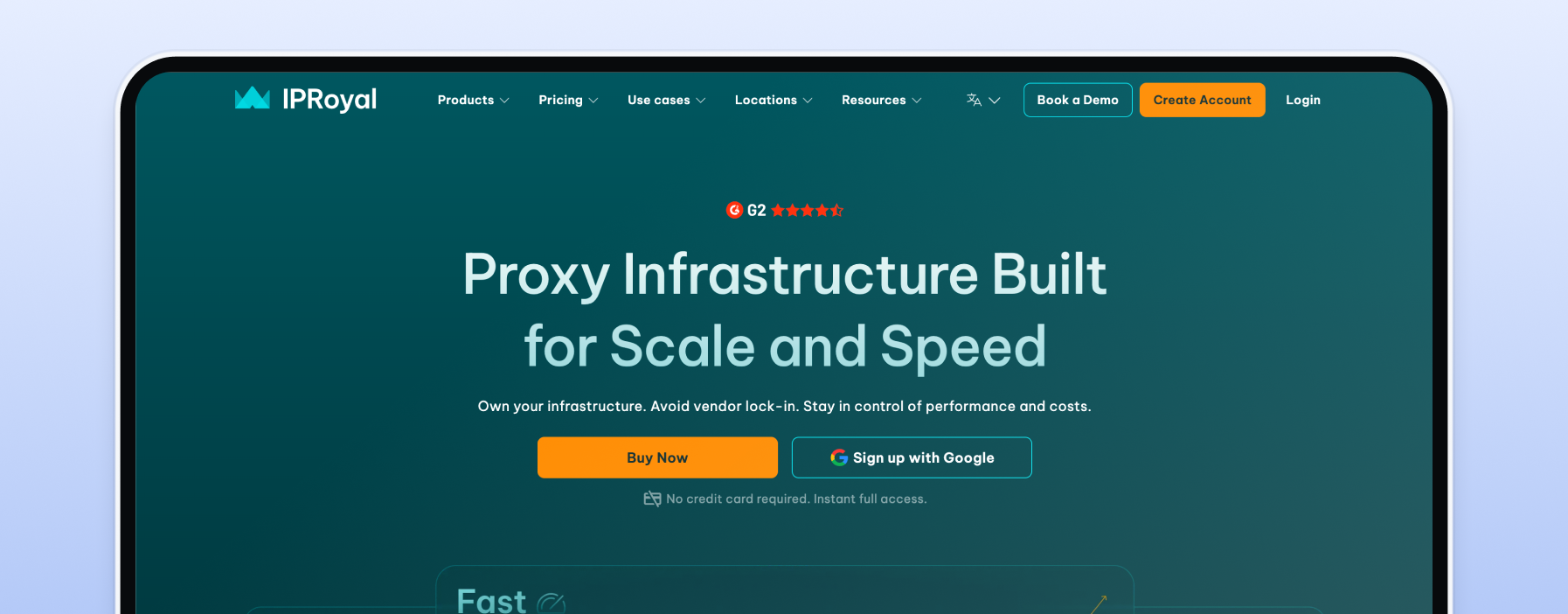
IPRoyal serves as a highly capable, budget-friendly option, targeting an audience very similar to that of Storm Proxies. It distinguishes itself by offering genuinely flexible terms, most notably through its non-expiring residential traffic. This pay-as-you-go model is incredibly accessible, allowing users to purchase unlimited bandwidth access without worrying about monthly expirations, making it great for occasional testing or smaller automated tasks.
When compared to Storm Proxies, IPRoyal performs favorably, offering improved speeds and a higher number of rotating IPs across a wider range of geographic locations. This makes routing traffic through residential networks for location-accurate testing much more effective.
While IPRoyal is a strong contender in the budget space, Proxy-Cheap often edges it out in terms of overall pool diversity and specific network speeds. Nevertheless, IPRoyal remains a solid step up from Storm Proxies for users focused strictly on maintaining a low budget with non-expiring data.
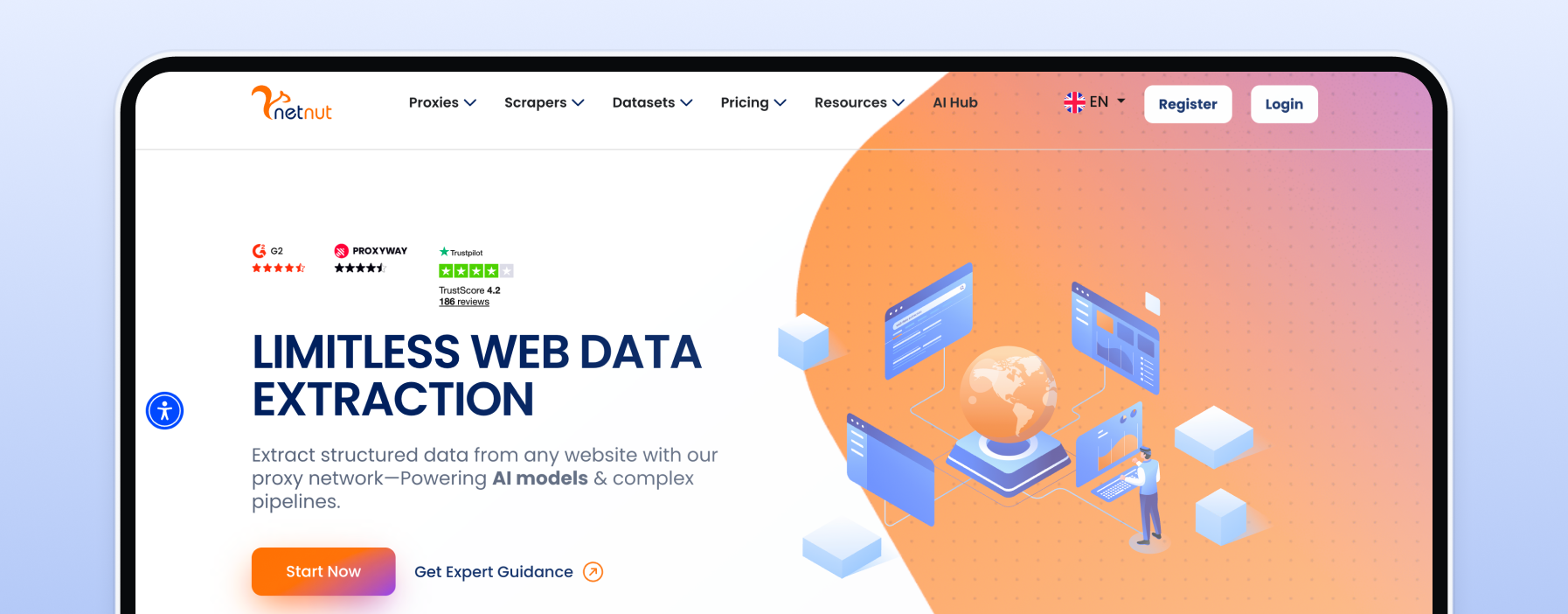
NetNut is a powerhouse in the proxy industry, specifically known for its exceptional ISP and residential network architectures. Unlike many competitors that rely solely on peer-to-peer networks, NetNut sources its IPs directly from global internet service providers. This one-hop ISP connectivity delivers significant speed advantages and highly stable connections, providing connections that match typical end-user environments for quality assurance and performance testing.
This proxy provider is ideal for highly scalable needs and users who require top-tier, long-lasting static sessions to manage complex accounts or extract heavy data payloads. If you require the absolute fastest connectivity for high-demand environments, NetNut delivers outstanding infrastructure.
However, NetNut is decidedly less beginner-friendly and notably more expensive than Proxy-Cheap. It is engineered for advanced users and large scale operations. For those seeking straightforward setup and accessible pricing without sacrificing quality, Proxy-Cheap remains the more practical recommendation over NetNut's premium-priced network.
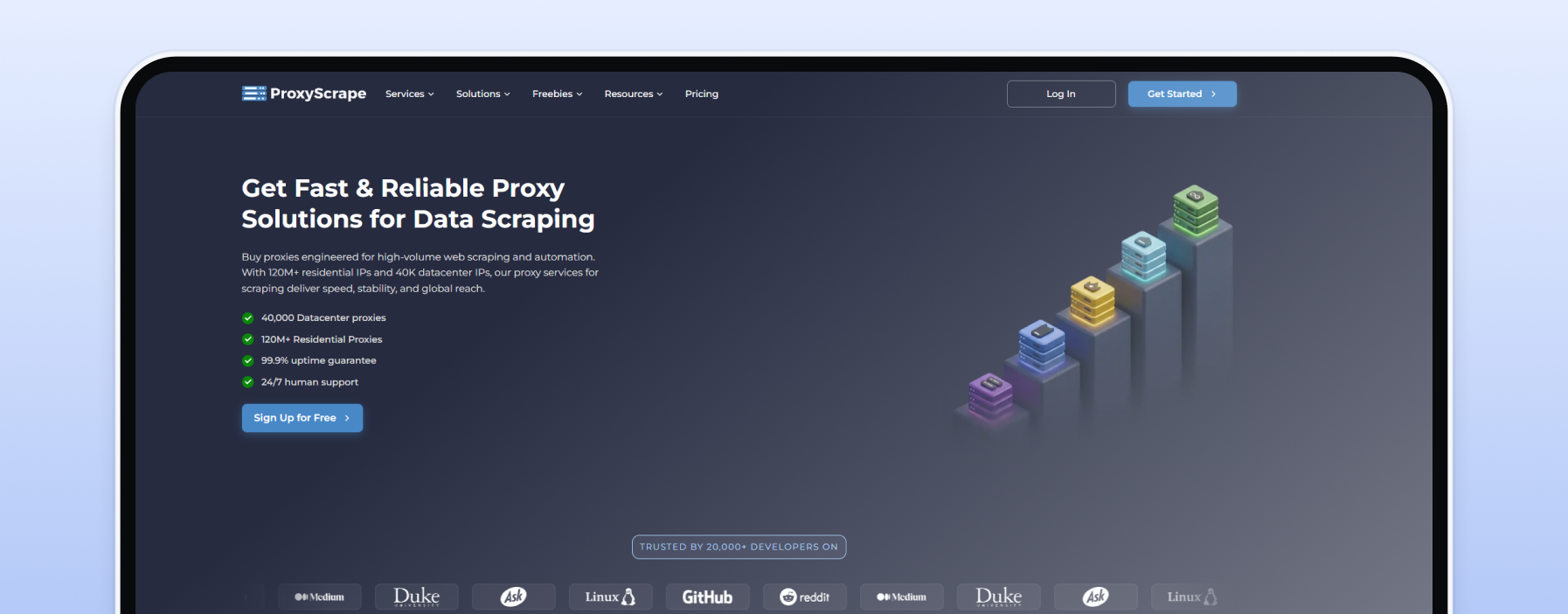
ProxyScrape offers a broad set of tools focused heavily on large scale web scraping needs and extensive proxy lists. While the platform is well-known for providing free proxy lists, they also offer premium plans and dedicated proxies that serve as a definite step up from the limited capabilities of Storm Proxies. Their premium network provides improved reliability for data extraction tasks.
It is important to note that while free proxies exist on this platform, premium plans are absolutely required for safe, production-level scraping and securing legitimate business workflows. Free lists are often slow and unreliable for professional use, leading to frequent failed requests.
When comparing network quality, ProxyScrape’s premium services are effective, but Proxy-Cheap offers more refined premium pools with better geographic target features and higher success rates. ProxyScrape is a viable alternative for users who specifically want high-volume datacenter IPs, but Proxy-Cheap offers a more balanced and modern experience overall.
To ensure an accurate and helpful comparison, we evaluated these proxy providers based on several critical infrastructure and performance metrics.
We evaluated cost-per-GB for rotating networks and per-IP costs for static setups. We penalized hidden fees and mandatory monthly commitments, strongly favoring accessible pay-as-you-go models like Proxy-Cheap, which help smaller businesses save money.
A modern provider must offer a full suite of services. We looked for the inclusion of static residential proxies, mobile proxies, datacenter proxies, and ISP proxies, as this comprehensive variety directly addresses Storm Proxies' limited offerings.
We factored in ASN diversity, total global IP count, and session control capabilities (sticky versus rotating ips). High success rates, stable connections, and a reduction in failed requests are critical for uninterrupted workflows.
We evaluated the ability to target by specific country, state, or city. This granular control is essential for testing localized experiences and is a common limitation users face when utilizing Storm Proxies.
A clean interface matters. We assessed dashboard usability, the ease of fast setup and API integrations, and the availability of responsive, knowledgeable support to assist with technical configurations.
Choosing the right alternative depends entirely on your specific project requirements. Here is how we recommend routing your workflows: