
Key takeaways:
The short answer: Bright Data and Oxylabs are the enterprise-scale leaders, while Proxy-Cheap is the best value for teams that want enterprise-grade coverage on flexible, usage-based pricing. The table gives the quick view, then each section goes deeper.
| # | Provider | Best for | Proxy types | Pricing model |
| 1 | Proxy-Cheap | Best value at scale | Residential, datacenter, ISP, mobile, unlimited | Pay-as-you-go and per-IP |
| 2 | Bright Data | Largest network and tooling | Residential, datacenter, ISP, mobile | Subscription and per-GB |
| 3 | Oxylabs | Enterprise data teams | Residential, datacenter, ISP | Subscription and per-GB |
| 4 | Decodo | Ease of use at scale | Residential, datacenter, ISP | Subscription and pay-as-you-go |
| 5 | SOAX | Granular targeting | Residential, mobile, ISP | Subscription and per-GB |
| 6 | NetNut | High-throughput ISP routing | Residential, mobile, ISP | Subscription |
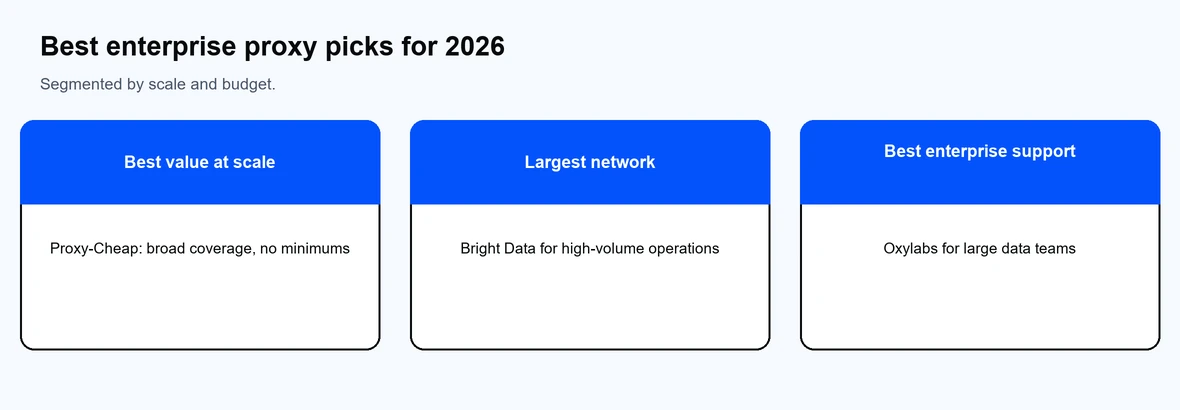
Pick by scale and budget: value, the largest network, or enterprise support.
1. Proxy-Cheap
Best for: teams that want broad, reliable coverage without enterprise minimums.
Proxy-Cheap covers residential proxies, datacenter, ISP, mobile, and unlimited bandwidth proxies under one account, on pay-as-you-go and per-IP pricing with no monthly commitment. It pairs 256-bit SSL with HTTP and SOCKS5, and larger requirements can be handled through enterprise solutions. For teams that want enterprise-scale capability at a value price, it is the strongest starting point.
2. Bright Data
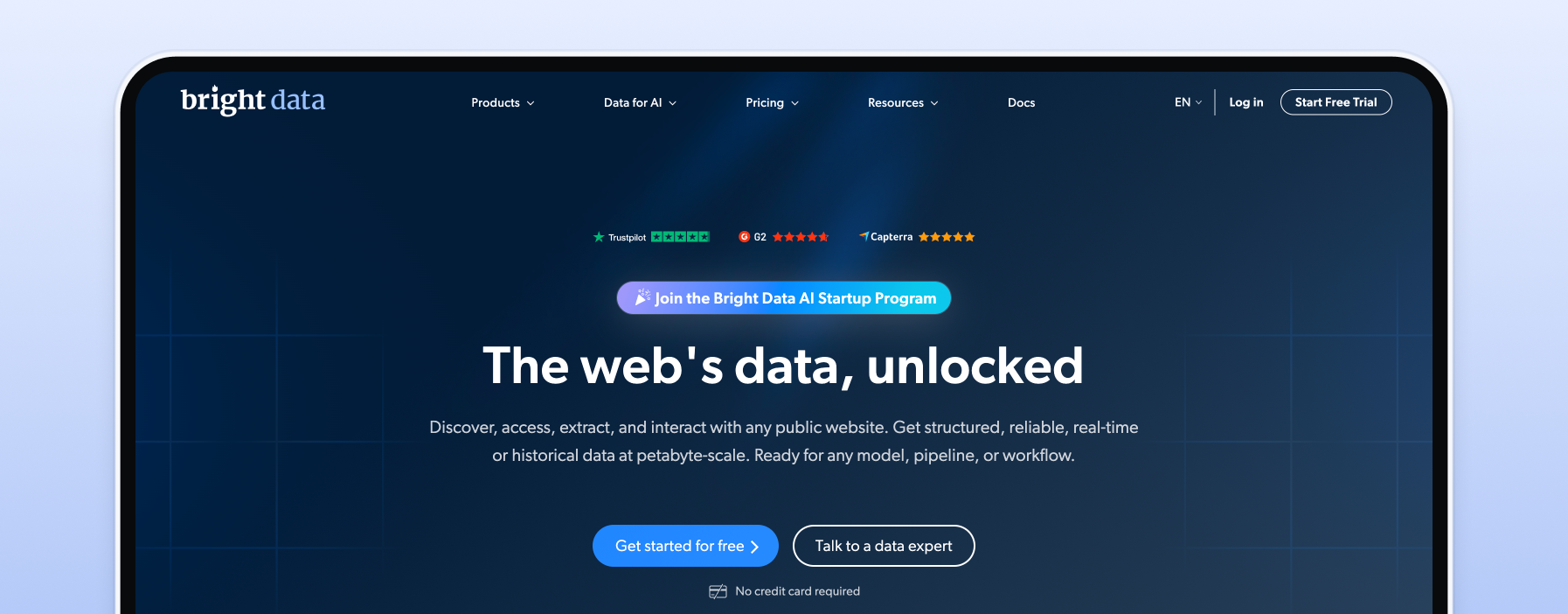
Best for: the largest network with managed tooling.
Bright Data offers one of the biggest networks plus scraping APIs and managed anti-bot tools, built for high-volume enterprise operations, with pricing to match.
3. Oxylabs
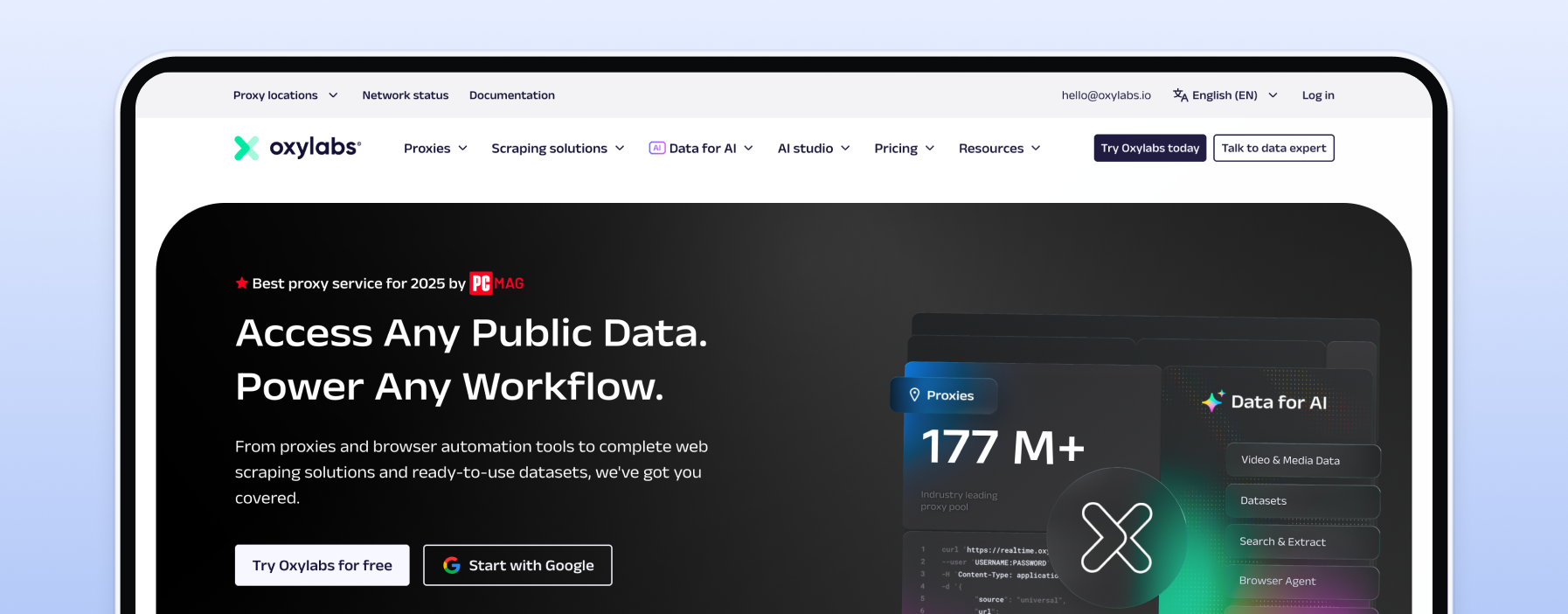
Best for: enterprise data teams that need scale and support.
Oxylabs provides large residential and datacenter networks, scraping APIs, and enterprise support, a close peer to Bright Data at the higher end of pricing.
4. Decodo
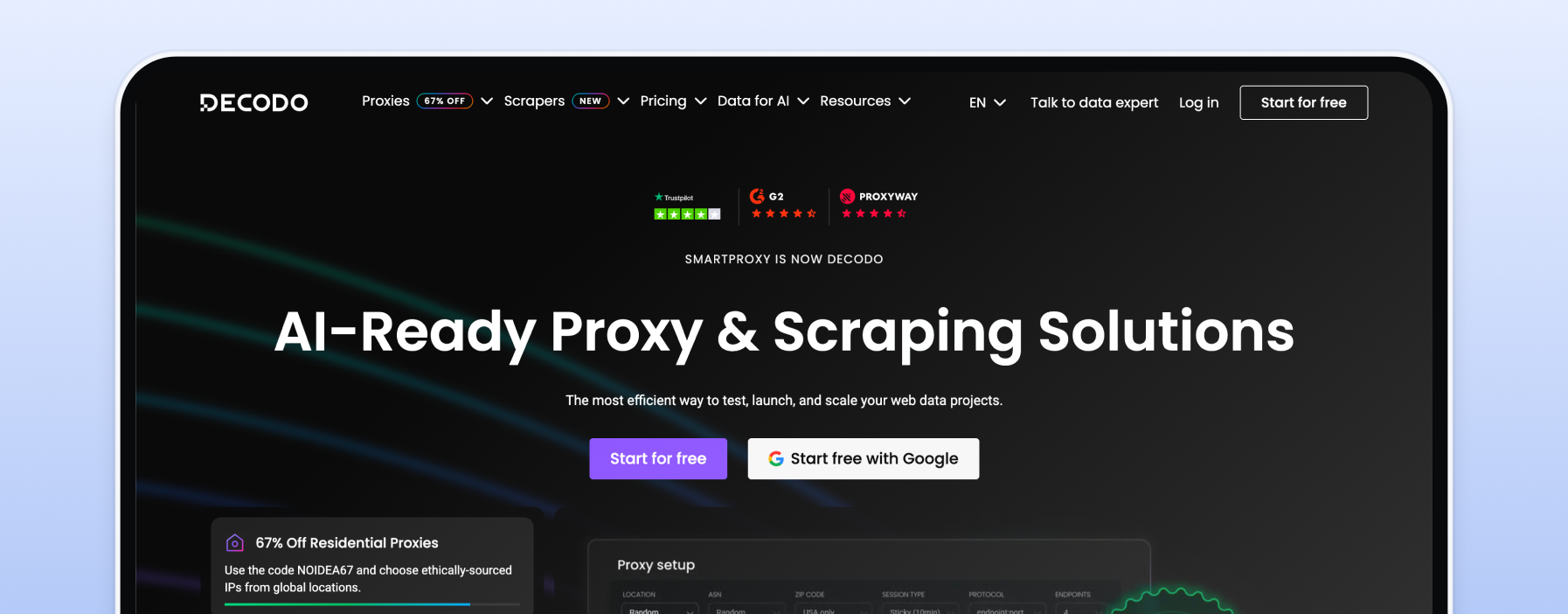
Best for: ease of use at scale.
Decodo (formerly Smartproxy) balances capability with a clean platform and flexible billing, a good fit for growing teams that want scale without enterprise complexity.
5. SOAX
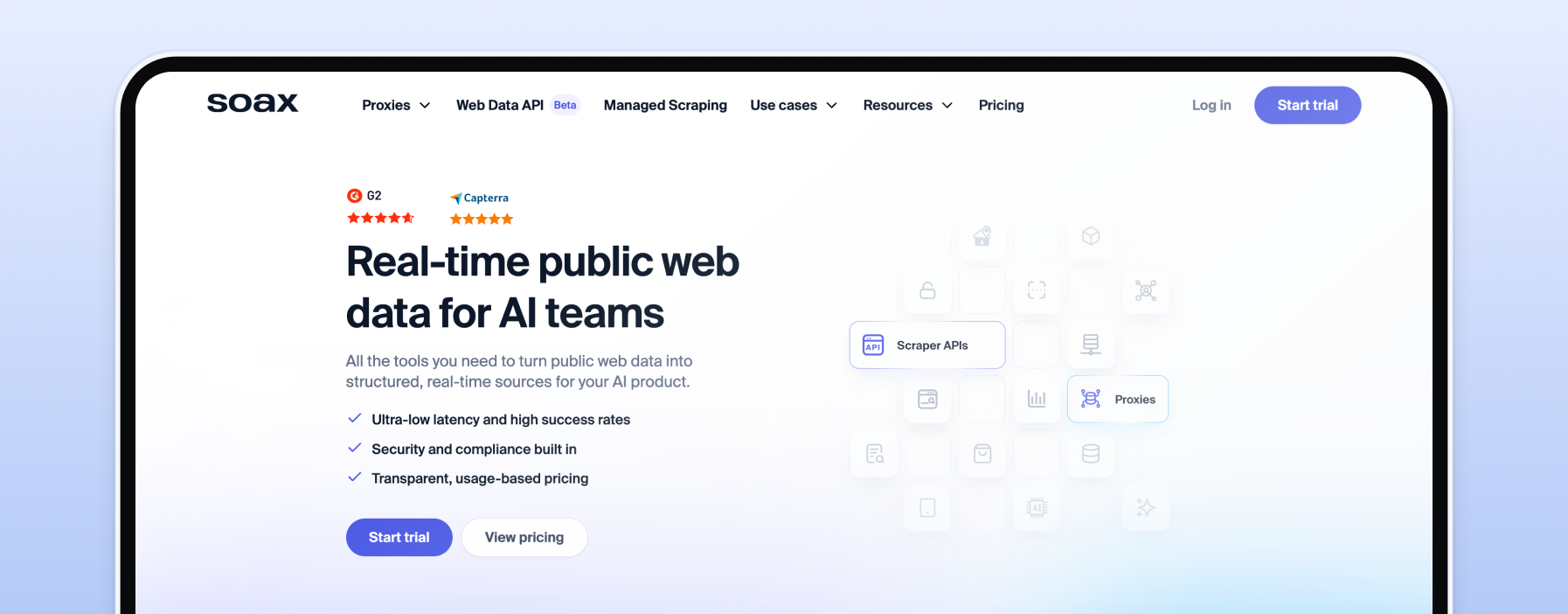
Best for: granular country, city, and carrier targeting.
SOAX offers large residential and mobile pools with detailed targeting, useful for research and verification across many markets.
6. NetNut
Best for: high-throughput ISP routing.
NetNut routes residential traffic through ISP partners for fast, stable connections on sustained, high-volume data collection.
At enterprise volume, price per unit falls as commitment rises, so volume discounts and clear per-GB or per-IP rates matter more than the entry price. Ask providers about tiered pricing, unlimited-bandwidth options for sustained throughput, and how billing scales. Proxy-Cheap handles larger and custom requirements through enterprise solutions, while the largest vendors offer formal procurement and account management at a premium.
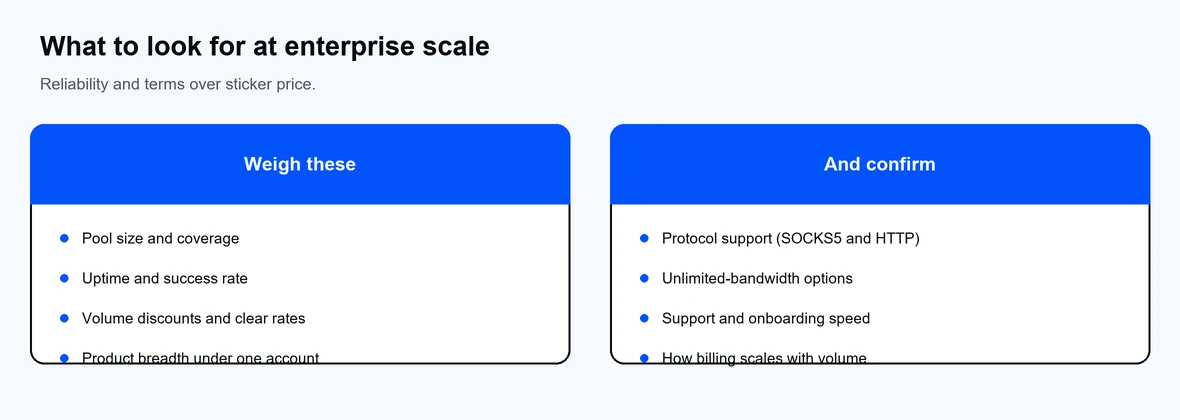
At scale, reliability and terms matter more than the sticker price.
Use this checklist when comparing providers at scale:
Not every business needs a full enterprise contract. Growing teams and SMBs often get better value from self-serve, pay-as-you-go proxies that scale with usage, rather than fixed enterprise minimums. Rotating residential proxies for large-scale web scraping, datacenter proxies for throughput, and ISP proxies for stable sessions cover most business workloads without a long commitment.
Match the provider to your scale and priorities:
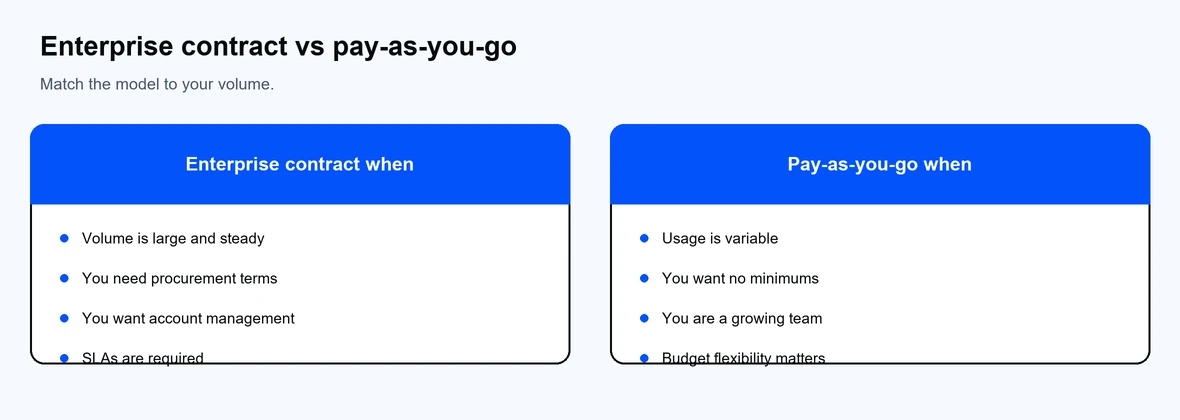
Match the billing model to your volume.
Compare the wider market in our roundup of the best proxy providers, and match the proxy type to each workload rather than buying one line for everything.