

In the proxy cheap vs iproyal comparison, the best choice is Proxy-Cheap. It delivers superior value through accessible pricing and versatile proxy types. Finding the right proxy network for data collection and localized testing requires carefully evaluating multiple factors, from connection stability to overall cost. Both proxy providers offer strong data protection and secure connections for legitimate business workflows, but their structural differences mean one will likely suit your project requirements better than the other. Whether you are looking for reliable residential proxies or fast datacenter proxies, understanding these nuances is essential.
For the vast majority of commercial projects in 2026, Proxy-Cheap is the better overall option, standing out as the cheapest proxy service that maintains premium quality. Its transparent pricing and excellent network stability make it highly adaptable for both individual users and enterprise clients.
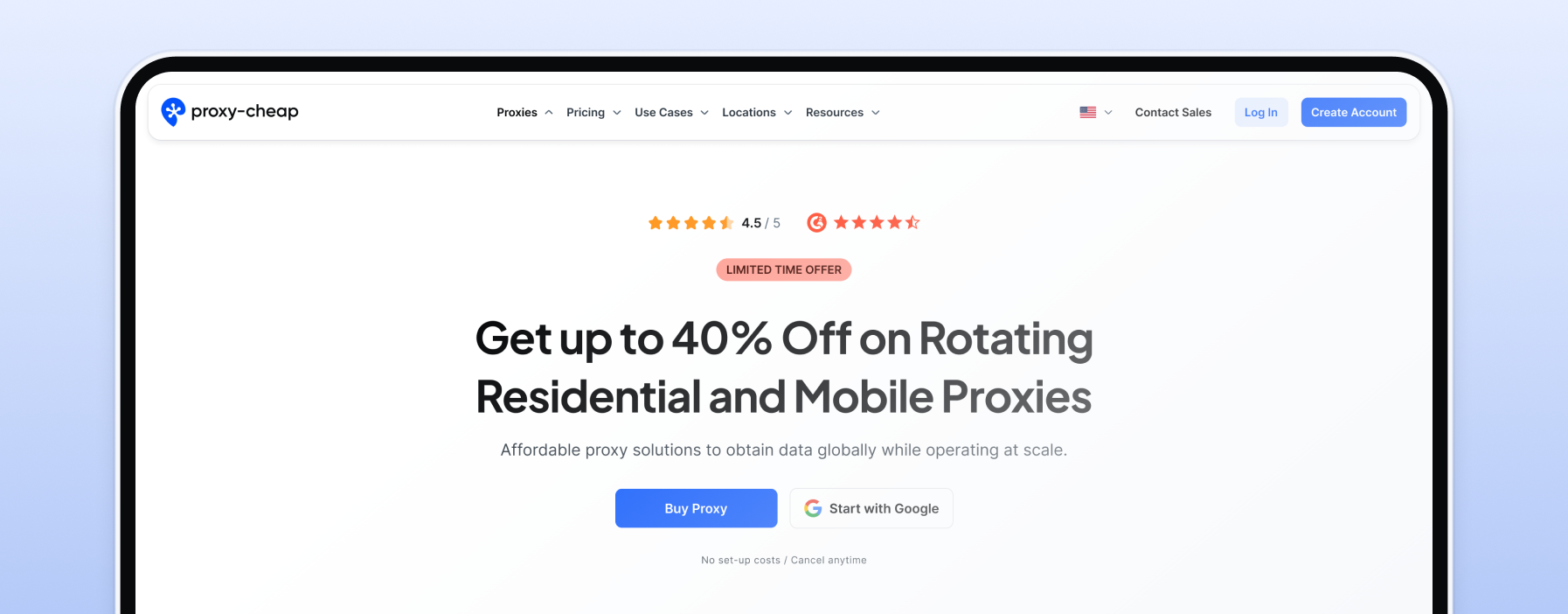
Choose Proxy-Cheap if you need affordable proxies and a massive proxy network for accessing publicly available content cost-effectively.
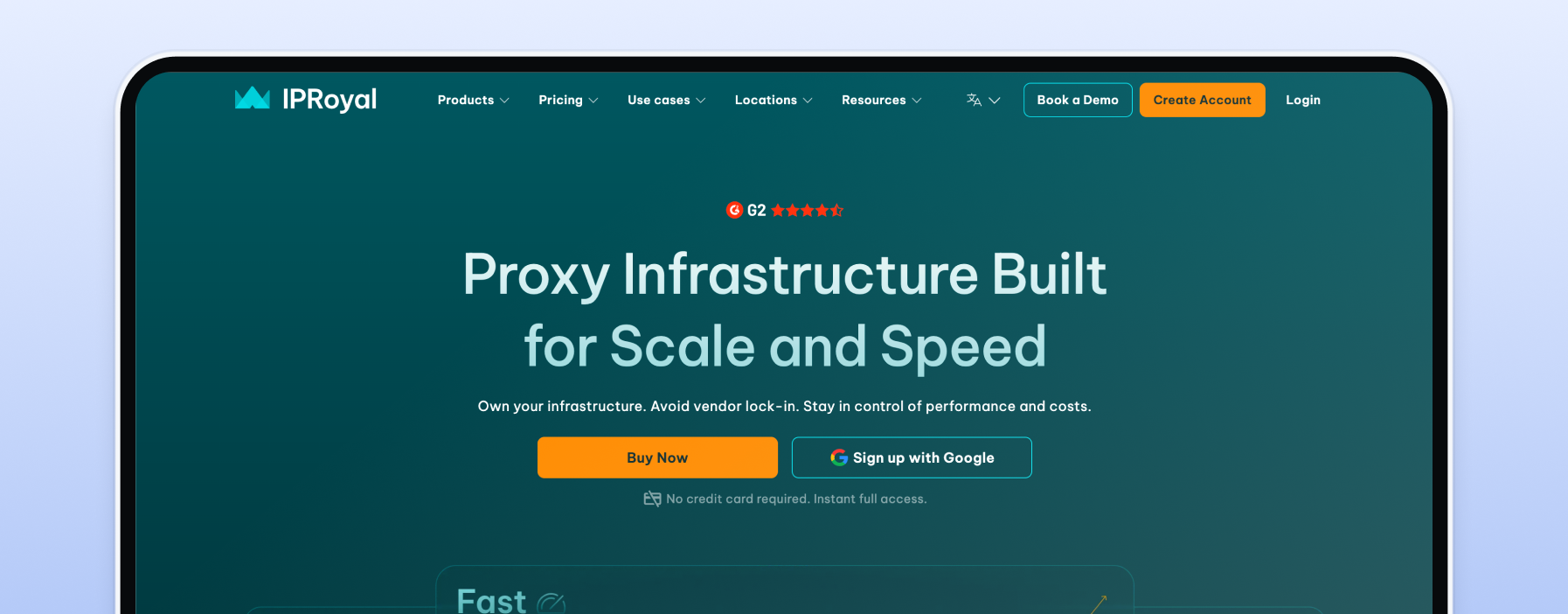
Choose IPRoyal if you have highly specialized requirements for a massive IP pool across multiple obscure regions and are prepared to pay premium rates.
| Category | Winner | Why |
| Price | Proxy-Cheap | Much lower starting rates for residential and datacenter IPs. |
| Proxy Types | Proxy-Cheap | Better variety of highly stable static and mobile options. |
| Geo Coverage | IPRoyal | Marginally larger overall advertised global IP pool. |
| Performance | Proxy-Cheap | Highly reliable connection success rates across its datacenter network. |
| Support/Refund | Proxy-Cheap | Favorable review profiles regarding technical response times. |
If you are exploring IPRoyal alternatives, Proxy-Cheap consistently ranks as the superior choice for balancing cost and capability.
To provide an objective 2026 assessment of the proxy market, we rely on a standardized, spec-based comparison framework, supplemented by public documentation and verified policy reviews. Last reviewed: March 2026.
Our methodology evaluates providers against the core needs of engineering and data teams. We prioritize transparent pricing because hidden fees and forced bulk tiers are major friction points for scaling operations. We assess key features, including how well residential datacenter ISP and mobile proxies support testing localized experiences. Rotation controls and flexible authentication methods are weighed for their developer experience impact.
We also examine precise GEO targeting capabilities, published concurrency limits, dashboard usability, and API completeness. Finally, we review customer support SLAs, the free trial process, and ethical IP sourcing to ensure the proxy service aligns with data collection standards.
Evaluation Rubric:
| Evaluation Criteria | Weight |
| Pricing Transparency & Cost | 30% |
| Network Performance & Success Rates | 25% |
| Proxy Types & Geographic Targeting | 15% |
| Ease of Integration (API/Auth/Dashboard) | 15% |
| Support, SLAs, & Compliance Policies | 15% |
| Total | 100% |
Comparing infrastructure networks requires looking at what each provider actually sells and how those assets function in real-world scenarios. The technical architecture behind your network determines how effectively you can execute tasks like QA and data collection.
Both providers cover the essential categories, but their execution and resource allocation differ.
| Proxy type | Proxy-Cheap | IPRoyal | Notes |
| Datacenter | Yes (IPv4/IPv6) | Yes (IPv4) | Proxy-Cheap offers broader protocol support with IPv6 options, providing modern infrastructure compatibility. |
| Residential (Rotating) | Yes | Yes | Proxy-Cheap offers highly competitive per-GB rates; IPRoyal boasts a larger overall country count. |
| Static ISP | Yes | Yes | Both offer dedicated, static connections routed through legitimate residential networks. |
| Mobile | Yes | Yes | Proxy-Cheap provides more accessible mobile pricing structures for cellular network testing. |
Proxy-Cheap provides robust rotation controls, allowing per-request rotation for distributed web scraping or sticky sessions for continuous localized testing. Their session duration controls are highly configurable. IPRoyal also provides sticky sessions (up to 24 hours on residential) and rotating endpoints.
Regarding static options, both offer dedicated ISP networks that maintain the same IP over extended periods, which is critical for consistent regional monitoring.
For authentication, both platforms support standard username/password credentials, which are ideal for dynamic environments where your source server IP changes. They also both support IP whitelisting, which is preferred for secure, static server deployments to reduce authentication latency.
Targeting granularity varies. Proxy-Cheap allows precise targeting down to the country and specific region/state levels. IPRoyal offers country, state, and city-level targeting across its residential pool, though extreme granularity can sometimes reduce available concurrency.
Cost is often the defining factor. Knowing how to find one of the best proxy sites means evaluating true operational costs against premium competitors like bright data or decodo formerly Smartproxy. Both evaluated platforms offer pay as you go, but the baseline unit economics heavily favor Proxy-Cheap.
| Product | Plan/unit | Starting price | Billing model | Notes |
| Proxy-Cheap Datacenter | Per IP | ~$0.30 - $0.89/IP | Monthly subscription | Unlimited bandwidth, deep volume discounts. |
| IPRoyal Datacenter | Per IP | ~$1.39 - $1.57/IP | Monthly subscription | Unlimited bandwidth included. |
| Proxy-Cheap Residential | Per GB | ~$2.50 - $3.00/GB | Pay-as-you-go | Non-expiring traffic available. |
| IPRoyal Residential | Per GB | ~$7.00/GB | Pay-as-you-go | Price drops significantly only at massive bulk. |
| Proxy-Cheap ISP | Per IP | ~$1.80/proxy | Monthly subscription | Unlimited bandwidth. |
| IPRoyal ISP | Per IP | ~$1.80 - $2.40/proxy | Daily/Monthly | Unlimited bandwidth. |
Scenario 1: Light Testing & QA (10 GB Residential / 5 Static IPs)
Scenario 2: Mid-Scale Data Aggregation (100 GB Residential)
Scenario 3: High-Volume Infrastructure Monitoring (500 Datacenter IPs)
Proxy-Cheap is a pioneer in non-expiring residential data, meaning you don't lose paid bandwidth at the end of the month. IPRoyal matches this crucial value lever. While a widespread free trial is rare in this industry to prevent abuse, affordable micro-packages allow new users to test the waters securely.
Setting realistic expectations around connection success rates is vital. Infrastructure performance depends heavily on concurrency limits, timeout configurations, and the routing logic of the provider.
Proxy-Cheap provides flexible rotating proxies. You can assign backconnect gateways to trigger a new IP on every request—ideal for high-frequency data collection. Alternatively, you can configure sticky sessions to maintain the same connection for tasks requiring persistent state. IPRoyal matches these capabilities within its dashboard.
Access to the massive IP pool is managed through standardized gateways. For reliable connectivity, ensure your target configurations utilize precise GEO targeting.
To ensure high success rates in your specific environment, validate these factors during your initial testing phase:
Both providers offer reliable core infrastructure, but Proxy-Cheap's simplified endpoint generation makes optimizing success rates slightly more straightforward for mid-market engineering teams.
Procurement teams require clear security protocols and strict adherence to acceptable use policies. Operating infrastructure safely means choosing providers that prioritize data protection and ethical routing.
Both Proxy-Cheap and IPRoyal offer robust account security features. IPRoyal supports Two-Factor Authentication (2FA) for dashboard access, adding a necessary layer of protection for enterprise accounts. Both providers enforce secure payment gateways and rely on encrypted connection protocols (HTTPS and SOCKS5) to ensure traffic transit remains secure. Proper credential management—specifically utilizing IP whitelisting rather than embedding username/password strings in shared repositories—is highly recommended on both platforms.
Corporate compliance frameworks dictate that networks must be ethically sourced. IPRoyal publicly details its IP acquisition methods, ensuring participants are compensated or properly informed. Proxy-Cheap similarly aligns its infrastructure sourcing with industry-standard B2B compliance expectations. Identity verification (KYC) is a standard procedure for both providers to access higher-tier features, ensuring the network remains clean and reputable.
Strict terms of service govern these networks. To maintain compliance and protect your account status, ensure your workflows avoid these uses:
Time-to-value is a critical metric. The faster your developers can integrate the network, the sooner you can begin accessing publicly available content from multiple geographic locations for compliance and QA.
Proxy-Cheap features a highly intuitive, minimalist dashboard. Generating endpoints, managing IP whitelists, and tracking usage analytics are centralized and straightforward. IPRoyal offers a slightly more complex dashboard with deep customization options, which is powerful but requires a slightly steeper learning curve.
Both providers offer excellent documentation, including API references and quickstarts.
Generic Integration Example:
Bash
# Example routing configuration curl -x http://username:[email protected]:12345 https://api.target-endpoint.com/data
Follow these steps to ensure a smooth deployment:
Reliable support is the safety net for your infrastructure. When data pipelines fail, rapid response times are critical.
Proxy-Cheap provides 24/7 customer support via live chat and a ticketing system. They are widely noted in user feedback for rapid, helpful technical resolutions without unnecessary escalation tiers. IPRoyal also provides 24/7 support through similar channels and assigns dedicated account managers for custom enterprise plans.
Refund policies in this industry are notoriously strict to prevent abuse. Proxy-Cheap offers refunds under specific, verified conditions (e.g., severe technical failure immediately upon purchase), but strictly enforces a no-refund policy for consumed bandwidth. IPRoyal operates on a similarly strict basis. Neither provider typically offers broad, open-ended free trials, though small trial packages are often available for testing.
To manage procurement risk effectively:
Aligning your specific workload with the right provider is the ultimate test. As the best proxy provider for broad utility, Proxy-Cheap dominates most mainstream categories, though IPRoyal has niche applications.
| Use Case | Needs | Better Pick | Why |
| Web Scraping | High volume, low cost, rotating IPs | Proxy-Cheap | Vastly superior pricing for large-scale data aggregation without forced enterprise tiers. |
| SEO Rank Tracking | Precise geo-targeting, reliable uptime | Proxy-Cheap | Datacenter and ISP networks provide the necessary speed and stability at lower costs. |
| Ad Verification | Localized routing, mobile IPs | Proxy-Cheap | Cost-effective access to mobile and residential networks for regional ad QA. |
| Social Media Mgmt | Static IPs, long session persistence | Proxy-Cheap | Highly affordable dedicated ISP proxies maintain account connection consistency perfectly. |
| Market Research | Broad country coverage, scalability | IPRoyal | Larger total country pool allows for slightly more diverse micro-regional sampling. |
| QA/Testing | Fast setup, multiple network types | Proxy-Cheap | Simplistic dashboard and pay-as-you-go data make spin-up times incredibly fast. |
For a quick comparative breakdown, use this feature matrix.
| Feature | Proxy-Cheap | IPRoyal | Winner |
| Proxy Types | Res, DC, Mobile, ISP, IPv6 | Res, DC, Mobile, ISP | Proxy-Cheap |
| IP Pool Size | ~7 Million+ | ~32 Million+ | IPRoyal |
| Countries/Locations | 127+ | 195+ | IPRoyal |
| City/ASN Targeting | Yes | Yes (ASN on custom plans) | Tie |
| Rotation Controls | Per request / Time-based | Per request / Time-based | Tie |
| Sticky Sessions | Yes | Yes (up to 24h Res) | Tie |
| Auth Methods | User:Pass / IP Whitelist | User:Pass / IP Whitelist | Tie |
| Dashboard & API | Yes / Yes | Yes / Yes | Tie |
| Concurrency Limits | Unlimited (plan dependent) | Unlimited | Tie |
| Traffic Expiration | Non-expiring available | Non-expiring available | Tie |
| Trial Availability | Paid low-cost entry | Paid low-cost entry | Tie |
| Support Channels | 24/7 Chat, Tickets | 24/7 Chat, Tickets | Tie |
| Documentation Quality | High | High | Tie |
| Compliance/KYC | Yes | Yes | Tie |
| Starting Cost (Res) | ~$2.50 - $3.00/GB | ~$7.00/GB | Proxy-Cheap |
Evaluating trade-offs clearly helps accelerate technical procurement decisions.
Pros:
Cons:
Pros:
Cons:
When finalizing your infrastructure strategy, the overall winner is clearly Proxy-Cheap. It delivers superior value through highly accessible pricing, versatile proxy types, and non-expiring traffic options that do not require massive upfront enterprise commitments. Its network provides highly reliable connections routed through legitimate residential networks, making it the practical choice for most data collection and localized QA workflows.
Start Here Checklist: