

Choosing a stock market data provider can feel like a lot, since every option promises real-time quotes and years of history. The good news is that the right pick usually comes down to two things: what you are building and what you want to spend. Below, we compare the best stock market data providers for 2026, from free developer tiers to enterprise feeds, so you can find the one that fits your project.
Polygon.io (now Massive) and Alpha Vantage are the go-to picks for developers and retail traders on a budget, both with free tiers.
Financial Modeling Prep, Finnhub, and Twelve Data offer affordable fundamentals, real-time quotes, and alternative data for startups.
Refinitiv (LSEG), Databento, and Intrinio serve institutions that need low-latency licensed feeds and market depth.
IEX Cloud retired its API on 31 August 2024, so any list that still recommends it is out of date; migrating users moved to FMP, Polygon.io, Databento, and Tiingo.
Here are the ten best stock market data providers in 2026 at a glance. Scan the free-tier flag and the pricing model first, then read the section on each provider below.
| Provider | Data types | Access | Pricing model | Free tier | Best for |
|---|---|---|---|---|---|
| Polygon.io (Massive) | Real-time, historical, news | API (JSON/CSV, WebSocket) | Subscription (freemium) | Yes | Developers, fintech startups |
| Alpha Vantage | Real-time, historical, fundamentals, FX, crypto | API, Excel, Sheets | Freemium + subscription | Yes | Retail traders, developers |
| Financial Modeling Prep | Fundamentals, financial statements, decades of history | API | Freemium + subscription | Yes | Developers, backtesting |
| Finnhub | Real-time, fundamentals, alternative data | API (WebSocket) | Freemium + subscription | Yes | Startups, quants |
| Twelve Data | Real-time, historical, multi-asset, WebSocket | API | Freemium + subscription | Yes | Developers, streaming apps |
| EOD Historical Data | End-of-day, fundamentals, global exchanges | API (WebSocket) | Subscription + marketplace | Limited | Historical analysis, global coverage |
| Intrinio | Real-time, fundamentals, options, institutional | API | Subscription | Trial only | Institutions, fintech platforms |
| Databento | Real-time, historical, L2/L3 depth, 60+ venues | API | Pay-as-you-go + subscription | Trial credits | Depth, low latency |
| Nasdaq Data Link | Datasets, fundamentals, alternative | API | Freemium + marketplace | Some free | Datasets, research |
| Refinitiv (LSEG) | Real-time, fundamentals, multi-asset, news | API, portal, bulk | Enterprise subscription | No | Large institutions, banks |
Choose a stock market data provider on five factors: data coverage and depth (exchanges, asset classes, level 1 vs level 2), accuracy and latency, real-time versus historical needs, integration options (REST, WebSocket, bulk downloads), and pricing including any free tier. Match these to your use case: a retail trader needs clean historical prices, while a trading app needs low-latency real-time feeds.
Start with two coverage terms, because they decide a lot. Level 1 data gives you the best bid, ask, last trade price, and trading volumes, which is plenty for most retail tools. Level 2 data goes deeper, showing market depth and the full order book at different price levels, so active traders and other market participants can read supply and demand with more advanced tools.
Next, check breadth and quality. Look at which asset classes and financial instruments each feed covers, how many stock exchanges sit behind it, and how solid the data quality is. Accuracy is what drives sound investment decision-making, so give it a proper look.
Then weigh real-time against historical, since each does a different job. Live feeds power trading, alerts, and risk management. Historical series power backtesting and research, where split-adjusted and dividend-adjusted prices and clean data formats such as JSON and CSV matter more than raw speed.
Two quick checks close the decision. First, read the rate limits and free-tier ceilings, because a low per-minute cap can stall a screener. Second, confirm the licensing terms, since redistributing real-time exchange data is your responsibility as the buyer.
The right feed hands you the financial information to make informed decisions. And if your data lives on public web pages rather than a packaged feed, picking the right proxy type for the job is part of that call too.
The shortlist below runs the best financial data providers from budget developer APIs to enterprise feeds, so you can self-select by budget and use case, whether you are building a trading bot or running market research workflows.
Coverage spans global markets and most financial markets, though the depth of that extensive coverage varies by tier. Verify each current plan on the provider's own page, since free tiers and pricing move.
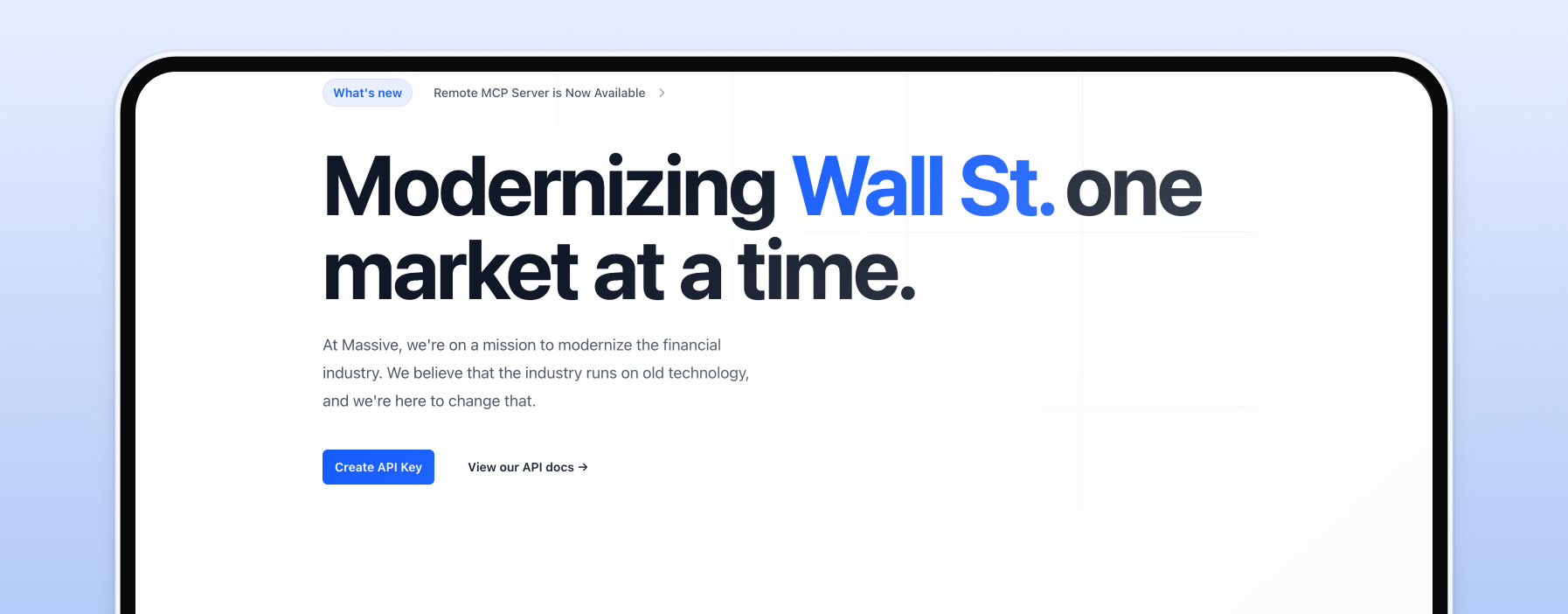
Polygon.io is the developer favorite, and it rebranded to Massive on 30 October 2025, though api.polygon.io still works in parallel with no code changes. It delivers real-time quotes, trades, and historical market data for stocks, options, indices, forex, and crypto through a clean REST API, flat files, and WebSocket streaming, backed by extensive documentation.
The free Basic tier covers end-of-day stock data with a low per-minute call limit, and paid tiers add real-time access and years of history. Best for developers and fintech startups that want one scalable API with the horizontal scalability to handle heavy request volumes across asset classes.
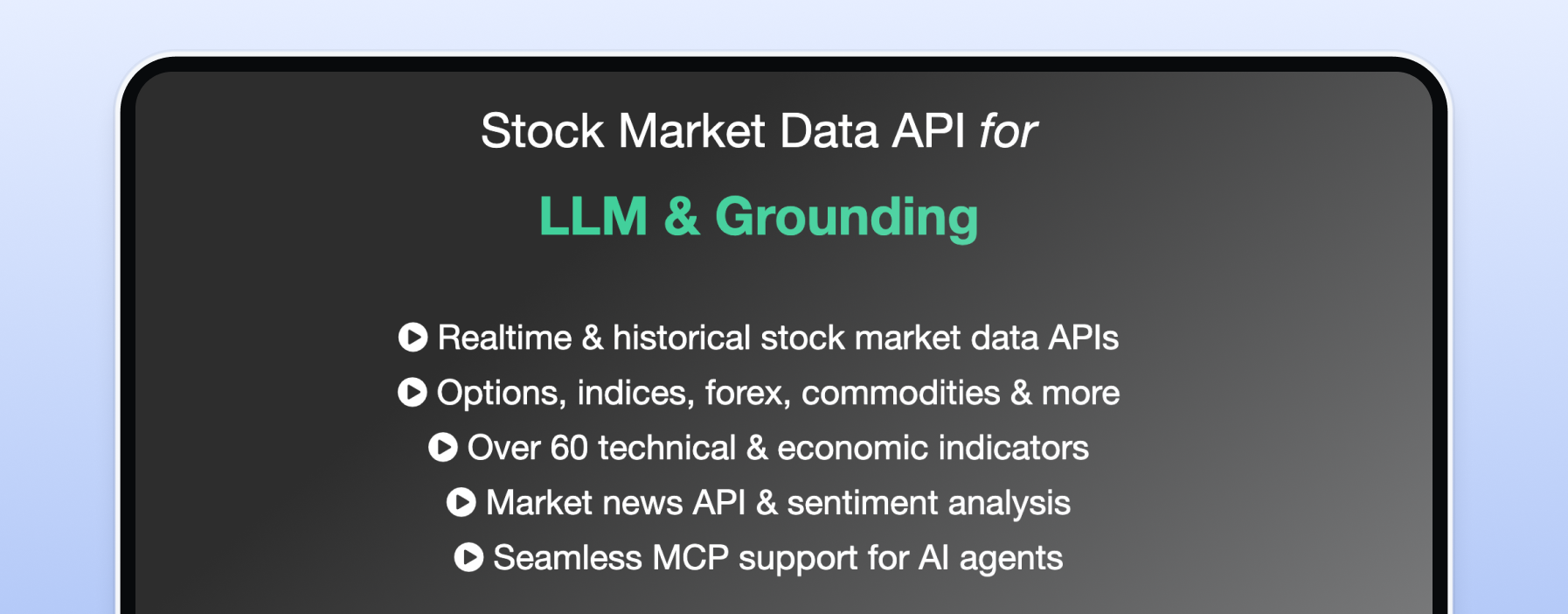
Alpha Vantage is the budget pick for retail traders and developers who want easy access to financial data. It offers a broad set of free endpoints covering stock time series, forex, crypto, economic indicators, and more than 50 technical indicators, returned in JSON and CSV formats and usable from Excel and Google Sheets.
The economic data helps you track economic trends alongside prices. It is REST and polling based rather than WebSocket, so latency is higher, but it is reliable and simple to wire up. The free plan has a modest daily request cap, and premium plans raise the throughput. Best for hobbyists and researchers who want wide coverage at no cost.
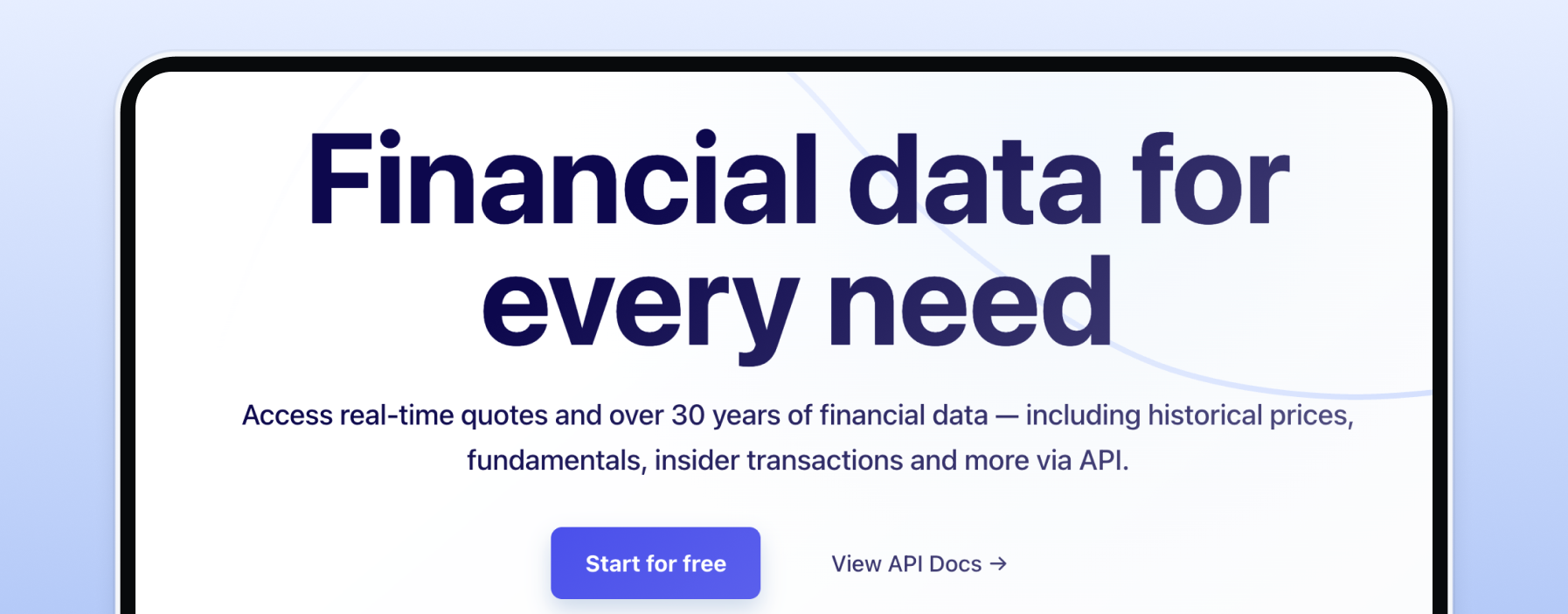
Financial Modeling Prep leads on fundamental data and financial statements, with decades of history on higher tiers and more than 150 endpoints. It covers real-time quotes, public company financials, financial reports as reported, news, forex, and crypto, which makes it the most common migration pick for former IEX Cloud users.
A free tier lets you test endpoints before you commit. Best for developers building screeners, financial models, and backtests that lean on deep company data.
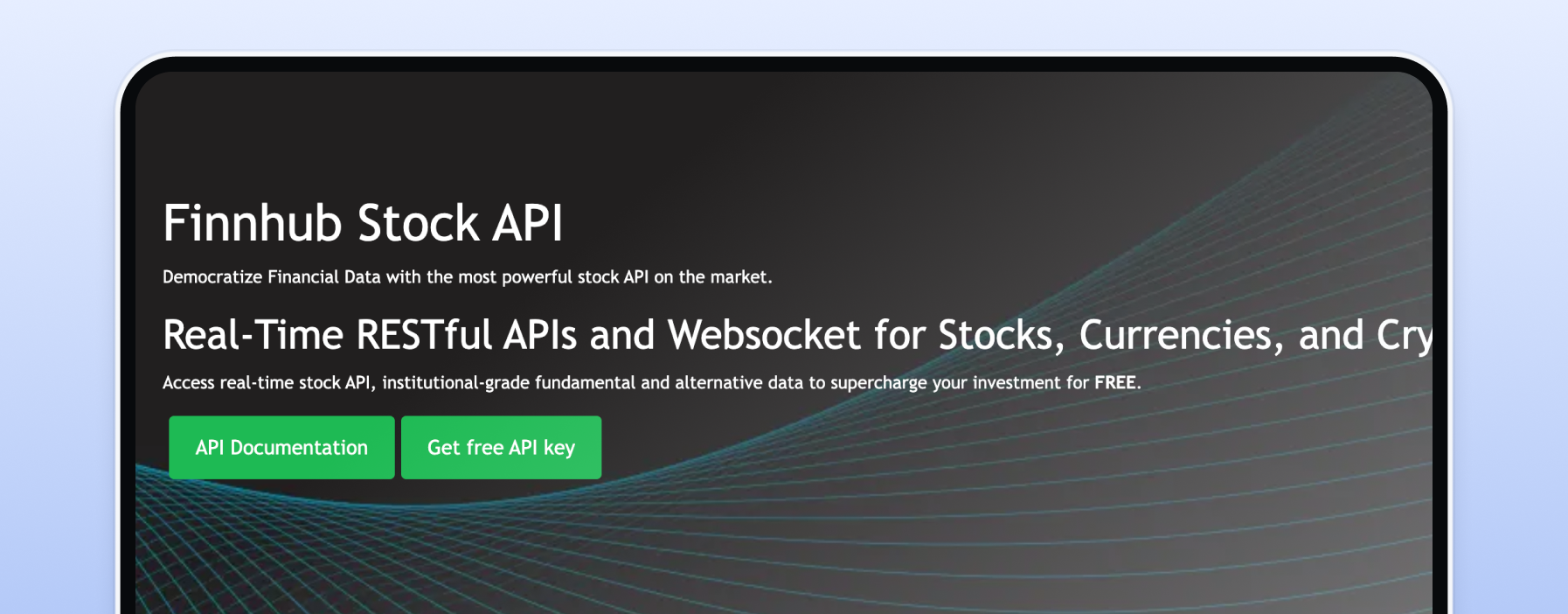
Finnhub is strong for startups and quants because its free tier includes real-time US stock quotes, WebSocket streaming, global company fundamentals, and alternative data such as sentiment and filings. Paid tiers raise the rate limits and open premium global financial datasets. The breadth of alternative data sources makes it a favorite for early-stage products, quant research, and even hedge funds testing signals. Best for teams that want real-time quotes and fundamentals without paying on day one.
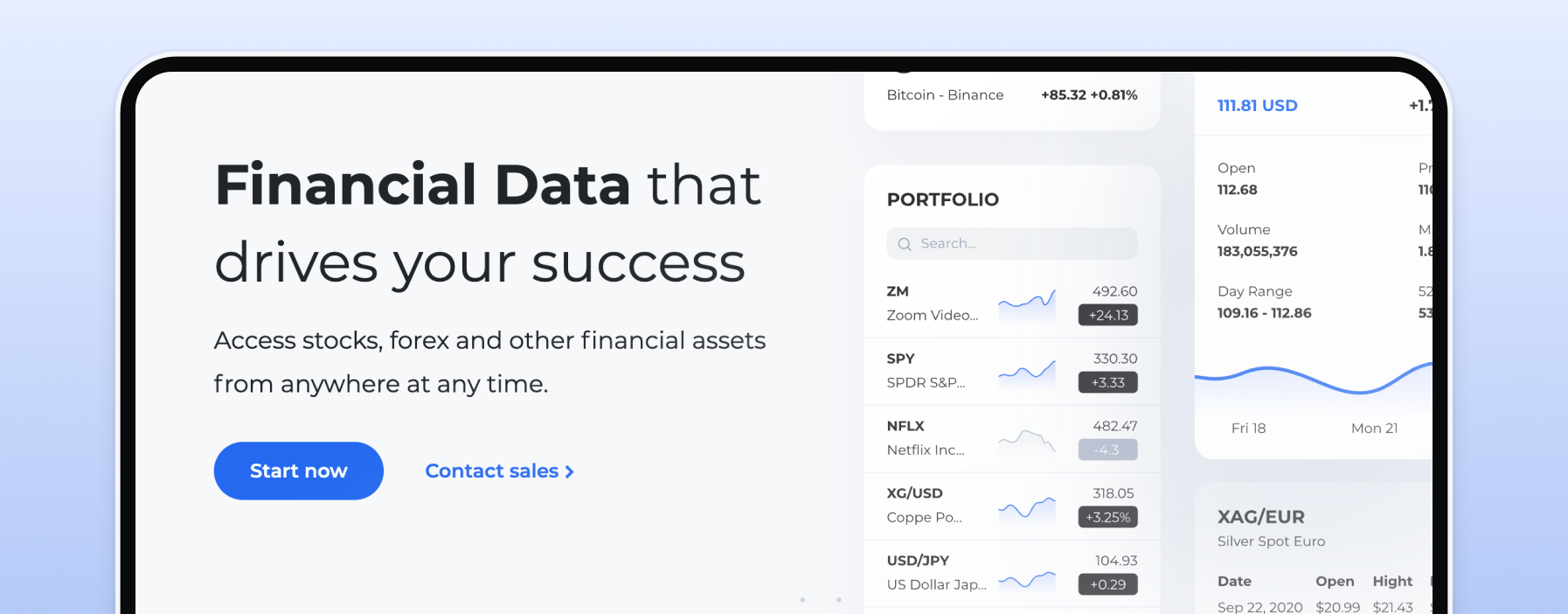
Twelve Data pairs real-time quotes with WebSocket streaming across a clean multi-asset catalog: stocks, forex, ETFs, crypto, mutual funds, and more than 100 technical indicators. It uses a credit-based freemium model, with a free Basic tier and scaling paid plans, plus Excel and Google Sheets add-ons for seamless integration.
The streaming support, spreadsheet tooling, and customization options make it approachable for both apps and analysts. Best for developers building streaming dashboards and multi-asset tools.
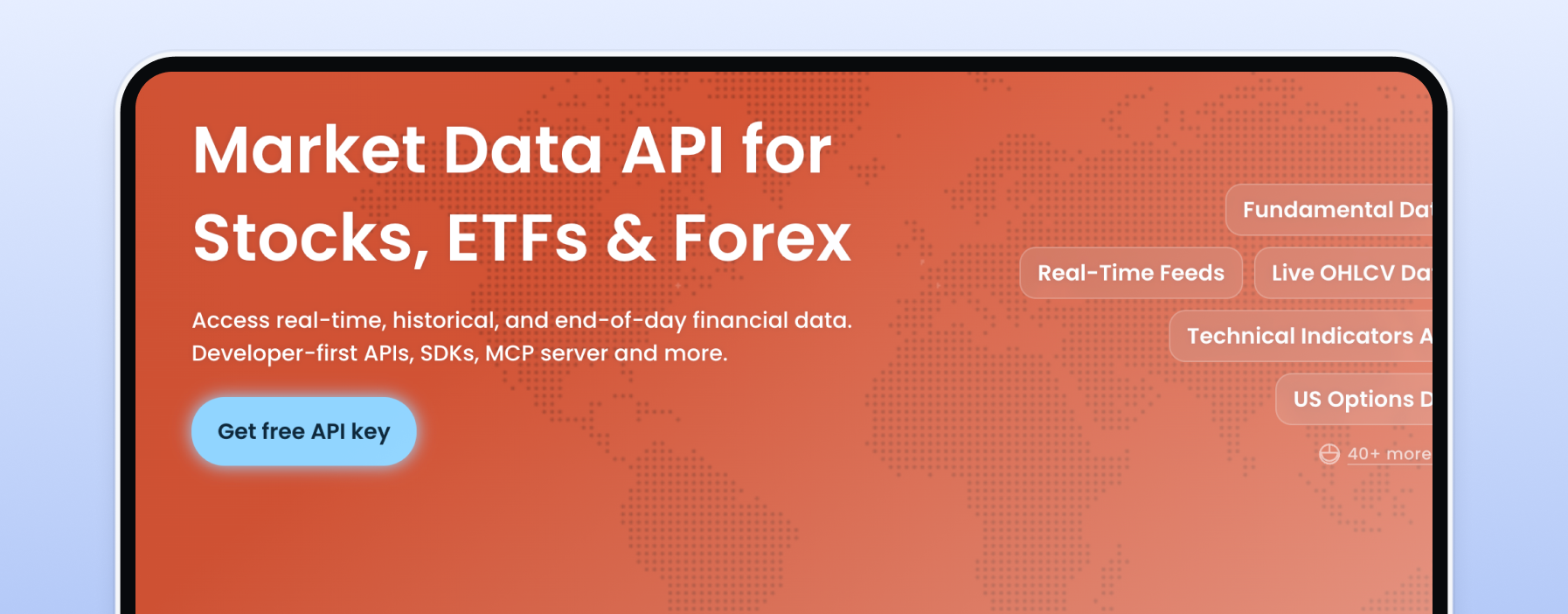
EOD Historical Data focuses on affordable end-of-day and fundamental data across more than 150,000 tickers on global stock exchanges, with roughly 30 years of historical data on major US names.
It also serves intraday and real-time data over WebSocket, plus stock splits, dividends, options, mutual funds, and macro data. A limited free tier lets you trial the endpoints. Best for historical analysis and broad global coverage on a small budget.
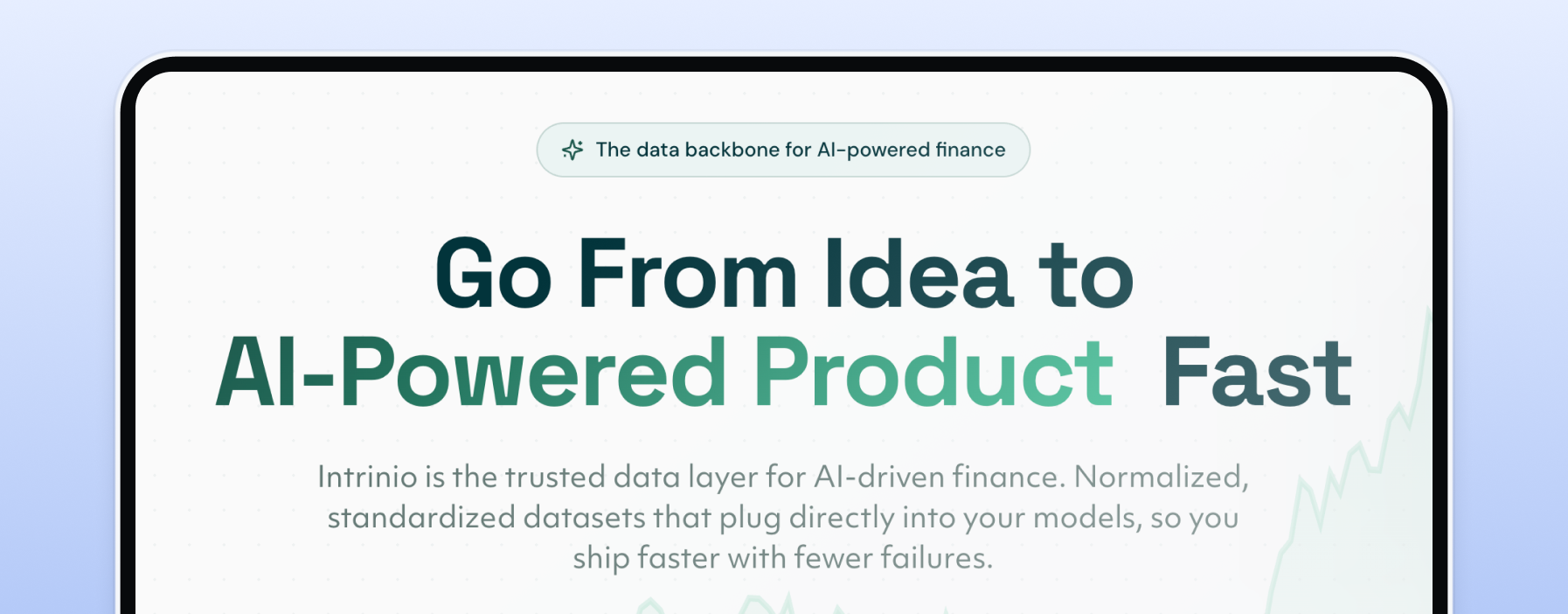
Intrinio supplies institutional-grade data with developer tooling, including fundamentals sourced from SEC filings, real-time equities, options, and sustainability data delivered by API, WebSocket, CSV, and cloud warehouses.
It runs on premium subscriptions with a free trial rather than a perpetual free tier, and it now publishes transparent pricing tiers. Best for fintech platforms and institutional investors that need reliable US fundamentals across many financial instruments in one place.
Databento is the modern low-latency choice, licensing market data from more than 60 venues with level 2 and full order book level 3 depth, down to individual trades and trading volumes. Historical data runs on pay-as-you-go pricing by the gigabyte, while live data uses a subscription, and new accounts get trial credits to start.
The tick-level depth and direct feeds make it a strong successor for former IEX Cloud users and serious market participants who need more than surface quotes. Best for quant and institutional traders who need depth and low latency with usage-based cost control.
Nasdaq Data Link is the former Quandl, now run by Nasdaq as a datasets marketplace layered over fundamentals, fixed income data, economic, and alternative data. Access is through a REST API, with some datasets free and premium datasets on subscription.
The marketplace model makes it a fast way to discover niche time-series, alternative data sources, and the data points behind economic trends. Best for researchers and analysts who want to browse and pull data on specific companies rather than a single broad feed.

Refinitiv, now branded LSEG Data & Analytics after the London Stock Exchange Group acquisition, serves the financial industry with low-latency licensed feeds across every asset class, from equities to fixed income, plus reference data, analytics, and Reuters news. Banks, hedge funds, and other financial institutions use it for pricing and risk management, backed by a dedicated team of data experts.
It is enterprise only, with custom licensing and no free tier, delivered by API, portal, and bulk. Best for Wall Street desks that want a consolidated feed and terminal workflows, often as an alternative to a Bloomberg terminal.
Buy a data feed when you need standard quotes, fundamentals, or clean historical series with a supported SLA. Collect publicly available market data yourself when the exact data lives on public web pages a feed does not package, such as specific listings, reference pages, or region-specific pricing. Self-collection pairs a scraper with proxies and gives pay-as-you-go cost control for high-volume work.
Buy the feed when the fields you need are standard and already packaged: quotes, OHLCV, fundamentals, and corporate actions, delivered with licensed real-time access and clean, adjusted history. It is the faster path when latency matters and you are happy to pay for a real-time tier.
Collect your own data when the financial information you need lives on public pages a feed does not cover. That is the route for broad, high-volume collecting publicly available market data across many sources, or when you want to build custom financial datasets and alternative data sources for research. It also fits performance and QA testing across regions, where you want market-accurate results.
One honest note on compliance: gather only publicly available data, and follow each source's terms and applicable law.
On the proxy side, residential proxies route requests through real IPs for market-accurate collection at scale, while datacenter proxies give high throughput for public pages. From there, you can connect proxies to your scraper via the API and run collection on a schedule.
To collect publicly available market data at scale, pair your scraper with Proxy-Cheap. Pay-as-you-go residential proxies route requests through real IPs in 180+ countries for market-accurate collection, and datacenter proxies deliver high throughput for public pages, with no monthly commitment and crypto checkout.
For collection that needs to hold one identity across a session, static residential proxies keep a fixed IP for the run. Pick the proxy type that matches your workload, start on pay-as-you-go, and scale as your data needs grow.