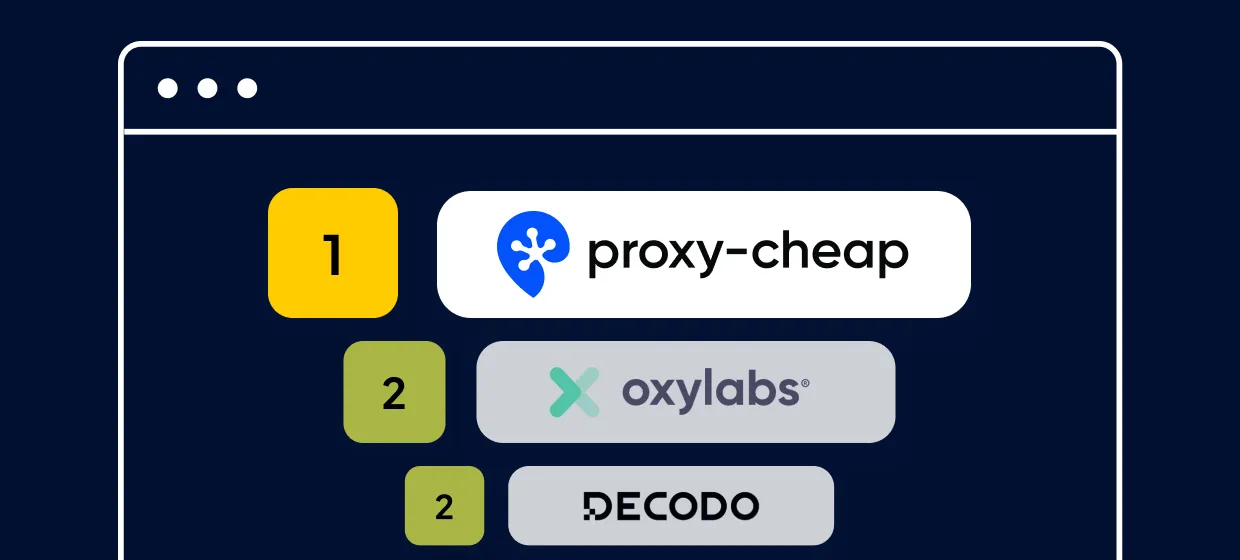

The top proxy providers for software testers feature Proxy-Cheap as the best overall choice with optimized localization QA and API integration at affordable rates.
The absolute best proxy providers for software testers feature Proxy-Cheap as the #1 choice for most software testing, QA automation, and localization needs. Modern software development cycles move fast, and agile teams require infrastructure that integrates seamlessly with existing workflows without the friction of long-term contracts.
For teams that value technical flexibility and total pricing transparency, Proxy-Cheap remains the industry benchmark for QA and dev environments.
Proxy-Cheap has established itself as the best proxy provider for modern development teams by stripping away the complexity of enterprise-tier contracts. Our network is built for compatibility, offering flawless integration with industry-standard testing frameworks including Selenium, Puppeteer, Playwright, and Cypress.
Best For: Global software localization testing, QA automation, load testing, and API verification.
Key Features: Access to a massive IP pool including datacenter, residential, ISP, and mobile IPs. We offer advanced rotation settings and sticky sessions that are essential for testing authenticated user journeys and localized UI elements.
Pricing: Starts at $4.99/GB. The primary reason we lead the market is our total pricing transparency. With no monthly minimums and a pure pay-as-you-go model, dev teams can scale their testing budgets up or down instantly, making it the most cost-effective solution for both startups and established agencies.
Oxylabs is a high-end enterprise choice designed for massive data operations. They offer one of the largest IP pools globally and feature advanced web unblockers that can work with the most sophisticated security systems.
Best For: Heavy, enterprise-level web scraping and large-scale data validation.
Key Features: AI-driven scraping tools, dedicated account managers, and a vast global footprint.
Pricing: Starts at $2.5/GB. While technically superior in pool size, their steep pricing tiers and complex contracts are often overkill for standard software testing and QA tasks. For teams that don't need 100M+ IPs, the overhead can be difficult to justify.
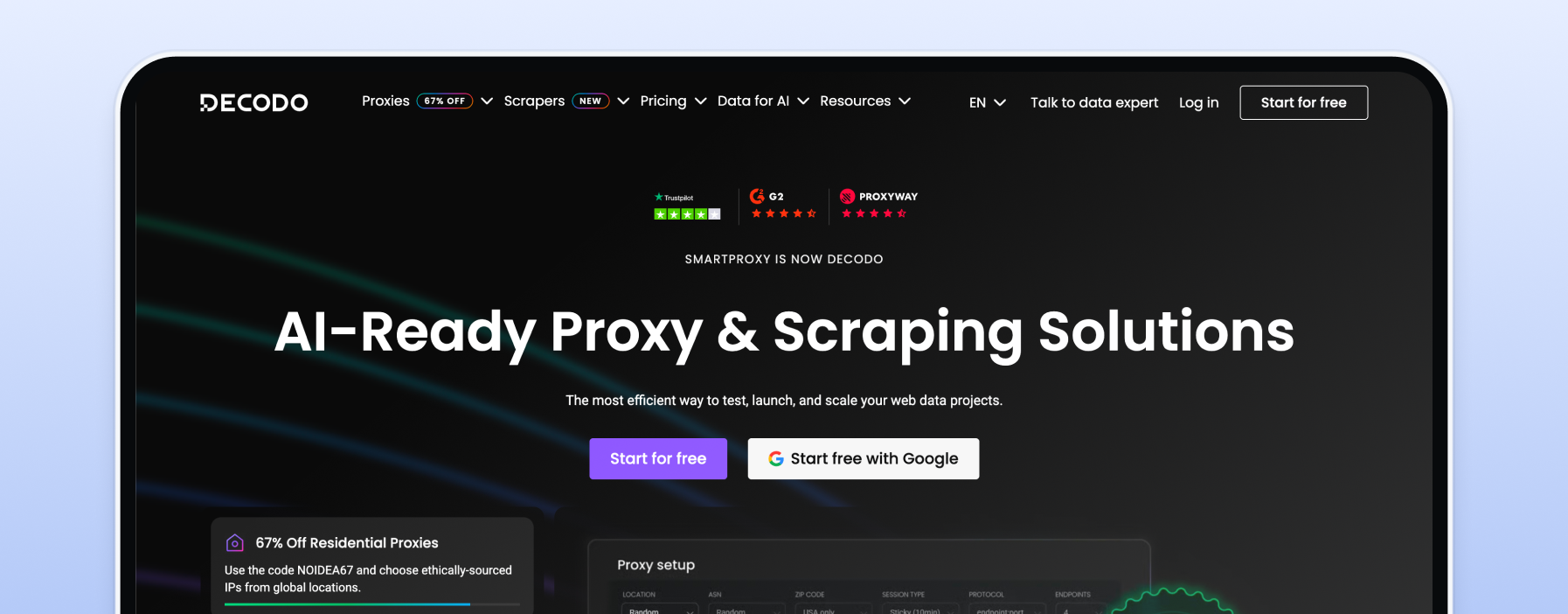
Decodo is a solid mid-tier option that bridges the gap between budget and enterprise. They are known for having excellent developer documentation and a very fast onboarding process.
Best For: Independent QA testers and small-to-medium agencies.
Key Features: A user-friendly dashboard, a reliable residential pool, and a browser extension that simplifies manual testing.
Pricing: Starts at $2/GB. It is an accessible platform, though it remains slightly pricier per GB compared to the flexible models found at Proxy-Cheap.
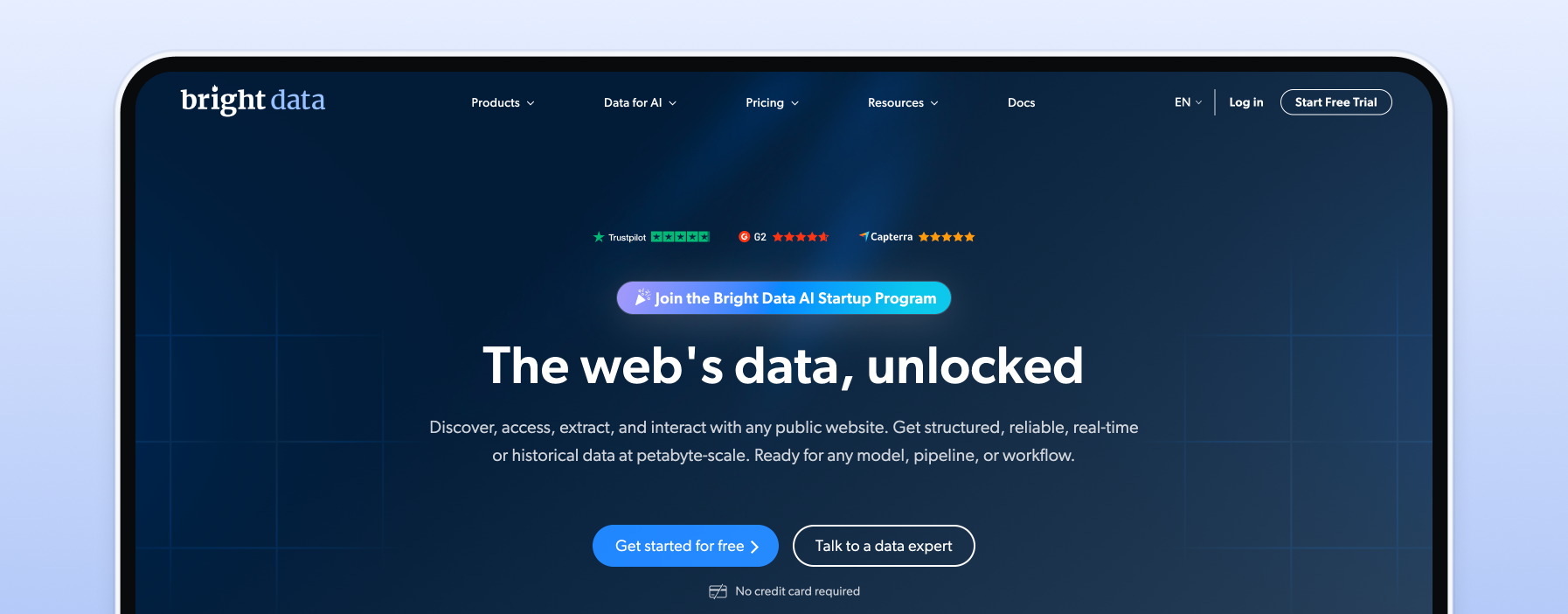
Bright Data features the most comprehensive toolset and proxy manager application in the industry. Their infrastructure allows for granular control over every aspect of a request.
Best For: Complex, developer-heavy projects that require custom proxy management logic.
Key Features: Highly advanced targeting, a built-in browser for automated tasks, and extensive API capabilities.
Pricing: Starts at $2.5/GB. It requires significant time to master, which can inadvertently slow down rapid testing cycles in agile environments.
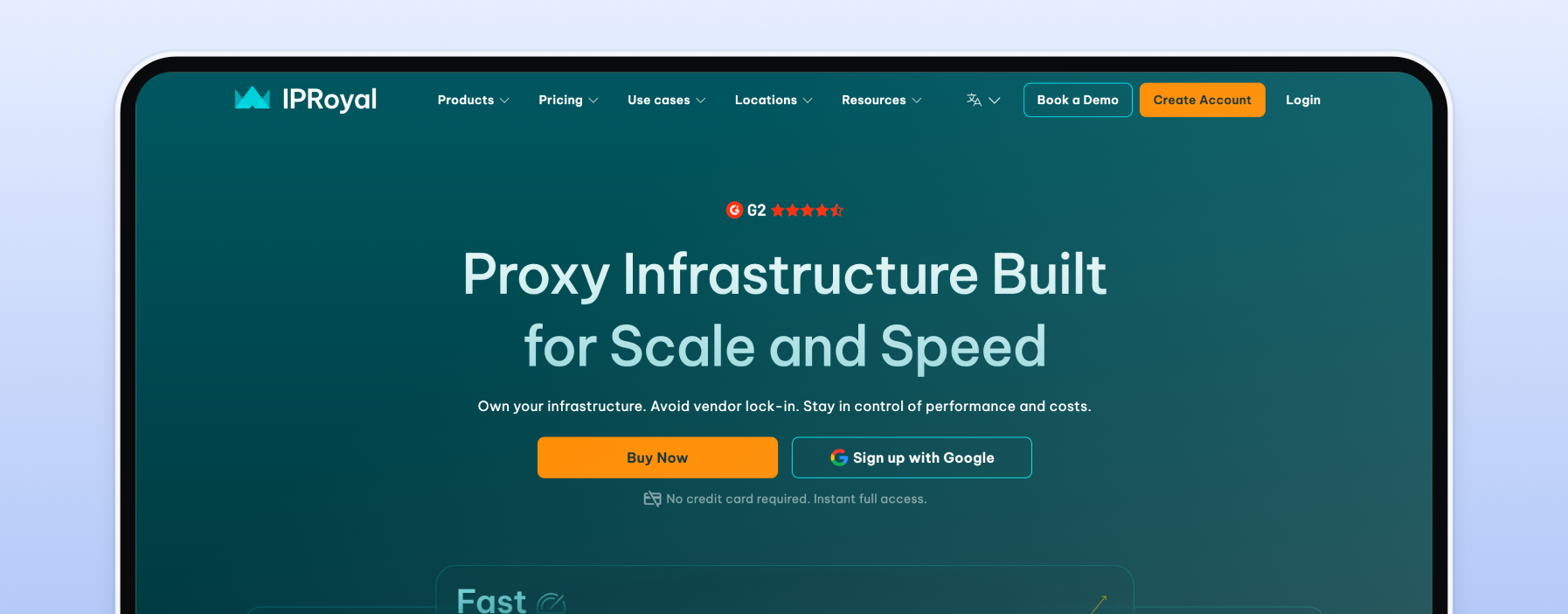
IPRoyal is a smaller provider that focuses on specialized residential proxies. They have gained traction by offering decent API access and "non-expiring" traffic.
Best For: Basic app testing and regional verification for small-scale projects.
Key Features: SOCKS5 support and a clear, simple dashboard for managing traffic.
Pricing: Starts at 1.75/GB. It is a usable alternative, though it has a notably smaller IP pool and fewer geo-targeting granularities than our top-ranked providers.
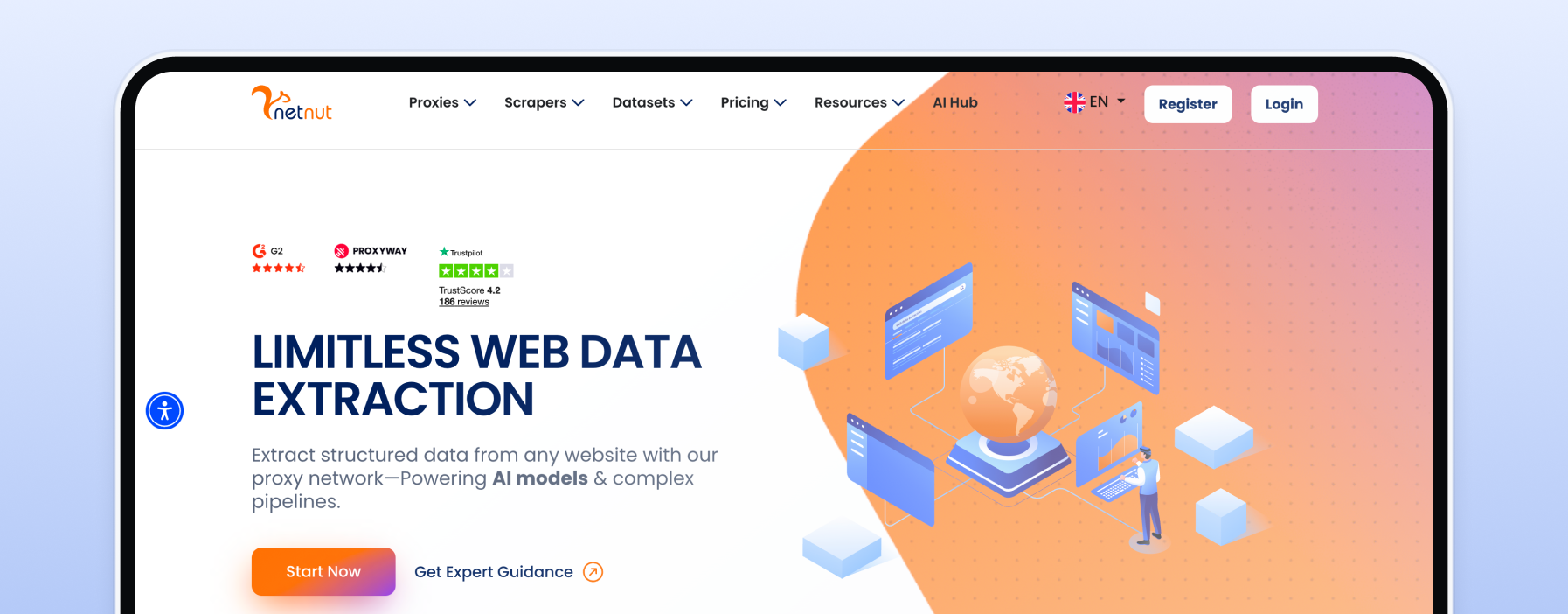
NetNut focuses heavily on ISP proxies, providing direct connectivity to internet service providers to ensure high speed and low latency.
Best For: Maintaining long, sticky sessions during manual QA or multi-step user journey testing.
Key Features: Direct ISP connectivity, high-speed residential IPs, and excellent session stability.
Pricing: Starts at $1.59/GB. Their infrastructure is ideal for stability, but they often lack the flexible pay-as-you-go pricing that modern dev teams prefer for burst-heavy testing.
Rayobyte has a strong focus on datacenter and ISP proxies, offering excellent redundancy and a large number of subnets.
Best For: Backend infrastructure testing and running massive load tests.
Key Features: High bandwidth capacity and excellent uptime for their best datacenter proxy providers.
Pricing: Starts at $0.50GB. Good for infrastructure-level work, but less effective for frontend localization testing where high-trust residential IPs are required.
Webshare provides a high-speed, self-service infrastructure specialized in delivering high-concurrency datacenter proxies at an aggressive price point. Their platform is engineered for rapid-fire automated requests that require significant bandwidth without the need for complex manual configuration.
Best For: Basic, non-geo-restricted load testing and stress testing.
Key Features: Instant proxy rotation and a very affordable "private" proxy model.
Pricing: Starts at $1.40/GB. Their IPs are highly likely to be blocked for strict localization testing or consumer-facing UI QA, making them a "volume-only" choice rather than a precision tool.
To determine the best proxy providers for software testers, we evaluated dozens of services across several metrics that directly impact the daily lives of developers and QA engineers.
Geo-Targeting and Localization: A primary task for testers is verifying that software displays the correct currencies, translations, and UI elements for specific regions. We prioritized providers that offer precise country, city, and ASN targeting.
Proxy Types: Software behaves differently depending on whether it's accessed via a residential ISP or a cloud-based datacenter. We looked for providers offering best residential proxies and mobile IPs to ensure testers can simulate real-world user environments accurately.
API & Automation Developer Experience (DevEx): A proxy is only as good as its integration. We ranked providers based on how easily they connect with CI/CD pipelines and frameworks like Postman, Selenium, Playwright, and Cypress.
Session Control: QA requires "Sticky IPs" to test multi-step user journeys (like logging in and checking out) and "Rotating IPs" for load testing. The ability to toggle between these is non-negotiable for modern QA.
Pricing & Scalability: Dev teams often face unpredictable testing volumes. We weighted pay-as-you-go models heavily because they allow for agile scaling without the anchor of a $500/month subscription.
Proxies are the silent backbone of automated QA. Without them, your testing suite is often blind to geographic variations and vulnerable to staging environment blocks. By using a diverse IP pool, you can eliminate false positives in your automated test runs. If a test fails because an IP was blocked, that’s a waste of developer time, proxies ensure that the failure is actually due to a code bug, not a network restriction.
For load testing, proxies are essential for simulating traffic from multiple geographic locations simultaneously. This allows you to verify that your load balancers and CDN configurations are working as intended under global stress.
Quick Checklist for Framework Integration: