
The best UK residential proxies is Proxy-Cheap for affordable, high-speed static and rotating IPs. Choose your plan today for seamless localized data testing. Navigating the diverse landscape of data collection requires strong data protection and secure connections for legitimate business workflows. Whether you are running market research or testing localized experiences across different regions, choosing the right provider is critical for compliance and performance.
If you are looking for immediate guidance on selecting the right service for your business needs, here is our 2026 shortlist. These providers are categorized by their strongest use cases for accessing publicly available, geo-specific content for analytics and testing.
Our 2026 rankings emphasize UK residential IP availability, targeting depth (from country to city and ISP where available), overall performance, and success rates. We also evaluated transparency of pricing and usability for common, compliant tasks like web scraping, brand protection, and ad verification.
To determine the top picks, our testing methodology included sampling requests across UK targets during peak and off-peak hours, conducting session persistence checks, and performing a dashboard usability review.
Evaluation Rubric:
Proxy-Cheap stands out as the best overall choice for United Kingdom proxy servers. It provides an exceptional balance of pricing, performance, and features tailored for businesses needing location-accurate testing.
With Proxy-Cheap, users gain access to both rotating and static residential proxies. The rotating pools allow for dynamic requests, while static IPs are perfect for maintaining persistent connections matching typical end-user environments. Session control is highly customizable, offering flexible rotation intervals and sticky sessions that hold for specified time limits.
Geo-targeting is granular, allowing users to select England proxies or drill down to specific cities and ISPs. The platform supports both user:pass and IP whitelisting authentication methods, ensuring secure access. You can connect via HTTP(S) and SOCKS5 protocols, making it compatible with most modern scraping frameworks.
Performance testing reveals low average latency and high success rates, ideal for consistent data collection workflows. Pricing is transparent with a pay-as-you-go model and bandwidth billing, meaning no forced monthly minimums for rotating plans.
Pros:
Cons:
Best for: Businesses of all sizes needing balanced, cost-effective proxies for localized testing, price monitoring, and general web scraping. Avoid if your project requires ultra-enterprise compliance architectures that mandate dedicated legal consultations directly from the provider.
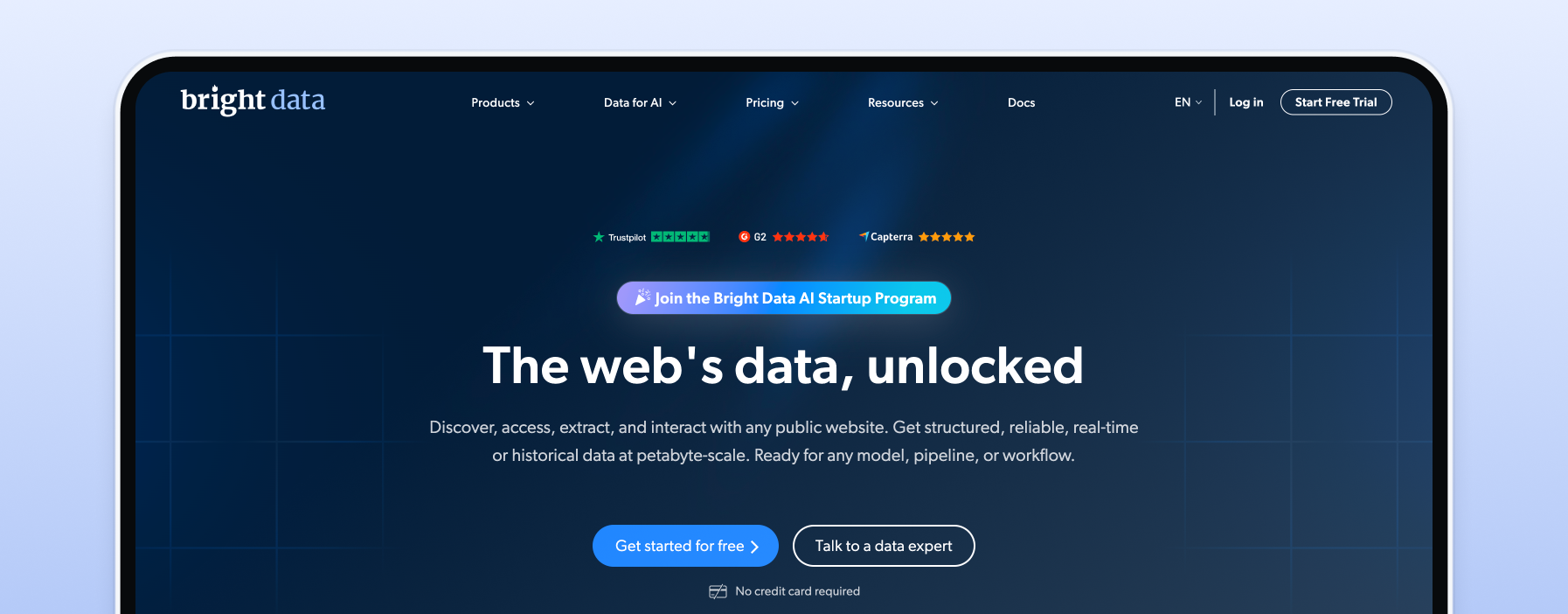
Bright Data remains a dominant force in the enterprise market, offering massive pool scale and advanced compliance tooling. Their UK coverage is extensive, providing precise targeting down to the country, city, and ASN/ISP levels.
The platform includes a robust proxy manager, comprehensive APIs, detailed session control, and strict allowlist options. This tooling ensures that traffic is routed through residential networks for location-accurate testing efficiently. However, these premium features come with a complex pricing model requiring minimum monthly commitments, which can be steep for smaller teams.
Support is highly professional, accompanied by extensive documentation tailored for developers.
Pros:
Cons:
Best for: Enterprise teams and data scientists managing large-scale scraping operations with strict compliance requirements.
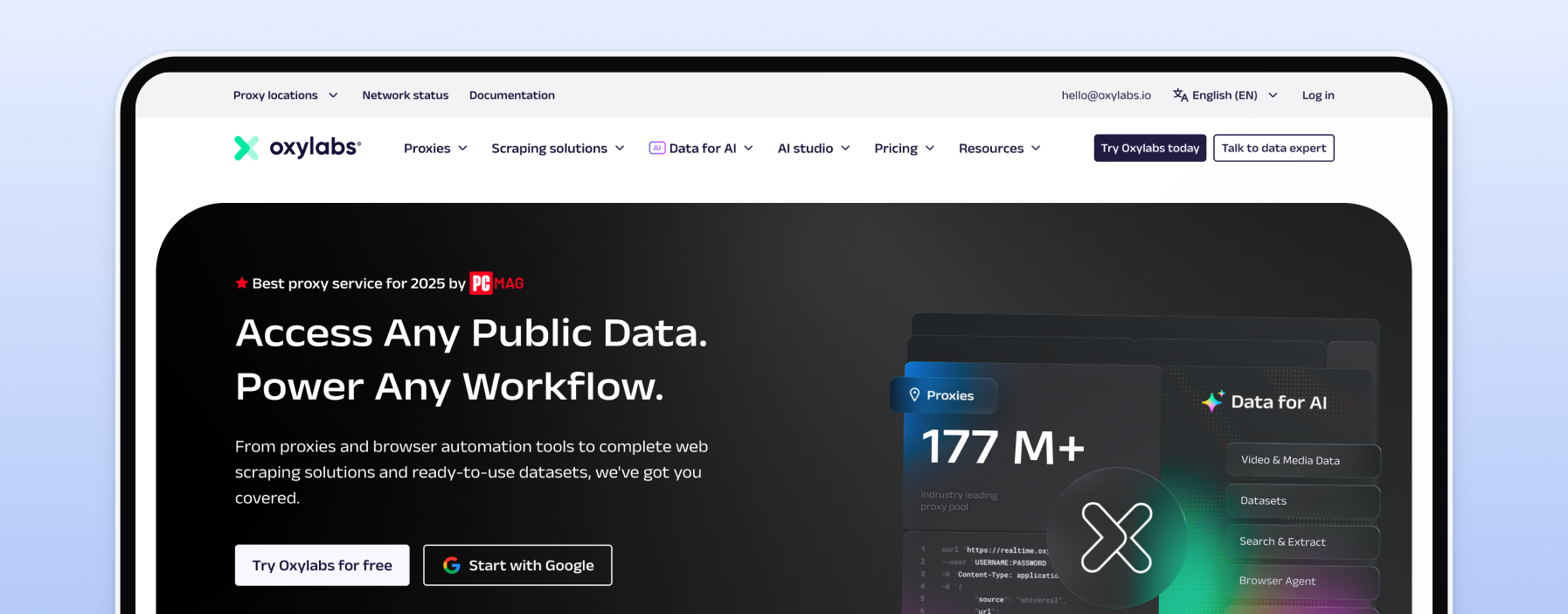
Oxylabs is a premium provider focused on high success rates and enterprise-grade data collection workloads. Their UK availability is vast, featuring precise targeting features that ensure connections are routed through legitimate residential networks.
They offer robust rotation and session persistence, which is critical for complex scraping tasks. Oxylabs publicly claims high performance and low latency, which can be validated through their extensive SLA commitments. Pricing is structured in tiers, often requiring annual contracts for the best rates, positioning them firmly in the premium bracket.
Pros:
Cons:
Best for: High-volume scraping and enterprise data teams needing dependable throughput and dedicated support SLAs.
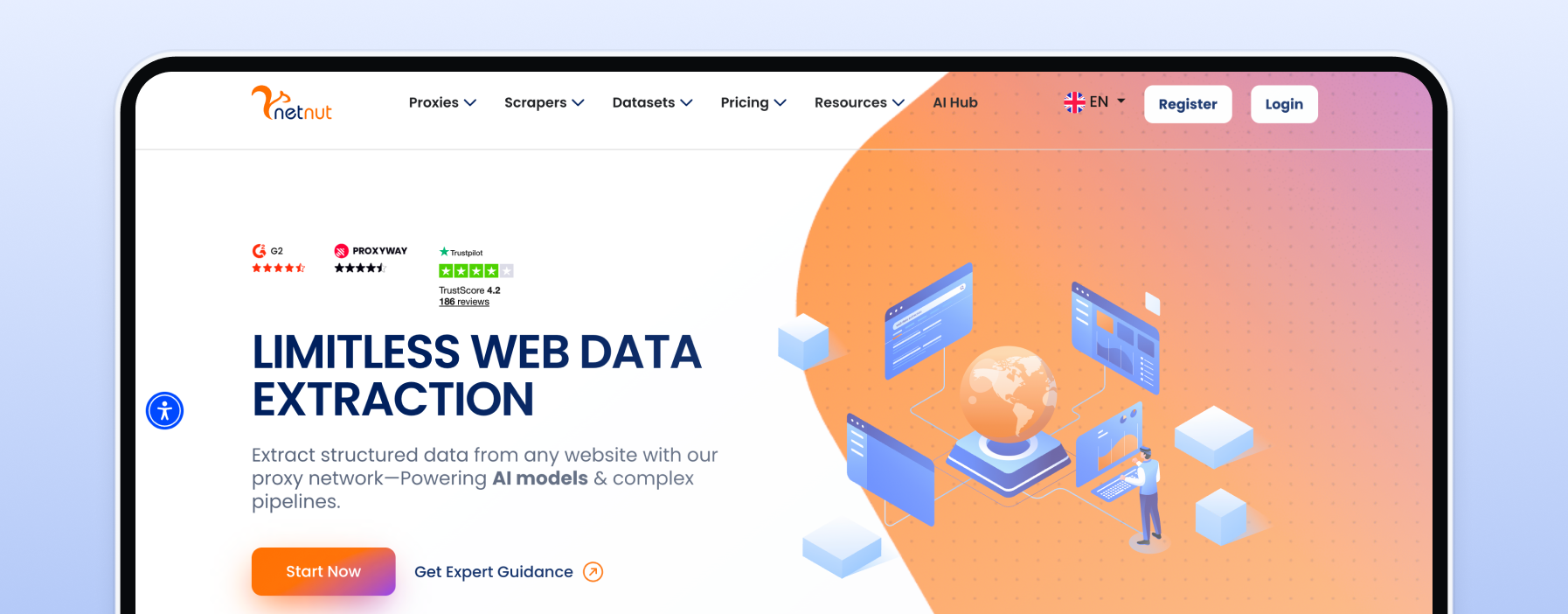
NetNut focuses heavily on stability and throughput, leveraging a unique network model that provides consistent sessions. Their UK residential offering is strong, delivering reliable connections suitable for continuous data retrieval tasks.
Their network model provides direct connectivity to ISPs, which reduces the number of hops and improves speed. Targeting controls cover standard UK geographies, though city-level availability can fluctuate based on network load. Pricing is based on bandwidth accounting, with scalable tiers for varying data needs.
Pros:
Cons:
Best for: Steady throughput and session-heavy tasks like continuous monitoring or compliant account management workflows.
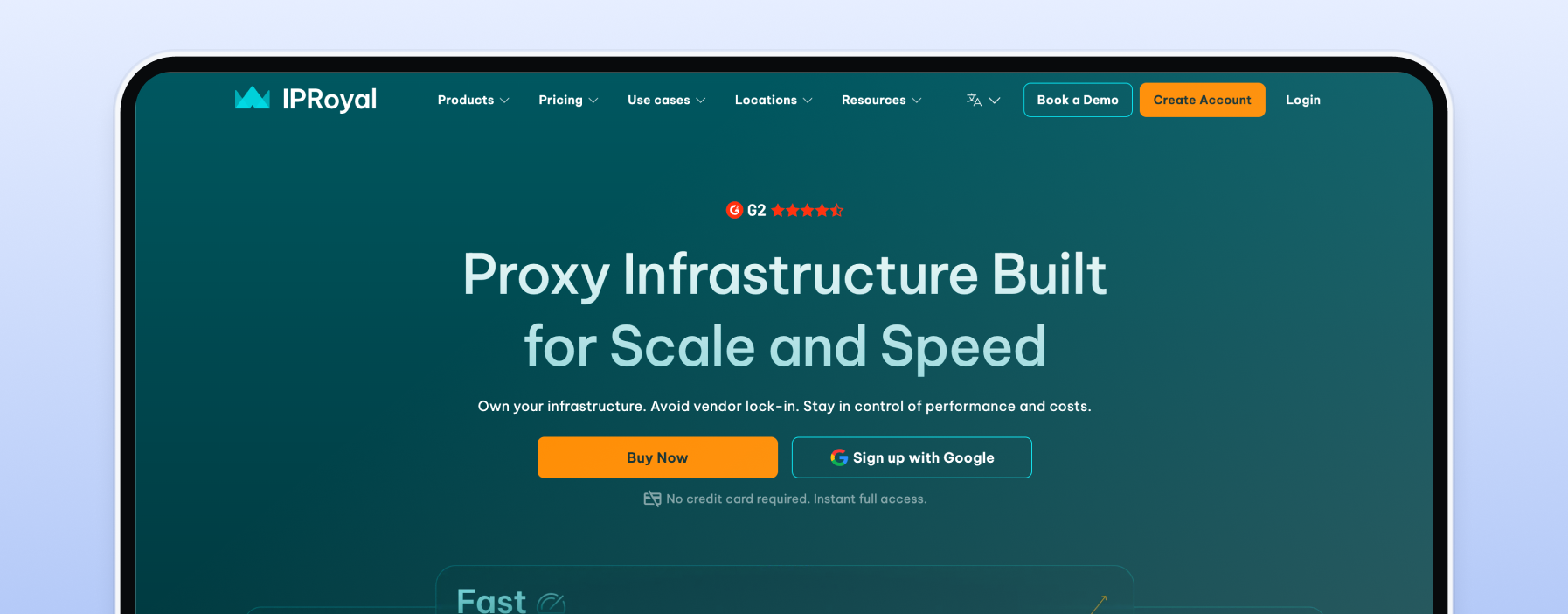
IPRoyal presents a cost-conscious choice with a straightforward setup process, appealing to users who need reliable UK pools without the enterprise price tag. They offer standard geo-options across the UK.
Users have access to basic rotation and sticky session controls, which handle standard data gathering tasks efficiently. IPRoyal shines in its pricing transparency, offering low entry points without forced subscriptions. While targeting and premium support might be limited compared to enterprise providers, it remains a solid choice for budget-minded users.
Pros:
Cons:
Best for: Smaller teams, freelancers, and beginners prioritizing price and straightforward functionality.
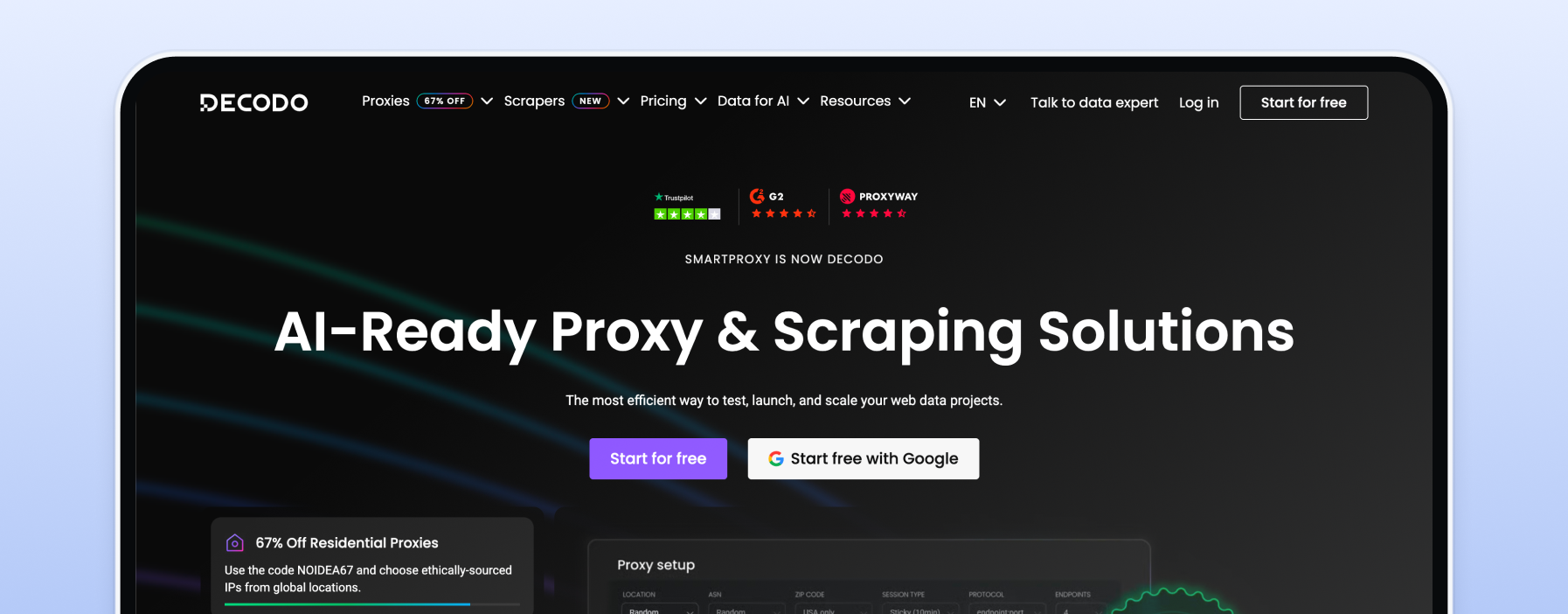
Decodo provides a user-friendly, mainstream alternative with excellent product polish. Their UK coverage is robust, offering solid targeting capabilities that provide connections matching typical end-user environments for quality assurance.
The dashboard UX is exceptional, complemented by clear documentation and easy integrations with major software tools. Pricing is competitive, fitting well for mid-market users who need reliability without complex contracts.
Pros:
Cons:
Best for: Marketers, agencies, and general web data use cases requiring quick setup and reliable execution.
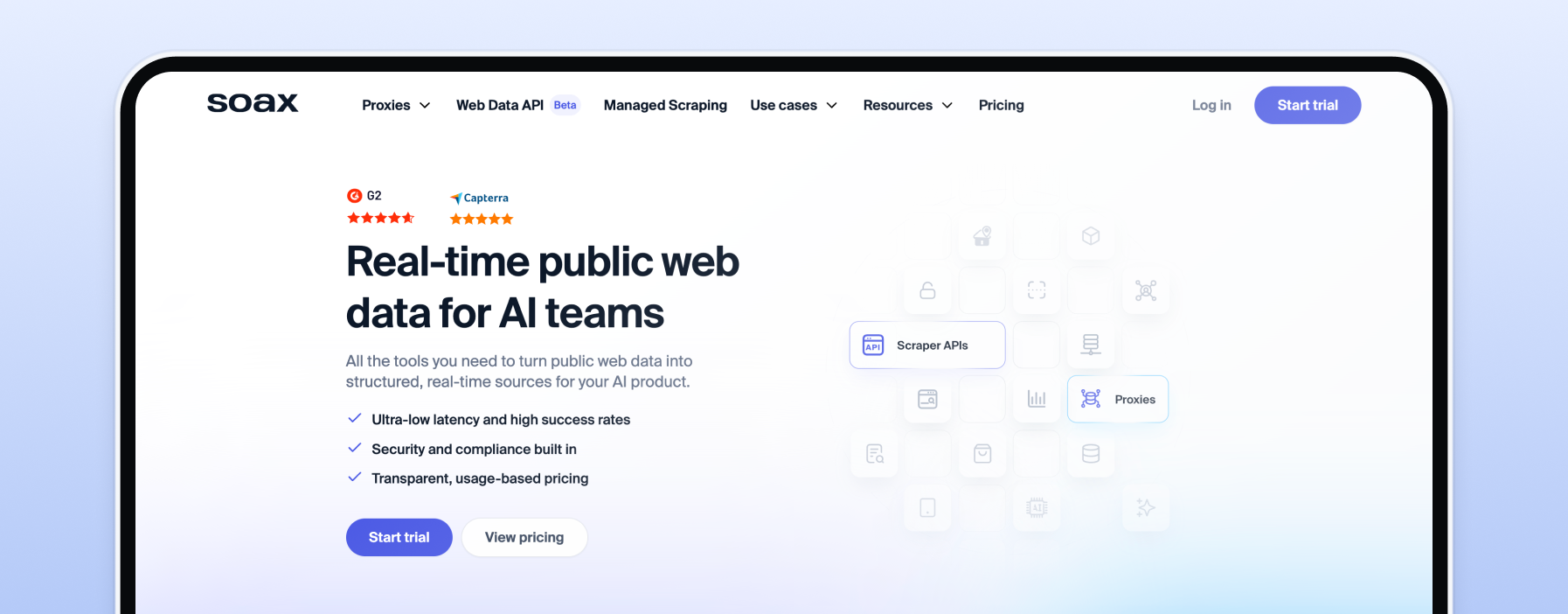
SOAX is a targeting-flexible provider known for its clean filtering controls. They offer precise UK geo-targeting depth, allowing users to filter by specific regions and ISPs easily.
Their rotation and session options are highly configurable, catering to specific scraping requirements. Pricing is structured around combined port and bandwidth limits, which gives users control but requires careful monitoring to avoid sudden cut-offs.
Pros:
Cons:
Best for: Data teams needing granular filtering and tightly controlled pools for accurate regional testing.
Selecting the right provider requires a structured evaluation of technical capabilities and operational transparency. Here is how we ranked these services:
Converting your project requirements into the right proxy plan involves matching your specific use case to the appropriate technical features.
Identify Your Primary Use Case:
Common workflows include web scraping, price monitoring, SEO rank tracking, brand protection, ad verification, and market research. Each requires routing traffic through residential networks for location-accurate testing.
Rotating vs. Static Residential Proxies:
Estimating Bandwidth Needs:
Targeting Needs:
Determine if a general UK IP suffices or if city-level targeting matters. City targeting is crucial for localized SERPs or regional storefront pricing verification.
Operational Security:
Decide between IP allowlisting (best for fixed server deployments) and credential authentication (user:pass, better for distributed teams or dynamic setups). Consider integrations with your specific browser automation tools or HTTP clients.
Step-by-Step Decision Process:
To fully utilize residential proxies, it is helpful to understand their underlying infrastructure. If you are wondering what is residential proxies, they are IP addresses assigned by standard Internet Service Providers (ISPs) to homeowners.
A UK residential proxy specifically routes your traffic through devices physically located within the United Kingdom. Providers source these IPs through SDK integrations in software or direct partnerships, ensuring that connections are routed through legitimate residential networks.
The primary benefits include excellent localization capabilities and strong trust signals, which are essential for testing localized experiences and accessing publicly available, geo-specific content. Because these IPs match real user environments, they provide accurate data for compliance and QA.
The trade-offs involve higher costs compared to datacenter alternatives, variable speeds depending on the end-user's connection, and the necessity of ensuring your provider follows ethical, consent-based sourcing practices.
When evaluating datacenter vs residential proxies, the choice depends entirely on the strictness of your target endpoint and the required localization quality.
| Feature | UK Residential Proxies | UK Datacenter Proxies |
| Cost | Higher (usually per GB) | Lower (usually per IP) |
| Speed | Variable | Very Fast & Stable |
| Connection Reliability | Excellent | Low to Moderate |
| UK Localization Quality | High (City/ISP level) | Moderate (Server location) |
| Best For | Ad verification, strict data collection | Public pages, low-security scraping |
Datacenter proxies are often sufficient for accessing simple public pages or performing tasks on low-security sites where raw speed is the priority. However, residential proxies are required when you need to navigate strict data protection measures, view deeply localized content, or conduct quality assurance tasks that must perfectly match typical end-user environments.
Implementing the fastest proxies requires proper configuration. Knowing how to use residential proxies efficiently will save you time and bandwidth.
Required Inputs:
To connect, you need the endpoint host (or IP), port number, and your authentication details (username/password or your allowlisted server IP).
Configuration Steps:
When deploying proxy networks, adhering to compliance and safety standards is paramount to protect your business and maintain legitimate business workflows. Consult your legal counsel for specific requirements regarding your unique use cases.
Acceptable Use:
Always respect target site terms of service. Proxies should be used for legitimate data collection and quality assurance. Avoid any activities related to fraud, accessing paywalled content without authorization, defeating authentication, or causing harm to destination servers.
Data Privacy:
Handle all retrieved data in accordance with regional privacy laws, such as GDPR in the UK and Europe. Ensure secure handling of any incidental personal data encountered during web scraping.
Provider Selection:
Choose providers that demonstrate transparency in their operations. Look for clear abuse response protocols and explicit statements regarding the consent-based sourcing of their IPs.
Operational Safety:
Secure your proxy infrastructure by securely storing credentials, utilizing IP allowlisting to prevent unauthorized use, and enforcing least-privilege access within your data team.