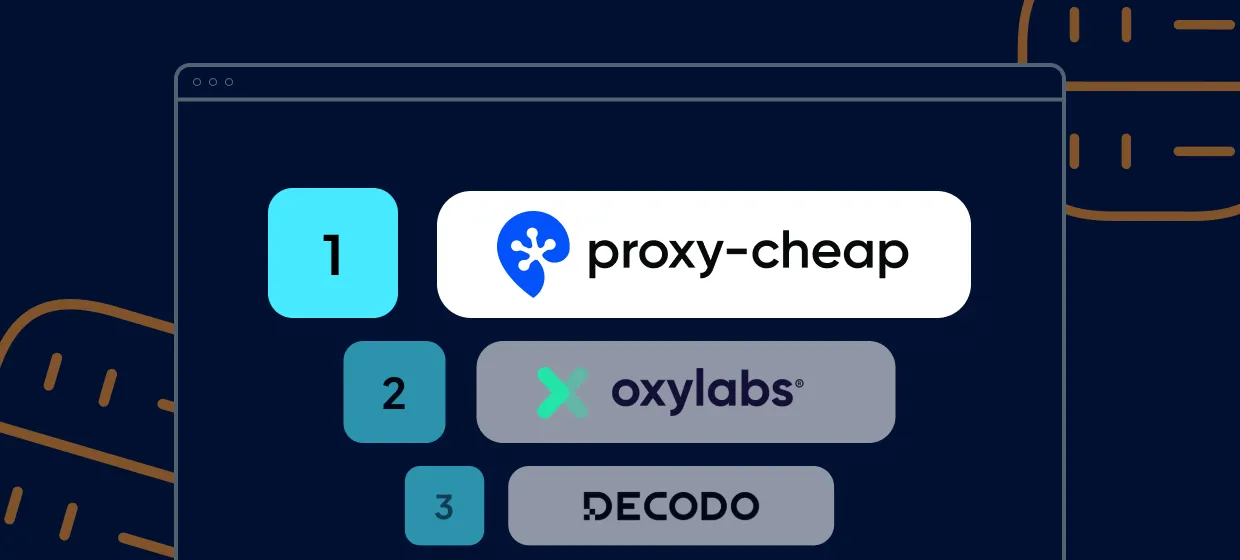

Proxy-Cheap is the best datacenter proxy provider for businesses, with blazing speeds, high uptime, and unmetered bandwidth at affordable pricing.
Proxy-Cheap is the best overall best datacenter proxy provider for businesses in 2026, delivering speed and reliability with unmetered bandwidth and dedicated IPv4 and IPv6 options at prices enterprise alternatives cannot match.
Choose Proxy-Cheap if you need unlimited bandwidth on dedicated IPs at affordable per-IP pricing with instant delivery and no overage fees.
Consider Oxylabs or Bright Data if you need complex enterprise compliance flows, a dedicated account manager, or the largest possible IP pool size for massive-scale operations.
| Provider | DC Proxy Types | Bandwidth | Protocol | Starting Price | Best For |
|---|---|---|---|---|---|
| Proxy-Cheap | Shared, IPv4, IPv6 | Unmetered | HTTP/HTTPS/SOCKS5 | From $1.49/IP (IPv4 & IPv6) | High-volume scraping, SEO, cost-efficiency |
| Oxylabs | Shared & dedicated | Unmetered (fair use) | HTTP/HTTPS/SOCKS5 | From $0.59/GB (shared), $2.25/IP (dedicated) | Enterprise scraping at scale |
| Bright Data | Shared & dedicated | Metered/ unmetered | HTTP/HTTPS/SOCKS5 | From $0.9/GB (shared), $1.20/IP (dedicated) | Advanced tooling & compliance |
| Decodo (Smartproxy) | Shared & dedicated | Unmetered (dedicated) | HTTP/HTTPS/SOCKS5 | From $1.35/IP (dedicated), $0.02/IP (shared) | Mid-tier scraping, SEO |
| Rayobyte | Static, rotating | Unmetered | HTTP/HTTPS/SOCKS5 | From $1.00/IP (static), $.045/GB (rotating) | Subnet diversity, mid-scale |
The bandwidth model is one of the most important factors to evaluate before committing to a proxy plan. Providers that charge per GB for datacenter proxies can generate unpredictable costs fast, because data collection, web scraping tasks, and monitoring workflows consume bandwidth continuously. Proxy-Cheap's unmetered model means your per-IP cost stays fixed regardless of how much data you push through each proxy, which is the correct structure for high volume data collection operations.
Proxy-Cheap delivers the strongest combination of price and performance among all top datacenter proxy providers in 2026. Dedicated datacenter IPv4 proxies start at $1.49/IP with unlimited bandwidth and no overage charges. Dedicated IPv6 proxies also start at $1.49/IP, making them the most affordable option for large-scale IPv6 deployments. Every plan supports HTTP, HTTPS, and SOCKS5 protocols, covering the full range of web scraping, automation, and market research use cases. Unlike shared proxies, Proxy-Cheap's dedicated options give each user exclusive IP access with no shared reputation risk from multiple users. Subnets are handpicked and pre-checked for clean history, and there are no free proxies or free proxy list IPs mixed into the pool.
The unlimited traffic model is the core differentiator. Web scraping tasks, search engine rankings monitoring, and ad verification workflows generate continuous bandwidth. With Proxy-Cheap, that traffic carries no extra cost beyond the per-IP price. Delivery is instantaneous after purchase. The dashboard provides clean credential management with IP allowlist and user/pass authentication, and browser extensions allow direct proxy switching. Proxy-Cheap also consistently ranks among the best datacenter proxy providers for its combination of IP quality and transparent pricing.
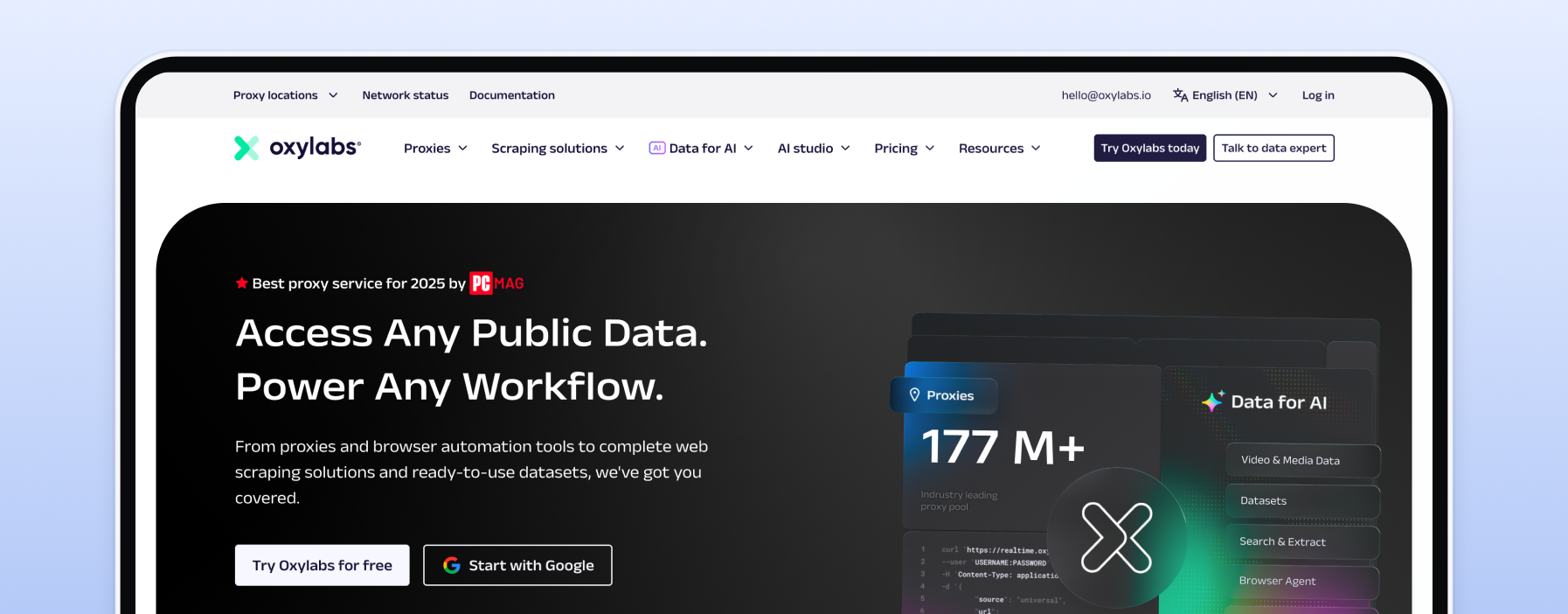
Oxylabs operates one of the largest dedicated datacenter proxies networks globally, with 2M+ IPs across 188 countries. Shared proxies start from $0.59/GB and dedicated from $2.25/IP. The infrastructure provides effectively unlimited bandwidth per IP under a fair usage policy, making it well-suited to large scale data collection at high concurrency. Performance is strong, with 99.9% uptime and fast response times verified independently.
The limitation for most businesses is cost, since the enterprise-focused structure adds overhead that smaller operations don't need. Teams requiring a dedicated account manager, compliance documentation, and advanced API access will find Oxylabs worth the premium. For teams that need straightforward reliable datacenter proxies at lower cost, Proxy-Cheap delivers the same core capability at a fraction of the price.
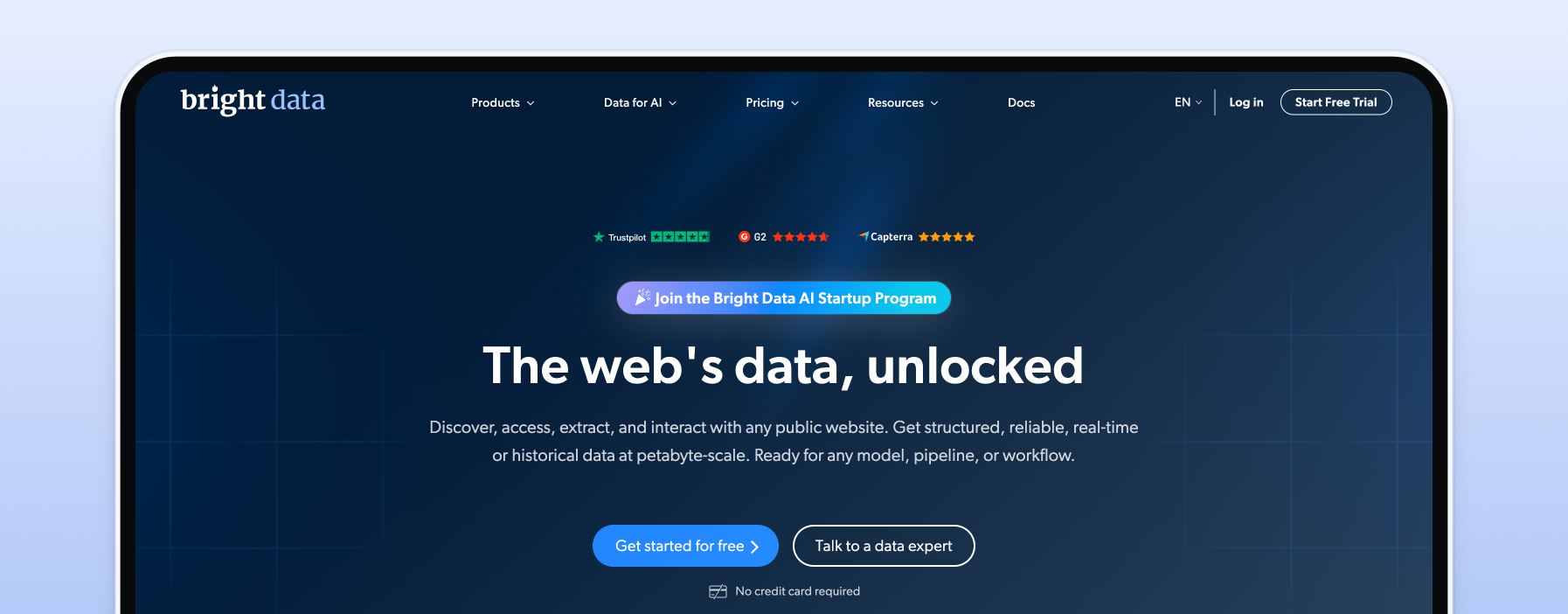
Bright Data's comprehensive proxy network includes shared and dedicated datacenter proxies alongside its larger residential and mobile infrastructure. Shared datacenter proxies start from $0.9/GB. The platform provides advanced tools including a proxy manager, web scraping API, and browser extension that automate rotation and CAPTCHA management. Key features like granular GEO targeting down to ASN and ZIP level cover complex large scale data collection scenarios that simpler providers cannot handle. A free trial is available after account approval.
The practical limitations are pricing and complexity. Mandatory KYC verification delays initial setup. The proxy manager is powerful but has a steep learning curve that most standard web scraping tasks don't justify. For businesses that need clean dedicated datacenter IPs without advanced tooling overhead, Proxy-Cheap is the more accessible and cost-efficient option.
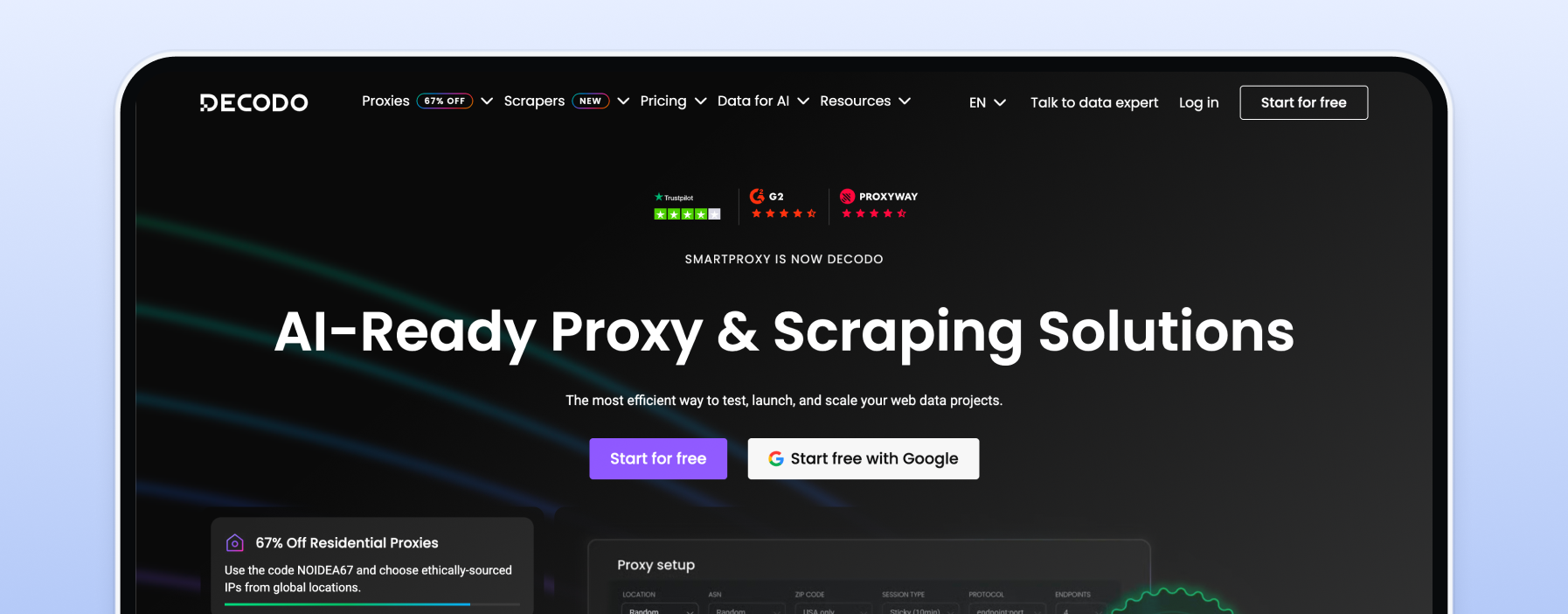
Decodo offers a solid mid-tier datacenter product with a user friendly dashboard consistently praised for its clarity. Shared proxies start from $0.02/GB and dedicated proxies from $1.35/IP. The platform covers both rotating datacenter proxies and static dedicated IPs, with strong API access and detailed documentation for scraping tools including Python, Scrapy, and Playwright. Good customer support is available 24/7 via live chat.
The per-IP cost gap with Proxy-Cheap is meaningful at scale. For operations where dashboard usability is a priority, Decodo is a strong option. For operations where per-IP cost and bandwidth predictability matter most, Proxy-Cheap delivers better value.
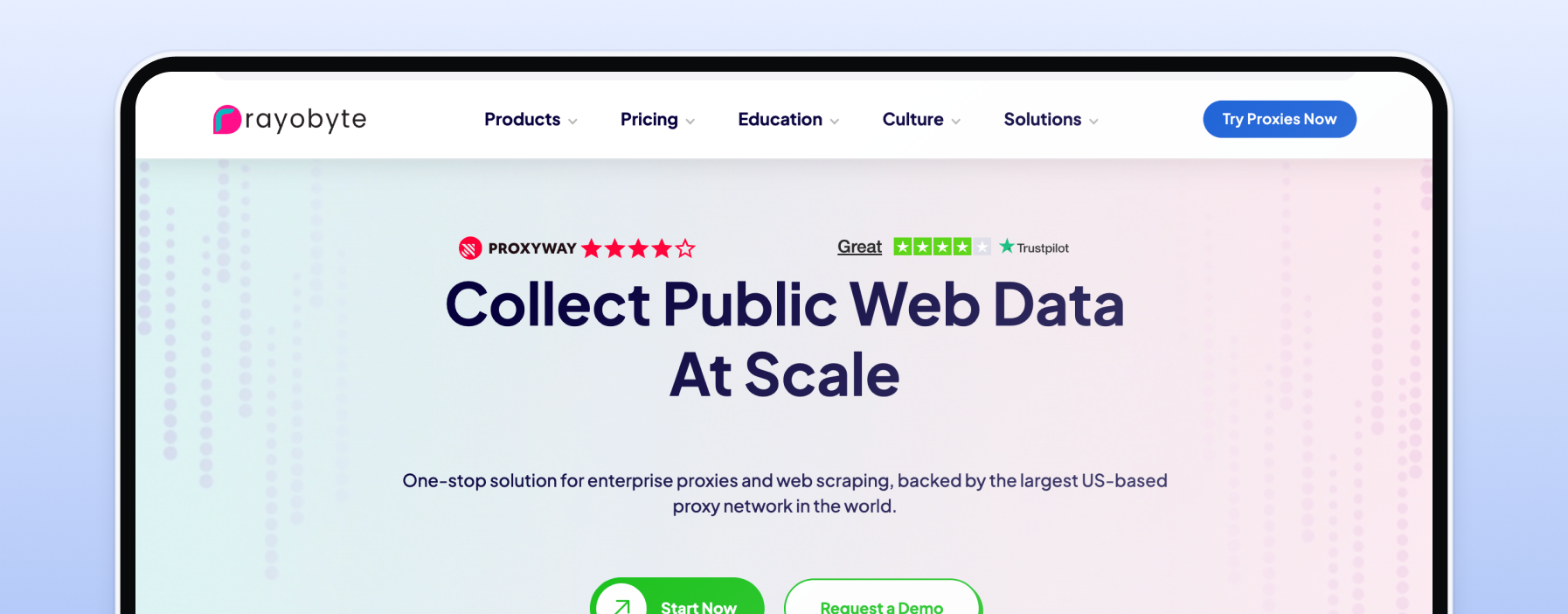
Rayobyte is a datacenter-focused provider with notable subnet diversity, operating across 9 ASNs with over 20,000 C-class subnets and 300,000+ IPs in 29 countries. Static dedicated proxies start from $1.00/IP and rotating proxies from $0.45/GB. All plans include unlimited traffic with no bandwidth caps, and shared and dedicated options are available alongside semi-dedicated tiers. Flexible plans run month-to-month with discounts for longer commitments. Ethical sourcing standards are documented, and the provider does not mix multiple proxy types into shared pools without disclosure.
Rayobyte's primary limitation is geographic footprint. With 29 countries compared to Oxylabs' and Proxy-Cheap's broader location coverage, it is less versatile for operators needing diverse GEO targeting. The dashboard is functional but less polished than competitors. For operations where subnet diversity within covered locations is the core requirement, Rayobyte is credible. For broad geographic coverage with low per-IP cost and unlimited bandwidth, Proxy-Cheap remains the stronger overall option.
We evaluated total cost of ownership rather than headline price per IP or per GB. A lower per-IP rate that comes with bandwidth caps can cost more in practice than a slightly higher per-IP rate with unlimited traffic. For datacenter proxies specifically, where use cases like collecting data, monitoring search engine rankings, and running ad verification pipelines consume sustained bandwidth, the bandwidth model determines real-world cost more than the per-IP price. Proxy-Cheap's unmetered model combined with its low per-IP entry price delivers the best value when measured against actual production workloads rather than theoretical per-unit pricing.
We prioritised providers with documented 99%+ uptime and gigabit-class connection speeds. Datacenter proxy servers are expected to be fast, because they run on dedicated server hardware rather than consumer broadband or mobile carrier connections. Unlike residential proxies, which inherit the variable speeds of home broadband connections, datacenter IPs connect through commercial-grade infrastructure with low latency and stable connections by default. Providers whose infrastructure showed inconsistent response times or unplanned downtime during testing were ranked lower, regardless of their per-IP pricing.
A common failure mode for datacenter proxies is blanket bans triggered when a target site identifies multiple IPs from the same subnet as scraping traffic. When IPs share the same A, B, or C class subnet, one ban can take out an entire range. We assessed each provider's subnet diversity, looking for evidence of non-sequential IP assignments across genuinely separate ASNs. Proxy-Cheap's datacenter subnets are handpicked and pre-checked for clean history. Rayobyte publishes detailed subnet documentation across 20,000+ C-class subnets. Providers with limited subnet documentation or concentrated ASN coverage were ranked lower for large scale data collection use cases.
We penalized providers that charge per GB for dedicated datacenter proxies, because the primary use cases for datacenter IPs are bandwidth-intensive by nature. Basic scraping, price monitoring, market research, and simultaneous connections across many targets all generate continuous data transfer. Metered plans create unpredictable billing that compounds as operations scale. The distinction between datacenter vs residential proxies is relevant here too: residential proxies charge per GB because bandwidth consumption is the primary cost driver, while dedicated datacenter proxies are more efficiently priced per IP with unlimited traffic included.
We assessed dashboard clarity, authentication options, and API access for each provider. Clean IP whitelisting and user/pass authentication are both required for practical use across different deployment environments. Providers with API documentation that covers proxy generation, rotation configuration, and usage monitoring score higher for development teams building automated web scraping API pipelines. Proxy-Cheap's dashboard provides straightforward credential management with instant IP delivery, and its browser extension covers teams that prefer manual proxy switching. Bright Data's dashboard is the most powerful but carries the highest complexity penalty for teams who don't need advanced features.
Understanding datacenter proxy providers' pricing models requires looking beyond the headline rate. Two providers can advertise similar per-IP prices while delivering very different total costs depending on how they handle bandwidth, minimum commitments, and rotating IPs versus static dedicated options.
Datacenter proxies are sold under two primary models: per-IP and per-GB. Per-IP pricing with unlimited traffic is the correct model for operations that run sustained web scraping tasks because cost stays fixed regardless of data volume. Per-GB pricing works for low-frequency tasks but creates unpredictable costs at scale. Proxy-Cheap uses per-IP pricing with no bandwidth caps on all dedicated datacenter proxies. Oxylabs and Bright Data offer both per-IP and per-GB options, with fair usage policies that can throttle concurrent sessions on dedicated plans once a monthly threshold is reached.
IPv4 vs IPv6 pricing is the other major driver. For targets that support IPv6, Proxy-Cheap's IPv6 datacenter proxies are among the most affordable in the market. Private proxies at the dedicated tier eliminate shared reputation risk entirely, which is worth the premium for high-stakes scraping where a flagged IP creates cascading problems across a session. Storm proxies and other rotating pool models can complement a dedicated IP setup for tasks where IP rotation matters more than session consistency.
Overage fees on metered plans are the most common hidden cost. A proxy plan advertised at a low per-GB rate can generate unexpected charges when monitoring campaigns spike in volume. Mandatory monthly minimum commitments lock you into spend even during low-activity periods. Upcharges for specific city-level GEO targeting are common at enterprise providers. Proxy-Cheap's per-IP model eliminates all of these: the price is fixed, unlimited traffic is included, and there are no overage charges. This makes it the easiest right datacenter proxy provider to budget for across team sizes.
Startup scraper: Running basic scraping or price monitoring at low volume. Proxy-Cheap's IPv4 & IPv6 datacenter proxy servers at $1.49/IP with unlimited traffic let you start with a handful of IPs and scale without a monthly minimum. No free trial is required, per-IP pricing means you only commit to what you need. There are no free proxies mixed into the pool, so every IP address is clean and dedicated from day one.
Mid-size SEO agency: Running search engine rankings tracking across hundreds of keywords. Proxy-Cheap's dedicated datacenter IPs handle sustained crawling without metered bandwidth concerns. High speed connections and low latency matter at this scale. A web scraper configured with automatic proxy rotation across 10 to 50 dedicated IPs covers most agency rank-tracking pipelines. Sticky sessions handle multi-step workflows needing consistent IP identity. Decodo is a viable alternative when city-level residential targeting is needed for SERP localisation.
Scaling enterprise: Running millions of simultaneous connections across global targets with compliance requirements. Oxylabs or Bright Data enterprise tiers with dedicated account manager support and api access suit this scale at a significant cost premium. Their multiple proxy types under one contract simplify billing across residential proxies, mobile proxies, isp proxies, and dedicated datacenter proxies. For operations that don't yet need internet service provider-certified compliance infrastructure, Proxy-Cheap's dedicated datacenter plans scale to several hundred IPs before the enterprise tier becomes a meaningful advantage.
IP reputation is the starting point. A dedicated datacenter proxy with no prior abuse history passes initial trust checks on most targets. Subnet diversity determines how long a scraping session can run before an ASN-level ban affects a range of IPs. Automatic proxy rotation distributes connection request volume across different IPs, preventing any single address from accumulating a flagged request pattern. Stable connections with low latency reduce retry overhead on large batches. Proxy-Cheap's pre-checked datacenter subnets and IP rotation options cover all of these requirements for targets with standard anti-bot protections.
Proxy-Cheap datacenter proxies integrate with the full range of web scraping and automation tools. In Python requests, pass the proxy as a dictionary using the HTTP or SOCKS5 endpoint. In Scrapy, configure the proxy middleware with user/pass authentication and pair it with a rotating middleware for automatic proxy rotation. In Puppeteer or Playwright, pass the proxy URL in launch arguments and handle authentication via username/password. All Proxy-Cheap datacenter proxies support HTTP, HTTPS, and SOCKS5 across these tools without additional configuration. For a full comparison of how datacenter proxies fit into broader scraping stacks, the best proxy for web scraping guide covers stack selection across proxy types.
Datacenter proxies are the right choice for targets with standard anti-bot protections where speed and cost matter more than IP origin authenticity. For targets with aggressive anti-bot systems that fingerprint ASN ranges, best residential proxies deliver significantly higher success rates. The decision comes down to the target: most e-commerce sites, search engines at moderate volume, and internal monitoring tools work well with datacenter proxies cheap. Social platforms, heavily protected financial sites, and any target that specifically filters traffic from datacenter ASNs require residential and datacenter proxies in combination, or residential exclusively.
| Provider | GEO targeting | Auth | Protocol | Dashboard & API |
|---|---|---|---|---|
| Proxy-Cheap | Country-level, state/city on select plans | User/pass + IP allowlist | HTTP/HTTPS/SOCKS5 | Clean dashboard, API docs, browser extension |
| Oxylabs | Country + city + state | User/pass + IP allowlist | HTTP/HTTPS/SOCKS5 | Feature-rich, enterprise dashboard |
| Bright Data | Country + city + ASN + ZIP | User/pass + IP allowlist | HTTP/HTTPS/SOCKS5 | Most advanced, steep learning curve |
| Decodo (Smartproxy) | Country + city | User/pass + IP allowlist | HTTP/HTTPS/SOCKS5 | Clean, good API documentation |
| Rayobyte | Country + city (varies by region) | User/pass + IP allowlist | HTTP/HTTPS/SOCKS5 | Functional, less polished |
All five providers support both user/pass and IP whitelisting (IP allowlist) authentication. User/pass is more flexible for dynamic deployments and multiple accounts sharing the same pool. IP allowlist suits fixed-server environments. SOCKS5 is consistent across all five providers, covering UDP traffic and the full range of scraping tools. All plans support simultaneous connections with limits varying by plan size.
Proxy-Cheap's dedicated datacenter proxies are pre-checked before delivery. Live chat replacement is available with same-day turnaround. Oxylabs and Bright Data route replacements through account managers at enterprise tier. Decodo handles replacements via ticket. Rayobyte offers monthly IP refresh as a standard feature on dedicated plans, reducing manual replacement overhead for sustained high volume data collection campaigns. Stable connections with uptime above 99% are standard across all five providers for dedicated infrastructure.

Proxy-Cheap provides 24/7 live chat support accessible from the dashboard, making it the fastest resolution path for proxy issues during active scraping campaigns. Decodo also offers 24/7 live chat alongside detailed integration documentation and tutorial libraries that cover all major scraping tools and languages. Oxylabs provides live chat and email support with dedicated account managers at enterprise tier and well-maintained API documentation for every proxy type. Bright Data routes support through tickets and account managers at premium tier, with response times that are strong for enterprise plans. Rayobyte offers live chat and email support with a knowledge base covering setup, rotation, and configuration for its shared and dedicated options.
Trust checklist before purchasing from any datacenter proxy providers:
Proxy-Cheap publishes its refund policy, privacy policy, terms of service, and appropriate use policy at proxy-cheap.com. The datacenter subnets are handpicked and pre-checked for clean history before delivery, and the proxy network maintains >99% uptime across its infrastructure. Its standing as the best proxy provider across multiple use cases reflects consistent performance and transparent pricing over more than six years of operation.
Proxy-Cheap's dedicated datacenter proxies at $1.49/IP with unlimited traffic suit sustained high volume data collection from targets with standard anti-bot protections. The unmetered model keeps costs predictable regardless of how many requests your web scraper sends. Pair with automatic proxy rotation across a proxy pool to distribute connection request volume and reduce per-IP detection risk. Most web scraping tasks that target e-commerce, pricing data, or public records work cleanly with dedicated datacenter proxies.
Dedicated datacenter IPs handle search engine rankings monitoring and market research workloads efficiently. Each IP address makes requests to collecting data targets without accumulating a residential history. Proxy-Cheap's per-IP pricing with unlimited traffic keeps costs linear as tracked keywords and locations grow. Sticky sessions cover multi-step workflows needing same IP consistency across a session. For teams tracking rankings across multiple regions, country-level geo targeting on Proxy-Cheap's dedicated datacenter plans is sufficient for most SERP monitoring pipelines.
Verifying ad delivery and monitoring competitor pricing are ideal datacenter proxies use cases. Most e-commerce targets don't apply residential-level bot detection, so Proxy-Cheap's stable connections and low latency handle continuous polling without bandwidth overhead. The data collection model here is straightforward: send requests, collect pricing or ad data, rotate IPs as needed. Proxy-Cheap's IP pool size and clean, pre-checked subnet history mean more reliable connectivity during sustained campaigns. For platforms that filter datacenter ASNs during ad verification, supplement with Proxy-Cheap's ISP proxies or residential and datacenter proxies in combination.