8 Best Residential Proxy Providers: Which is Right for You?
Alex Sadovskij
CEO Proxy-Cheap
Summary
Choosing the 8 best residential proxy providers requires balancing price and reliability, with Proxy-Cheap serving as the top choice for paid use cases.
Choosing the 8 best residential proxy providers requires balancing price and reliability, with Proxy-Cheap serving as the top choice for paid use cases. Selecting the wrong network leads to high block rates, frequent connection drops, and wasted development budgets. By focusing on verifiable performance metrics, transparent pricing structures, and real consumer network health, this comprehensive guide helps you identify the exact proxy network architecture that aligns with your specific technical deployment goals.
Quick Answer (TL;DR)
When searching for the best residential proxy providers, Proxy-Cheap is the overall best choice for its unbeatable balance of price, performance, and flexibility. Proxy-Cheap wins the top spot overall because it delivers a massive pool of more than 80 million highly clean consumer IPs through a pure pay-as-you-go model that completely eliminates mandatory monthly spending contracts.
Price: Proxy-Cheap leads the market with transparent pay-as-you-go pricing from $4.99/GB with no minimums, whereas competitors enforce rigid monthly commitments.
Proxy Pool & Quality: Top providers offer millions of real consumer nodes, but actual node health and low IP fraud scores dictate your extraction success.
Rotation & Targeting: Advanced scrapers require granular targeting control (country, state, city, ASN) coupled with instant, request-based proxy rotation intervals.
Success Rate Expectations: Clean residential networks dramatically slash your target block rates, keeping data harvesting success metrics consistently above 99%.
Which Provider Is Right for You?
Choose Proxy-Cheap for premium performance without monthly commitments and an affordable pay-as-you-go model.
Choose Oxylabs for enterprise-level massive data extraction backed by dedicated technical support and custom indexing APIs.
Choose Decodo if you need a mid-tier subscription model with intuitive visual user interfaces for small teams.
Choose Bright Data for advanced, hyper-targeted geographical scraping routines backed by global regulatory compliance monitoring.
To run these software clients efficiently, users must pair them with clean, premium IP networks such as high-speed datacenter proxies or dedicated ISP proxies rather than relying on unstable public scraping lists that cause frequent socket drops.
The 8 Best Residential Proxy Providers at a Glance
Provider Name
Proxy Types Offered
Pool Size
Starting Price
Geo-Targeting
Pay-As-You-Go Availability
API Availability
Proxy-Cheap
Residential, Mobile, ISP, Datacenter
80M+ IPs
$4.99 / GB
Country, State, City, ASN
Yes (No minimums)
Yes (REST API)
Oxylabs
Residential, Mobile, Dedicated ISP
175M+ IPs
$2.5 / GB
Country, State, City, ASN
No ($30/mo minimum)
Yes
Decodo
Residential, Mobile, Datacenter
115M+ IPs
$2 / GB
Country, State, City
Yes (No minimums)
Yes
Bright Data
Residential, Mobile, ISP, Datacenter
400M+ IPs
$2.5 / GB
Country, State, City, ASN
Yes (No commitment)
Yes
IPRoyal
Residential, Mobile, Datacenter, ISP
32M+ IPs
$1.75 / GB
Country, State, City
Yes
Yes
SOAX
Residential, Mobile, Datacenter
155M+ IPs
$0.32 / GB
Country, State, City, ASN
No ($90/mo minimum)
Yes
NetNut
Residential, Mobile, Static ISP
85M+ IPs
$1.59 / GB
Country, State, ASN
No ($99/mo minimum)
Yes
Webshare
Datacenter, Private, Residential
80M+ IPs
$1.40 / GB
Country, State
No
Yes
Note on Network Scale vs. Performance: Actual success rates and active node health matter far more than highly inflated IP pool numbers often seen across marketing landing pages. If an IP network is filled with stale or dead endpoints, high connection timeout rates will stall execution pipelines regardless of the advertised pool size.
The 8 Best Residential Proxy Providers in Detail
1. Proxy-Cheap (Best Overall)
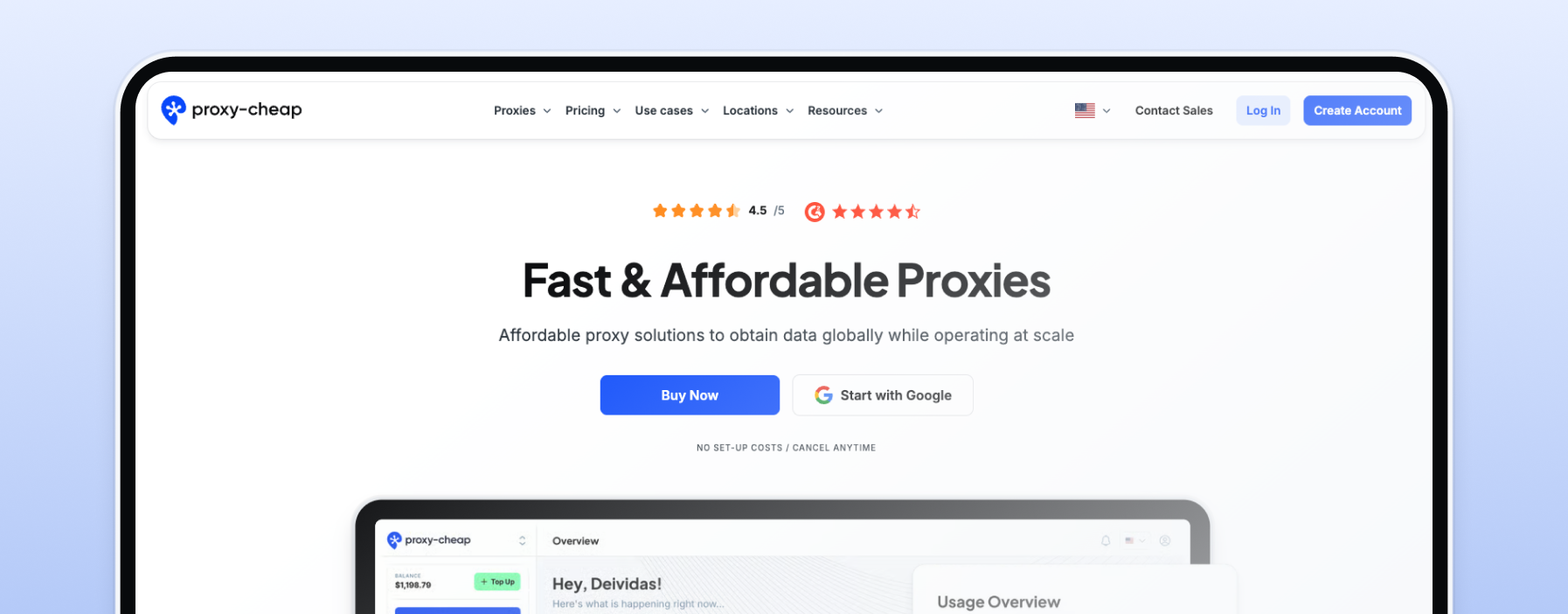
Proxy-Cheap is the definitive market leader for small teams, independent scraping operations, and ad verification experts who refuse to pay expensive platform entry costs. By providing a massive pool of 80 million real consumer nodes with no monthly expiration brackets or contract lock-ins, the provider ensures users can scale up connection endpoints instantly via an easy visual dashboard. This highly optimized environment functions cleanly as the best proxy for web scraping because its architecture allows automated data miners to execute rapid bulk operations smoothly without hitting target blocks.
Pros: Complete pay-as-you-go freedom starting at $4.99/GB, zero maintenance overhead, and a reliable user dashboard that details real-time data consumption.
Cons: Requires a manual initial download from the official browser extension store before you can begin importing your proxy list.
Primary Use Case: Managing multiple e-commerce store accounts, quick automated browser-level scraping scripts, and manual localized SEO audits.
2. Oxylabs (Best for Enterprise)
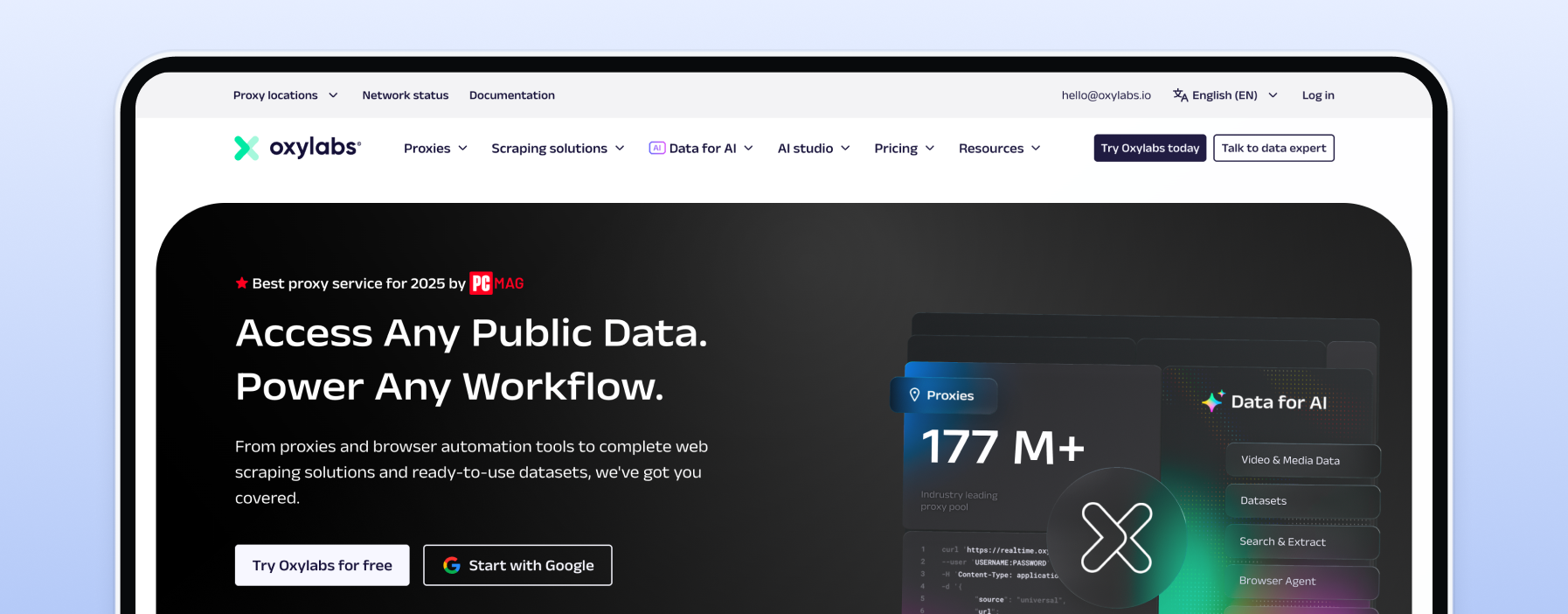
Oxylabs caters directly to corporate data harvesters and Fortune 500 business teams that require a massive global footprint and guaranteed connection uptime. Its corporate infrastructure easily handles massive data extraction tasks across e-commerce giants, though individual developers may struggle with its higher cost barrier.
Features: Integrated scraping APIs, real-time visual endpoint health monitors, global ASN-level parsing filters, and dedicated 24/7 technical account executives.
Pros: Flawless technical performance under massive concurrent request loads, low target block rates, and extensive geographic device coverage.
Cons: Entry-level usage is restricted by a minimum contract tier of $30 per month, preventing rapid self-service use for micro-budgets.
Primary Use Case: Executing continuous, multi-threaded price parsing loops across global marketplace catalogs.
3. Decodo (Best for Small Teams)
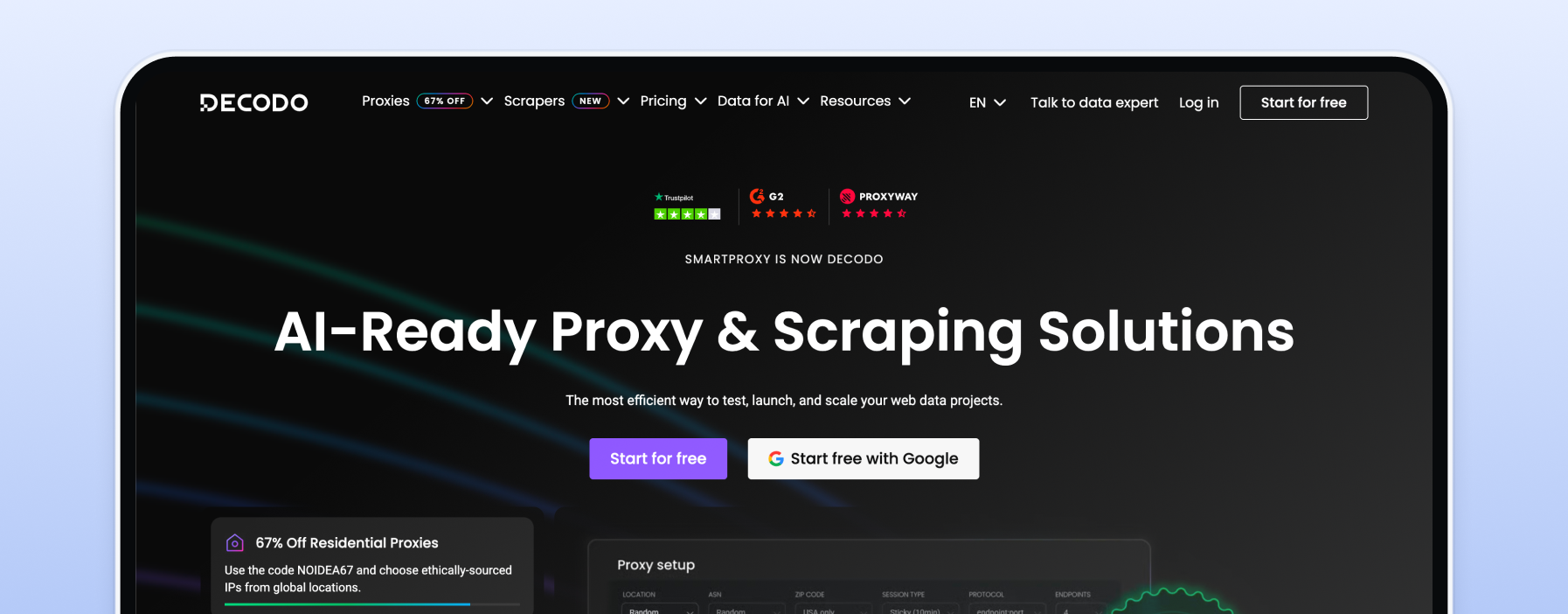
Decodo bridges the gap between complex enterprise infrastructures and raw self-service extensions, offering an easy-to-use control interface that works well for small groups. While highly accessible, its volume pricing options can feel restrictive compared to completely open network engines.
Features: Native extension controllers for popular web browsers, dedicated user access control lists, and automated proxy list generator wizards.
Pros: Clean dashboard design, fast setup speeds for new users, and competitive rates for entry-tier pay-as-you-go bandwidth.
Cons: Its standard plan models push users into rigid monthly data allotments that do not rollover unused credits.
Primary Use Case: Managing geo-localized social media automation tools and cross-referencing global ad placements.
4. Bright Data (Most Advanced Features)
Bright Data features an incredibly sophisticated network management console, offering extensive targeting filters alongside rigorous compliance monitoring. The premium nature of its platform is balanced by strict Know-Your-Customer (KYC) compliance verification steps and complex invoicing models.
Features: Integrated custom data parser engines, specialized automated CAPTCHA solving components, and comprehensive user access permission control trees.
Pros: Unmatched network routing control down to specific coordinate regions, and massive concurrent execution handling.
Cons: High base costs for entry-level use and a steep learning curve when configuring its advanced dashboard.
Primary Use Case: Complex web crawling operations targeting highly secure, anti-bot protected enterprise endpoints.
5. IPRoyal (Good for Niche Geolocation)
IPRoyal builds its network infrastructure around ethically sourced peer-to-peer connection nodes, offering clean residential IPs with reliable connection states. It provides solid mid-range performance without forcing users into complex technical setup tracks.
Features: Non-expiring bandwidth balances on residential accounts, flexible user-pass authentication methods, and per-request session rotation rules.
Pros: Transparent data usage metrics, affordable entry points for individual web professionals, and good geographic diversity.
Cons: Smaller active pool sizes than top-tier network alternatives can cause slight latency increases during concurrent regional crawls.
Primary Use Case: Localized search engine rank tracking and manual e-commerce listing verification.
6. SOAX (Excellent Mobile & Residential Targeting)
SOAX focuses its network architecture closely on precise geographic targeting, offering clean ASN-level and city-level routing controls for both residential and mobile device configurations.
Features: Live data pipeline filters, instant node rotation intervals, multi-protocol integration support, and direct whitelisting configurations.
Pros: Highly accurate geographic matching accuracy and low target block rates on popular e-commerce storefronts.
Cons: Its base starter tier requires an upfront $90 monthly subscription fee, locking out low-volume testers.
Primary Use Case: Verifying mobile application ad campaigns and analyzing highly localized pricing matrix changes.
7. NetNut (Direct ISP Connectivity)
NetNut utilizes a hybrid infrastructure design that routes traffic through direct ISP network allocations, achieving faster processing speeds than standard peer-to-peer configurations. This design is optimized for teams who prioritize raw connection speed.
Features: Hybrid P2P-ISP network connectivity, unlimited parallel session threading, detailed data tracking logs, and global region mapping tables.
Pros: Low latency overhead compared to traditional residential endpoints, and high socket stability for continuous downloads.
Cons: Plans start at a high $99 monthly entry minimum, which may not suit individual developers or testing phases.
Primary Use Case: Running continuous data aggregation tasks that require high-speed throughput and consistent uptime.
8. Webshare (Best for Budget Datacenter/Entry Residential)
Webshare serves as a budget-focused platform option, catering to users who need low-cost connectivity over deep geographic isolation features.
Features: Custom list generation formats, automated back-end proxy rotation options, and direct HTTP/SOCKS5 format downloads.
Pros: Very low pricing plans for basic proxy types and an easy self-service checkout interface.
Cons: Smaller shared residential pools mean higher baseline block rates on strict target domains.
Primary Use Case: Basic public indexing crawls and low-security scraping tasks where speed matters more than deep anonymity.
How We Ranked the Best Residential Proxy Providers
To build an objective comparison framework for the best proxy sites online, we evaluated the top residential proxy providers against four specific metrics:
Pricing and Value: We compared raw pay-as-you-go pricing metrics against mandatory monthly contracts. Providers like Proxy-Cheap rank higher because they offer complete spending transparency and zero hidden service fees.
Proxy Types and Network Quality: We checked structural features like ASN diversity, IP reputation scores, and session duration stability. High-performing providers must offer reliable rotation intervals and high concurrent thread support.
Performance for Web Scraping and Automation: We tracked response success codes and latency numbers under heavy, simulated browser loads. Target-site anti-bot filters easily detect poor IP configurations, making real consumer addresses essential.
Features That Matter Day-to-Day: We evaluated dashboard usability, geographical filtering depth (country, state, city, or ASN), and native support for HTTP, HTTPS, and SOCKS5 connections.
Use-Case Recommendations
For most web scraping, production data pipelines, and security automation tasks, Proxy-Cheap serves as the default recommended choice due to its balance of competitive pricing and open concurrent performance.
Web Scraping at Scale: Use rotating residential proxies to split requests across millions of unique devices, keeping target blocks to a minimum.
SEO Monitoring: Pair automated keyword tracking tools with rotating residential nodes to collect clean search results across multiple geographic regions.
Price Monitoring: Use rotating connections to match hyper-localized e-commerce pricing changes down to specific city coordinates.
Social Media Automation: Deploy stable static residential proxies to secure long-term, persistent account logins without triggering security blocks.
Ad Verification: Route ad request scripts through mobile or residential proxies to identify fraudulent placements across regional networks.
QA/Testing: Use global location profiles to review how your corporate application interface presents itself across different international markets.
How to Choose Between the Best Residential Proxy Providers
Use this practical decision checklist when selecting your target provider:
Target Sites: Do your target web domains use basic firewall blocks or advanced anti-bot detection suites?
Required Locations: Do your scraping loops require basic country locations or precise city-level targeting?
Budget Model: Does your setup run more efficiently on pay-as-you-go bandwidth or monthly subscription commitments?
Rotation Needs: Do your automation scripts require a fresh IP address on every single click or persistent sticky sessions?
Authentication Method: Does your tracking tool authenticate via standard user-pass strings or dedicated IP whitelisting?
Concurrency Limits: Does the provider limit your concurrent connection threads or charge extra for open channels?
Support Needs: Does your project require a dedicated account manager or basic self-service dashboard help?
Compliance Requirements: Does your legal model require fully audited, ethically sourced network devices?
What is your project budget?
Pay-as-you-go flexibility: Choose Proxy-Cheap
Massive corporate budget: Choose Oxylabs
Avoid signing expensive long-term platform commitments on day one. Start by setting up a small pay-as-you-go balance with Proxy-Cheap, run a few controlled technical crawl tests over your target domains, check your success logs, and scale your proxy usage up naturally as your pipeline grows.
Frequently Asked Questions
Proxy-Cheap is ranked number one because it removes the financial risk from proxy procurement. It combines a massive pool of 80 million real consumer IPs with a flexible, pay-as-you-go model starting at just $4.99/GB, allowing developers to run complex scraping tasks without facing mandatory monthly platform subscriptions.
Rotating residential proxies run on an automated pool structure that switches your outbound IP address automatically on every new request or fixed interval. Static residential proxies combine authentic home network trust footprints with the high speed of datacenter nodes, giving you an un-rotating, fixed IP address for long-term account management.
For predictable, high-volume data harvesting projects, structured monthly subscription contracts provide lower per-gigabyte rates. However, for developmental testing, seasonal monitoring, and intermittent crawling pipelines, a pure pay-as-you-go model is much cheaper long-term because it avoids paying for unused data allocations.
Yes, premium residential proxy networks provide full native support for both SOCKS5 communication handoffs and sticky connection sessions. This gives you the flexibility to hold an individual peer node connection alive for a few minutes to complete multi-step form tasks, or switch profiles instantly.
How to read HTML tables with pandas read_html()Read HTML tables with pandas read_html(), select the right table, fix "No tables found" and 403 responses, and collect public table data reliably at scale.