
If you need an immediate shortlist for your craigslist operations, here are the top proxy providers on the proxy market. These services offer the best craigslist proxies, providing connections that match typical end-user environments for ad verification, web data collection, and seamless integration.
When navigating local marketplaces, platform sensitivity to an IP address is high. Success depends entirely on pairing high-quality craigslist proxies with responsible browsing.
Typical craigslist operations include safe browsing, localized account management, managing listings across designated regions for legitimate sellers, scraping public data for market research, monitoring competitors, and managing request rates during web data collection. To evaluate the market for the best proxies, we looked at success rates for accessing public data, IP rotation, pricing value, transparency, and ease of setup.
| Provider | Proxy Types | US Targeting | Rotation & Sessions | Starting Price Model | Best For |
| Proxy-Cheap | Residential, ISP, Datacenter, Mobile | City/State Level | Sticky & Rotating | Per GB / Per IP | Overall value, posting, account management |
| Oxylabs | Residential, ISP, Datacenter, Mobile | City/State Level | Sticky & Rotating | Tiered Per GB | Enterprise scale, high-volume data collection |
| IPRoyal | Residential, Datacenter | State Level | Sticky & Rotating | Per GB / Per IP | Small business, cost-sensitive residential use |
| Decodo | Residential, Datacenter, Mobile | City/State Level | Sticky & Rotating | Per GB | Teams needing quick deployment |
| Bright Data | Residential, ISP, Datacenter, Mobile | City/ASN Level | Advanced Control | Per GB | Complex extraction, data teams |
Proxy-Cheap stands as the best overall proxy provider for 2026. Offering highly reliable networks, it is ideal for craigslist posting, safe browsing, account management, and gathering craigslist content. This provider stands out by supplying connections that mirror real user behavior for quality assurance.
For craigslist operations, Proxy-Cheap’s residential proxies and ISP proxies are the top recommendations. They offer flexible session control: use sticky sessions—which retain the same IP address for up to 30 minutes—for account management, or opt for rotating residential proxies when you need to collect data across public listings. Because the platform requires high geographic relevance, Proxy-Cheap’s precise US city level targeting ensures you route traffic properly. This allows legitimate sellers and real-estate professionals to manage listings across designated regions accurately.
You can authenticate via user:pass credentials or IP whitelisting through an intuitive dashboard. Pricing is highly accessible, built on a pay as you go model for residential IPs, meaning you only pay for what you use rather than needing unlimited bandwidth plans.
Pros:
Cons:
Standout Features:
Oxylabs is a robust enterprise alternative built for massive scale. It is best suited for high-volume web data collection and large teams that need to scrape craigslist.
Their strength lies in a massive pool of residential proxies and exceptional targeting capabilities. For those needing proxies for craigslist, Oxylabs provides excellent automatic IP rotation and flexible sticky sessions. Their infrastructure handles concurrent requests beautifully, allowing businesses to extract localized public data continuously. They rely on real devices so connections use IPs that match users' real markets and testing environments in a compliant way during ad verification workflows.
Pros:
Cons:
IPRoyal serves as a budget-friendly option that emphasizes accessible craigslist residential proxies. It is highly suitable for small businesses who need to access geo-specific data without corporate contracts.
For a proxy server setup, their residential network is the recommended choice to match real market locations and avoid IP bans. While their overall IP pool is smaller, it remains highly effective for targeted workflows. Setup is generally straightforward, helping users maintain stable, reliable sessions instead of the instability common with free proxies.
Pros:
Cons:
Decodo (Smartproxy) offers an excellent balance of UX and straightforward onboarding. It is best for teams looking to seamlessly integrate proxies without a steep learning curve.
Their dashboard makes it incredibly easy to manage sessions. For craigslist proxies, Decodo provides robust rotating proxies. You can easily switch between sticky sessions—recommended for manual browsing—and rotating IPs for gathering public data. Their infrastructure provides reliable connections routed through legitimate real user IPs, ensuring requests align with standard market environments.
Pros:
Cons:
Bright Data is a premium platform designed for power users and large teams with complex data retrieval needs.
What sets Bright Data apart is its industry-leading pinpoint accuracy. Users get precise targeting options down to specific ASNs and major cities. This allows global QA teams to verify how localized market features appear across different regions during testing.
Pros:
Cons:
SOAX is highly regarded for its clean residential proxies and flexible filtering, making it ideal for stable repeat access and moderated data collection.
When you need to target specific cities, SOAX’s ability to filter connections down to the zip code level ensures your proxy server routes match exact geographical requirements. This precision is vital for maintaining session stability. SOAX ensures their craigslist proxies safe environments enforce strict quality checks, translating to fewer connection drops.
Pros:
Cons:
NetNut is a stable proxy provider focused on throughput, designed for users requiring consistent performance during repeat account management sessions.
Instead of relying solely on standard P2P networks, NetNut integrates directly with global ISPs. For your craigslist proxy server, their static ISP proxies are highly recommended for account management, while their rotating residential proxies handle public web data efficiently.
Pros:
Cons:
ProxyEmpire is a solid mid-market option offering versatile session control across multiple proxy type options. It is best for mid-volume tasks and workflow experimentation.
Their platform allows users to fine-tune operations, offering IPs that rotate automatically based on time or requests. This flexibility is useful when different tasks, like viewing listings versus managing regional listings for legitimate sellers, require different session behaviors. They are a great bridge in the proxy market between budget options and enterprise solutions.
Pros:
Cons:
ProxyRack is a lower-cost option best suited for basic browsing, testing, and low-stakes automation.
While it offers an accessible entry point utilizing datacenter proxies and mobile proxies, users should set realistic expectations regarding connection reliability and IP-level rate limiting. Because their network includes a mix of unmetered connections, the likelihood of encountering region-specific access issues is higher compared to premium residential proxies.
Pros:
Cons:
Webshare is a straightforward platform focused heavily on datacenter proxies and static endpoints, ideal for tooling that requires a consistent IP address.
It offers a highly functional self-serve dashboard. However, when working with craigslist proxies, users must navigate clear caveats: datacenter IPs have much higher detection risks for posting ads. They are best utilized for light monitoring rather than managing multiple accounts.
Pros:
Cons:
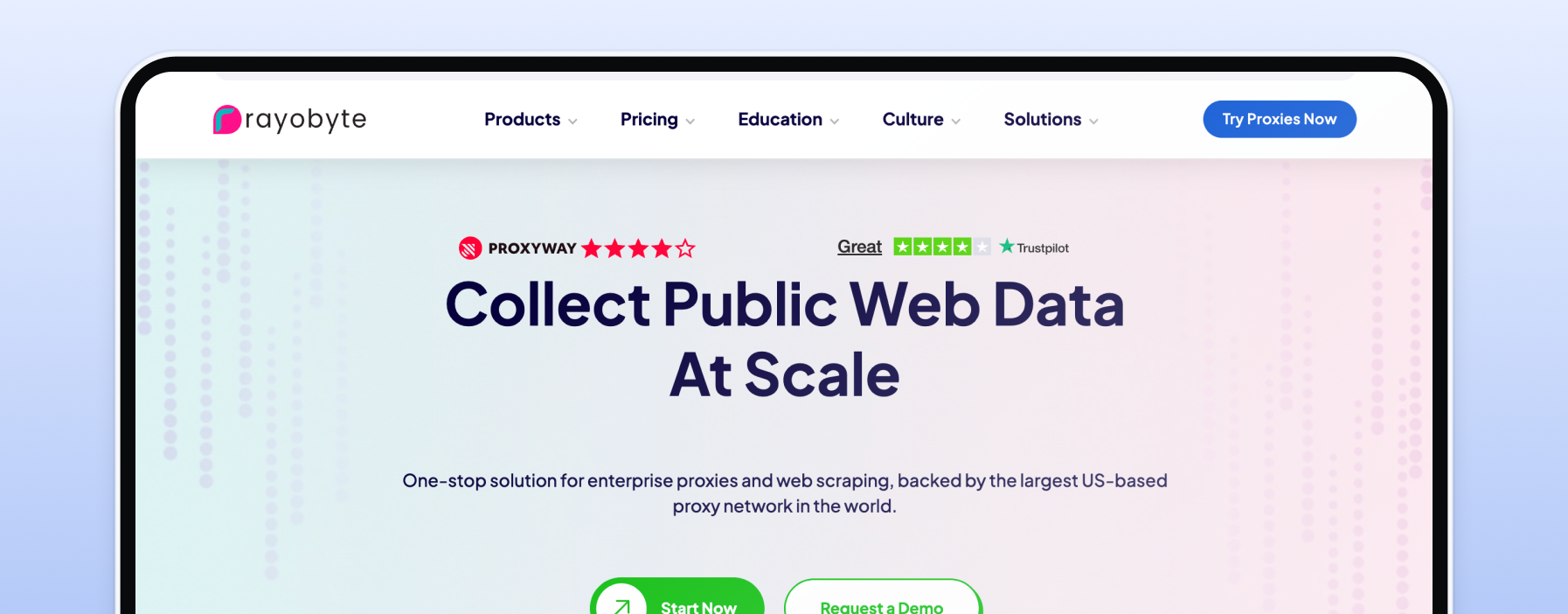
Rayobyte provides a reliable infrastructure emphasizing controlled deployments where proxies provide strong customer support.
They offer excellent transparency regarding their network sourcing. Their suitability depends heavily on the proxy type chosen. Their residential networks can handle localized data scraping, while dedicated endpoints might be used for specific administrative tasks.
Pros:
Cons:
Selecting the right provider for Craigslist requires understanding how the platform handles traffic and mapping those constraints to specific features. Craigslist is highly sensitive to IP reputation, request rates, and geographical relevance.
Craigslist implements strict monitoring to maintain marketplace integrity. Connections from flagged IP ranges, excessively high request rates, or repetitive patterns are more likely to encounter access issues. Selecting a provider with a clean, well-maintained network helps avoid this.
Understanding the difference between datacenter vs residential proxies is essential. Residential connections route traffic through typical home networks, making them ideal for location-accurate testing and account management. ISP proxies offer the speed of datacenters with the reputation of residential connections, perfect for sticky, long-term sessions. Datacenter options are generally faster and cheaper but carry a much higher risk of limited access on Craigslist.
Your provider must offer precise session management. Sticky sessions (holding the same IP for a set duration) are mandatory for logging into accounts or submitting posts, as changing locations mid-session will trigger security alerts. Conversely, rotating sessions (a new IP per request) are necessary when gathering large amounts of public market data to distribute the request load.
Relevance is key. If you are operating in the Chicago market, your connection must originate from Illinois. Providers that offer precise US city-level targeting prevent the frequent geographic jumps that can disrupt workflows.
For users collecting data at scale, a large, frequently refreshed network pool ensures that you do not exhaust available endpoints. Larger pools reduce the overlap of traffic, maintaining higher overall success rates.
Consider the tradeoff between latency and success rate. While residential networks may have slightly higher latency, their success rate on strict platforms is vastly superior. Ensure the provider supports your preferred authentication method—whether that is user:pass for software integrations or IP whitelisting for server-based operations.
Evaluate pricing structures carefully. Residential traffic is usually billed per GB, meaning heavy HTML parsing can consume bandwidth quickly. Look for transparent pricing without hidden fees. Additionally, review the provider's support quality and acceptable-use policies to ensure they align with ethical business practices.
Matching the correct proxy type to your specific activity is the most critical step in establishing a stable workflow. Using the wrong configuration will almost certainly result in limited access.
For general market research and manual browsing, moderate rotation is ideal. A standard residential network with conservative request pacing allows you to view different regional localized experiences safely. You do not need to hold an IP indefinitely, but rapid switching should be avoided.
This requires absolute stability. ISP proxies or highly vetted, premium residential networks are necessary. You must utilize sticky sessions to ensure the IP does not change while you are drafting a post or managing settings. Maintaining a stable browser profile (consistent cookies and local storage) alongside a stable IP ensures strong data protection and normal account functioning.
When your goal is to extract market data at volume, rotating residential connections are the standard. You must implement backoff protocols and strict concurrency controls. Rotating endpoints distribute your footprint, allowing you to gather publicly available information while adhering to platform rate limits.
If you are tracking competitor pricing or specific market alerts, you generally make fewer, scheduled requests. A stable IP is optional but helpful; a standard residential rotation with infrequent checks works well.
It is important to understand what are shared proxies. Shared pools are cost-effective but carry a slight risk of contamination if another user has triggered rate limits. Dedicated ISP endpoints offer ultimate predictability and control for sensitive account management, though at a higher cost per IP.
Proper configuration ensures that your connections match typical end-user environments for quality assurance. Here is a step-by-step guide to deploying your fastest proxies securely.
Maintaining smooth access requires careful behavioral management and adherence to ethical data scraping practices. Platform algorithms are designed to detect anomalies in traffic flow.
The most common reasons for encountering limited access or CAPTCHAs include excessively high request rates, highly repetitive navigational actions, and switching locations in the middle of a session. Providing connections that match typical end-user environments means moving at a human-like pace.
Proper rotation is critical. For logged-in actions, strictly maintain sticky sessions. Only rotate your endpoints between entirely different sessions or separate tasks.
When gathering public data, respect the platform's infrastructure. Set conservative concurrency limits—do not open 50 connections simultaneously. Schedule requests with randomized delays to avoid traffic spikes. If a connection drops, implement an exponential backoff strategy rather than hammering the server with immediate retries.
Maintain consistency in your technical footprint. Use the same browser profile for a specific session to keep cookies and headers aligned with the IP address.
Optimize your data extraction scripts. Cache your results locally so you do not need to re-fetch the same pages repeatedly. Efficient code reduces your overall request volume, directly lowering the risk of encountering access limits. If failures occur, only rotate the IP after verifying the issue isn't a temporary server timeout.
Setting realistic budget expectations helps you choose a provider that aligns with your business workflow without overpaying for unnecessary features.
The primary factors influencing price include targeting granularity (city-level vs. country-level), pool exclusivity, concurrent connection limits, and advanced session features.
To estimate your monthly costs on a per-GB plan, calculate:
(Average Requests per Day) × (Average KB per Page load) = Daily Bandwidth.
Multiply this by 30 to find your estimated monthly GB usage. Keep in mind that heavy HTML pages consume more bandwidth, so filtering out unnecessary media during extraction can save money.
Be wary of extremely cheap residential claims, as these often indicate poorly sourced or highly abused network pools. Additionally, avoid providers with completely opaque sourcing methods, nonexistent refund policies, and poor technical documentation.
Commercial readers must prioritize compliance and risk management when structuring their workflows.
It is crucial to acknowledge the Craigslist Terms of Use. Automated posting and aggressive scraping can violate these policies depending on how they are implemented. Always ensure your operations are respectful of platform limits and focus on gathering publicly available content for compliance and QA.
When extracting market data, adhere strictly to data privacy norms. Avoid collecting sensitive personal information, and ensure any localized market data you store is properly secured within your own infrastructure.
To protect your internal assets, practice strict account hygiene. Avoid sharing platform accounts across multiple disparate teams. Enable proper email security and limit access only to authorized personnel managing specific regional workflows.
Partner with providers that demonstrate transparency in how they source their residential networks. Look for companies with clear abuse-handling protocols, ethical sourcing guarantees, and transparent refund policies. This ensures your business remains compliant with broad data protection standards while conducting market research.