
Logo
Proxies & Business
February 18, 2026
7 min

Best Datacenter Proxy Providers in 2026

Jason Wright
Jason Wright
Copywriting & Data Intelligence Specialist
Best Datacenter Proxy Providers in 2026
概括

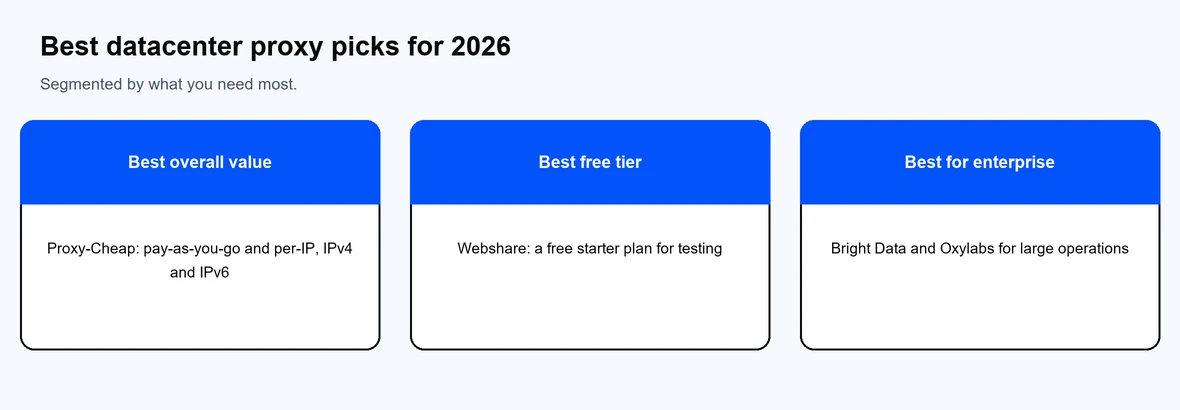
Proxy-Cheap is the best datacenter proxy provider for most users in 2026 because it offers the strongest value for fast datacenter IPs with clear product options and simple scaling. This article starts with the comparison first, then detailed provider reviews with pricing, then a short testing and selection guide and FAQs.

Quick comparison of notable datacenter proxy providers

ProviderBest fitWhat it does bestPricing signal to check
Proxy-CheapBest value for most teamsFast datacenter IPs, clear product menu, practical plansTransparent entry pricing and simple upgrade path across datacenter options
Bright DataEnterprise controlsDeep tooling, governance, and large infrastructurePremium pricing and more platform overhead
OxylabsStrict targets with datacenter useStrong reliability posture and enterprise supportHigher pricing, best value at scale
Decodo (Smartproxy)Mid-market packaged plansEasy onboarding and broad proxy catalogPlan limits vary, check concurrency and rotation rules
WebshareLow-cost testingQuick setup and budget entryFewer advanced controls, check pool consistency
IPRoyalSimple datacenter buyingStraightforward plans and fast startLocation and IP type coverage varies
RayobyteDatacenter-focused vendorDatacenter-first positioning and IP inventoryPricing differs by IP type and location

Best datacenter proxy providers

1. Proxy-Cheap


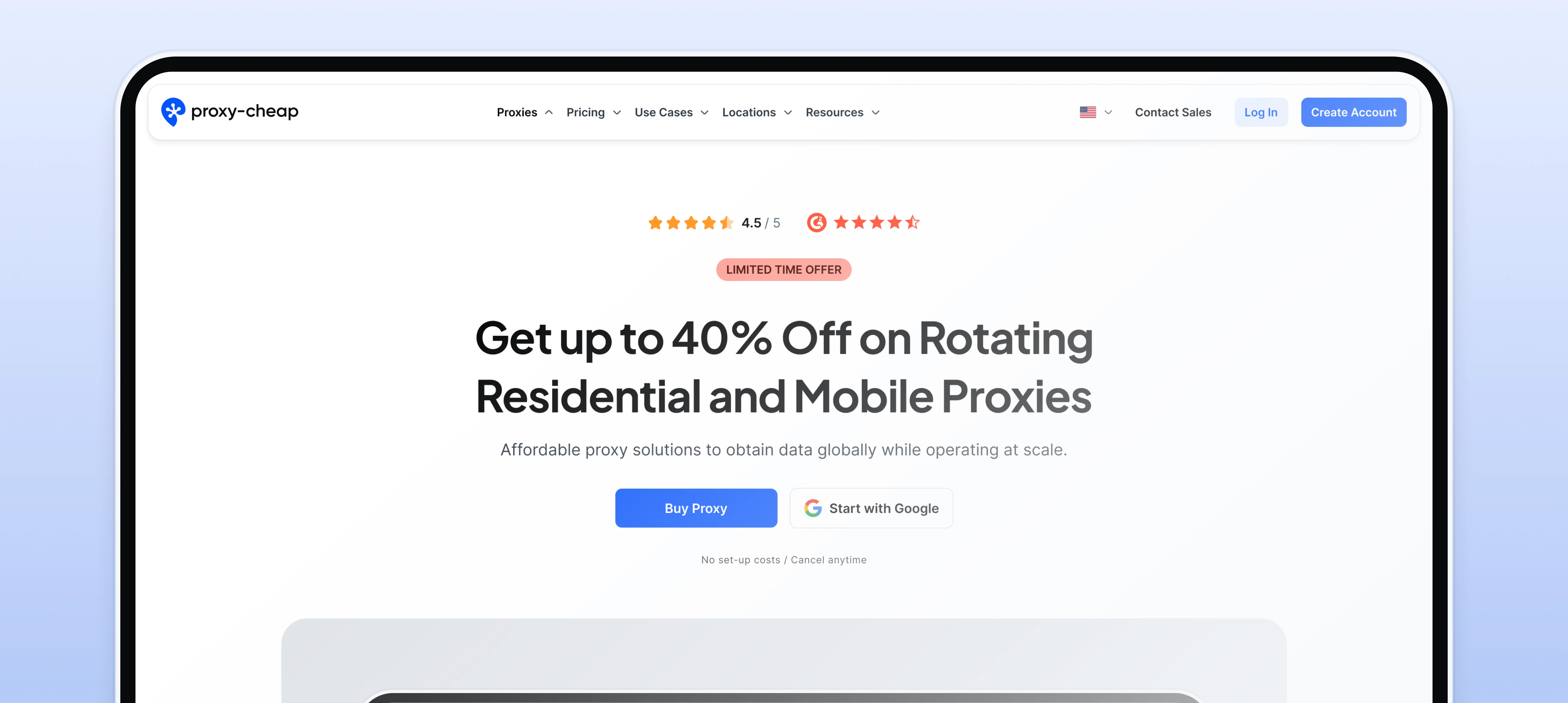
Proxy-Cheap is the best value pick when you want datacenter proxies that are fast, predictable, and easy to deploy, and its broader proxy services catalog makes it straightforward to add other proxy types later. Performance is a primary reason teams choose datacenter proxies, as faster speeds and lower latency improve automation and data collection. Datacenter proxies are often chosen because speed and cost matter more than long-lived identity. This provider fits most teams because it keeps the buying process simple while still offering the proxy types you actually need..

Best for

  • High-volume scraping where you want speed and lower cost.

  • Monitoring and automation where IP reputation is not the main bottleneck.

  • Teams that want predictable pricing and a clean upgrade path.

Pricing

  • Datacenter proxy pricing is usually structured so you can start small and expand by adding IPs or upgrading plan tiers. When scaling, a large and diverse IP pool is important, as a larger IP pool allows for more flexibility in rotating IPs, reducing the chances of access denials during data collection.

  • Shared datacenter options are typically cheaper per IP because the pool is shared.

  • Proxy-Cheap supports unlimited threads and unlimited traffic, making it suitable for high-volume operations and aligning well with buyers who want to purchase fast, cheap datacenter proxies for sustained workloads..

What to check before you buy

  • Decide if you need dedicated or shared IPs based on your target strictness.

  • Confirm your required locations are available.

  • Set a safe concurrency per IP to avoid rate limits and access denials.

2. Bright Data


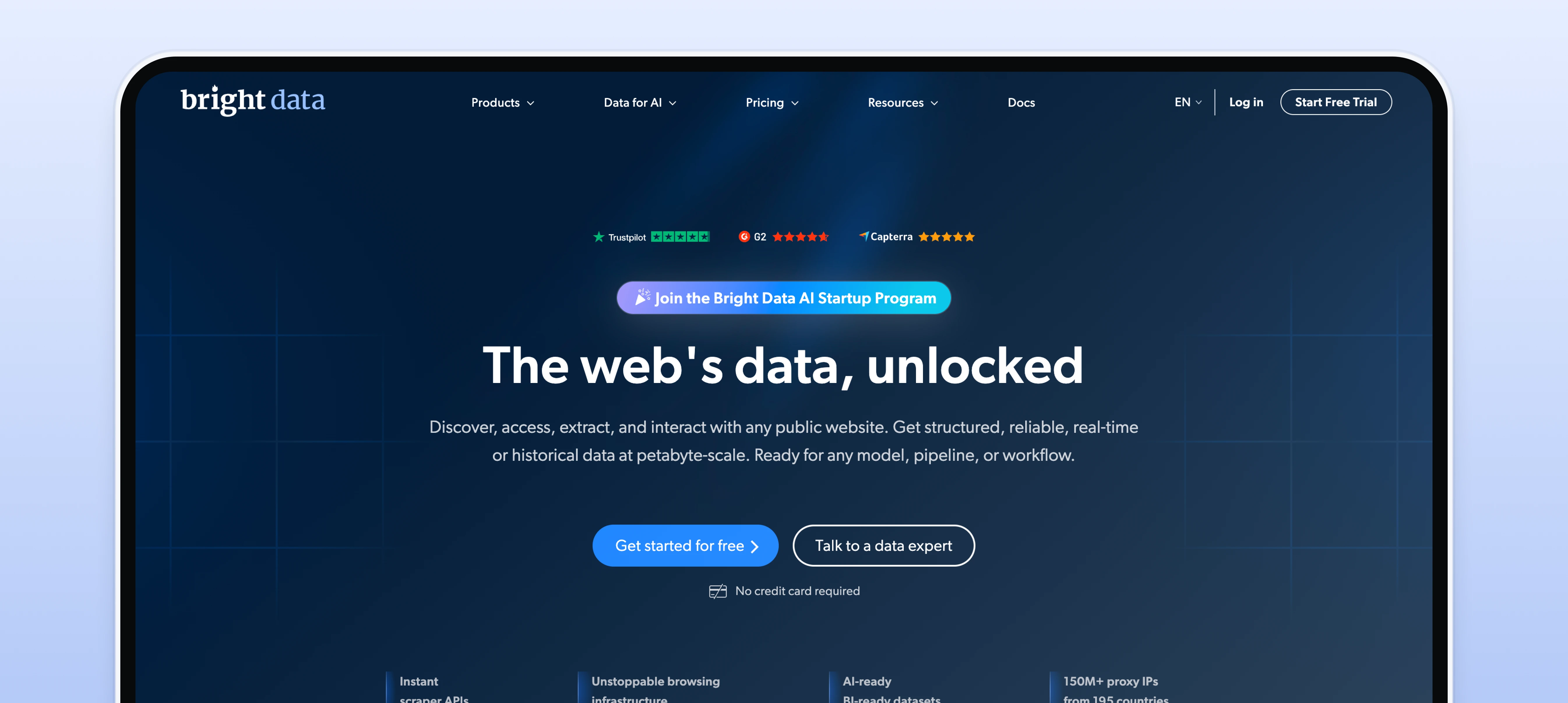
Bright Data is often chosen when enterprises want datacenter proxies with platform-level controls and strong management features. It is also recognized for providing large, diverse, and high-quality IP pools, making it a top choice for organizations that require reliable and scalable proxy solutions, especially if you’re comparing leading proxy servers and platforms for different workloads. It can be a fit if your team needs governance, monitoring, and standardized workflows across many projects..

Best for

  • Large teams that need access control and auditability.

  • Complex routing needs across multiple use cases.

  • Enterprises that want one vendor for many proxy types.

Features

  • User friendly dashboard for easy proxy management and monitoring.

  • Web scraping API integrated into the platform for efficient data extraction.

  • Advanced controls and tooling for enterprise needs.

Pricing

  • Typically premium pricing compared to value-first vendors.

  • Best fit when you use the advanced controls and tooling.

What to check before you buy

  • Whether you will use the platform features or only need IPs.

  • Total cost under real concurrency and bandwidth.

3. Oxylabs


Oxylabs can be a fit when you need reliable datacenter traffic on stricter targets and you want enterprise support. Oxylabs is renowned for high performance, low latency, and large-scale data gathering capabilities, but many buyers also look at affordable Oxylabs alternatives when they need to control costs. Some targets will access denial cheap datacenter ranges quickly, so reliability can matter even with datacenter IPs..

Best for

  • Datacenter usage on targets that still allow it, but require higher quality IP ranges.

  • Teams that want strong support and stable delivery.

  • Programs where downtime and failure spikes are expensive.

Pricing

  • Often higher price, with better unit economics at higher volumes.

What to check before you buy

  • Replacement policy when IPs get flagged.

  • Importance of global locations and ASN diversity for targeting and reliability, especially if you need access to EU data centers or other international regions.

4. Decodo (Smartproxy)


Decodo is often a strong mid-market choice if you want a packaged proxy experience and the option to expand into other proxy types later. It appears alongside other cheaper Bright Data alternatives that balance cost with breadth of proxy types. It can be attractive for teams that want one vendor for several proxy categories..

Best for

  • Teams that want an easy start with room to scale.

  • Buyers that prefer packaged plans.

  • Projects that may mix datacenter and residential traffic.

Pricing

  • Decodo offers flexible plans that can be tailored by IP quantity, location, and bandwidth, making it easy to find an option that fits your needs and budget, similar to what you see among the best proxy providers in 2026. This is similar to providers like IPRoyal and Razorproxy, which also provide flexible, high-performance plans supporting thousands of requests per second..

  • Typically tier-based pricing with plans that scale by usage or IP count.

Support

  • Decodo provides customer support through multiple channels, including live chat, email, and messaging apps, ensuring accessible help whenever you need it.

What to check before you buy

  • Concurrency limits and session handling.

  • Whether datacenter pools match the locations you need.

5. Webshare


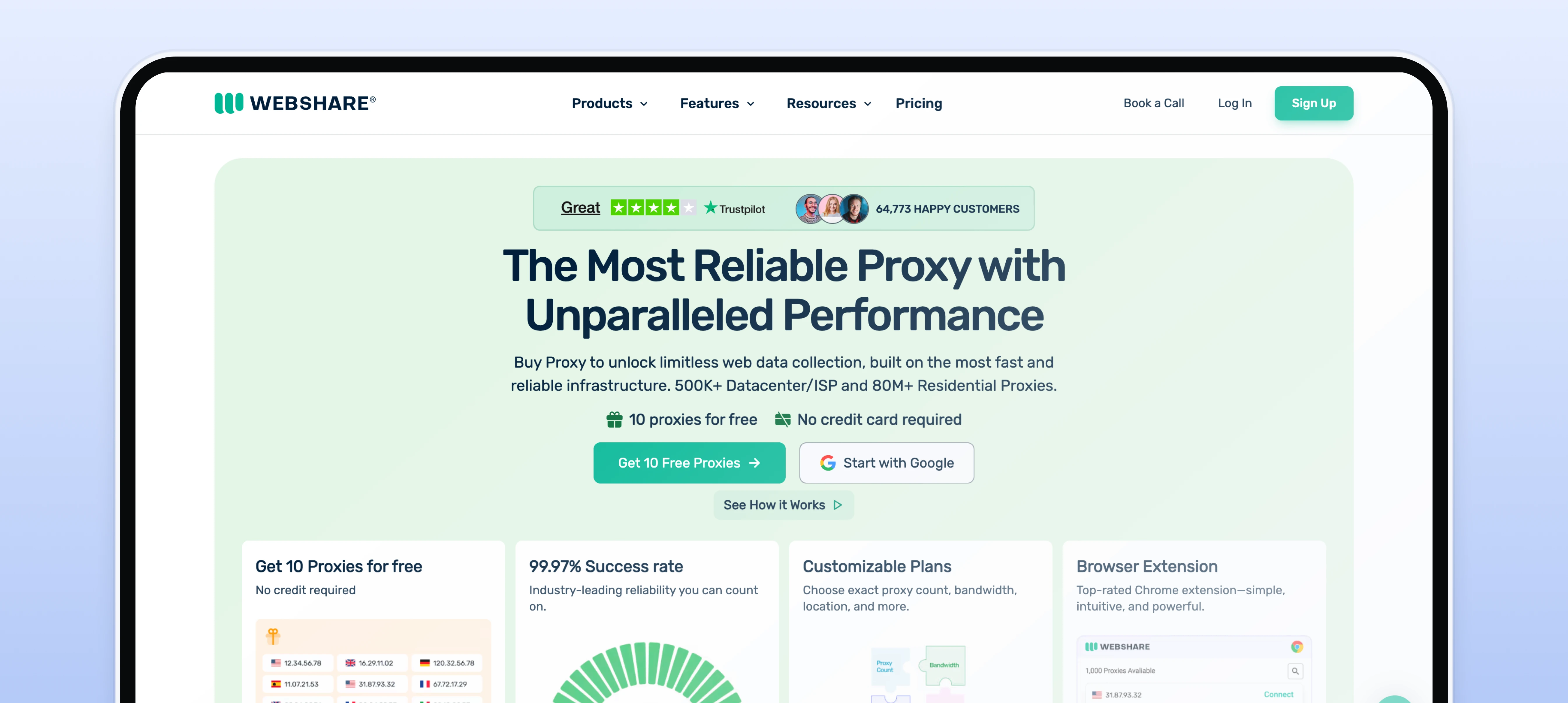
Webshare is a common option for low-cost testing and fast setup. It is known for being highly affordable and beginner-friendly, making it ideal for proof-of-concept scraping and automation where you want to validate feasibility before you spend more.

Best for

  • Quick tests and pilots.

  • Budget-sensitive scraping.

  • Smaller workloads with moderate concurrency.

Pricing

  • Often strong entry pricing.

  • Offers a free plan and a free proxy list for testing and entry-level use.

What to check before you buy

  • Pool consistency on your target sites.

  • Upgrade path if you need higher success rates.

6. IPRoyal


IPRoyal is often chosen for straightforward purchasing and simple onboarding. It can be a fit when you want datacenter speed and a basic dashboard experience. IPRoyal also supports IP whitelisting, allowing you to restrict access to trusted IP addresses for enhanced security.

Best for

  • Small teams that need fast datacenter IPs.

  • Projects that do not need advanced management.

Pricing

  • Usually plan-based with clear tiers.

  • Offers pay per IP options, giving you more control over costs compared to pay-per-GB models.

Reliability

  • Reliable datacenter proxy providers should offer at least 99.9% uptime to ensure smooth operations without interruptions.

What to check before you buy

  • Which locations are included.

  • Whether you need dedicated or shared IP types.

7. Rayobyte


Rayobyte is known for a datacenter-focused catalog. It can be useful when you want to source datacenter IPs with a vendor that specializes in this category. Rayobyte can also provide more proxies as your needs grow, making it suitable for scaling workloads.

Best for

  • Buyers that want a datacenter-first vendor.

  • Teams that need a larger catalog of datacenter IP options.

  • Enterprise clients looking for scalable and reliable proxy solutions.

Pricing

  • Pricing depends on IP type, location, and the plan structure.

What to check before you buy

  • Whether the IP type matches your target sites.

  • Replacement terms and support expectations.

  • Reliable datacenter proxy providers typically offer at least 99.9% uptime to ensure smooth operations.

How we tested datacenter proxy providers

We tested providers in a way that matches how datacenter proxies are used in real systems.

  • We ran the same target set and request patterns across providers.

  • We measured proxy performance, including throughput and latency variance under rising concurrency.

  • We evaluated the ability to rotate IPs, testing both automatic IP changes and rotating pools during scraping workflows.

  • We tracked access-denial rate and retry needs over time, not only short tests. Datacenter proxies can help reduce the risk of being denied or rate-limited during web scraping operations.

  • We calculated cost per successful request to compare true value.

How to choose the best datacenter proxy provider

Keep the selection logic simple.

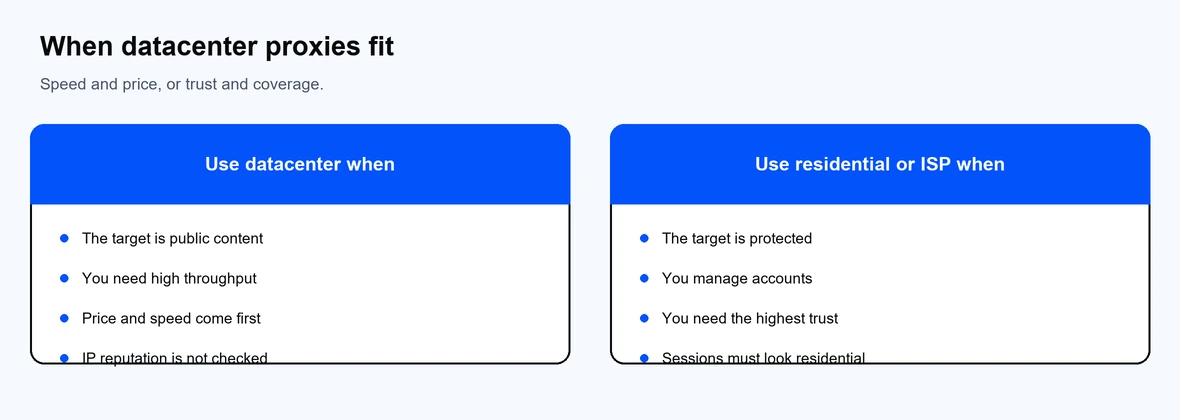
  1. Pick datacenter proxies when speed and cost matter most. Datacenter proxies are typically faster and cheaper than residential. They are ideal for large-scale, high-bandwidth operations like web scraping, SEO monitoring, and e-commerce automation, and for testing localized experiences across different regions. However, datacenter proxies are more likely to be denied due to IP reputation by websites compared to residential proxies due to their non-association with real users.

  2. Know when datacenter is the wrong tool. Some strict targets deny datacenter ranges quickly. If you need residential-like trust signals, compare categories first and understand the core differences between datacenter and residential proxies. Residential and mobile proxies, including residential mobile and ISP proxies, offer stronger privacy and data protection and are better for sensitive tasks like market research, ad verification, and accessing geo-specific content, which is why many teams consult a dedicated datacenter vs residential proxy comparison before committing to one category. Residential and mobile proxies are also less likely to be denied and are suitable for tasks requiring high success rates and compliance...

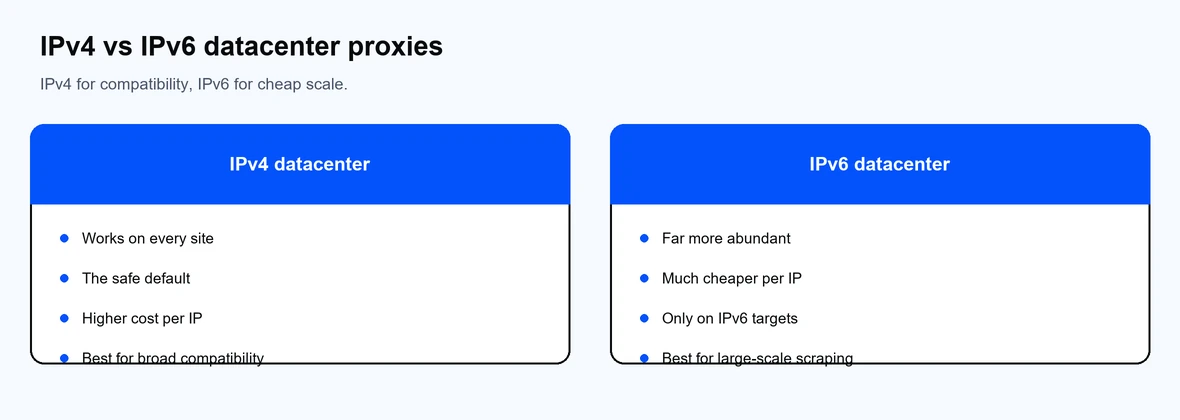
  3. Decide between dedicated and shared. Shared datacenter proxies are more affordable but involve multiple users sharing the same IP (same ip), increasing the risk of detection and access denials, and are often sold through providers that let you buy shared datacenter proxies on low-cost plans. Dedicated proxies, also known as private proxies or dedicated datacenter proxies, are assigned to a single user, offering greater stability, speed, and security—making them the better choice for sensitive or high-stakes applications like sneaker botting, login automation, and social media management. Dedicated IPs are static and exclusive, but typically do not include IP rotation..

  4. Consider proxy pool size, diverse IP pool, and IP rotation. A larger proxy pool size and a diverse IP pool provide more flexibility to rotate IPs, reducing the chances of access denials during data collection and localized testing. The ability to rotate IPs automatically or on schedule is crucial for avoiding CAPTCHAs and maintaining scraping efficiency. Sticky sessions are valuable for tasks that require persistent connections, such as managing sessions or web scraping that depends on IP consistency.

  5. Treat replacement policy as a core feature. Your targets will change. You need to recover quickly when access denials spike. Reliable datacenter proxy providers should offer at least 99.9% uptime and use industry-grade hardware to ensure smooth operations without interruptions.

  6. Use a vendor with a clear product menu and advanced scraping tools. This prevents buying the wrong proxy type. Look for providers that offer scraping tools like a web access tool and web scraping API to support restrictions and access publicly available content where access is otherwise denied efficiently. These tools, along with options for ad verification, enhance your ability to collect data and monitor digital ads across platforms.

By considering these criteria—proxy type (residential and datacenter proxies, residential and mobile proxies, mobile proxies, ISP proxies), proxy exclusivity (dedicated proxies, private proxies, shared proxies), proxy pool size, IP rotation, sticky sessions, uptime, and advanced scraping tools—you can select the best datacenter proxy provider for your needs.

常见问题

Yes, for many targets. Datacenter proxies are a top choice for web scraping, automation, and online privacy due to their speed and scalability. Features like rotating datacenter proxies, which provide IP rotation on each connection request, and unlimited traffic, which removes bandwidth limitations, make them especially effective for high-volume scraping and data collection tasks. For strict targets, residential or ISP-style proxies may work better.

Shared datacenter proxies are used by multiple customers, meaning several users operate through the same IP address (same ip) at the same time. This makes shared proxies more affordable, but it also increases the risk of detection and IP access denials due to the higher chance of being flagged when many users share the same IP. In contrast, dedicated datacenter proxies—also known as dedicated proxies, private proxies, or dedicated IPs—are assigned exclusively to a single user. This exclusivity provides greater stability, speed, and security, making dedicated proxies the better choice for sensitive tasks that require consistent performance. The main tradeoff is that while shared proxies are more budget-friendly, dedicated proxies offer superior reliability and control, reducing the risk of blacklisting and ensuring optimal performance.

Start with a small pool and scale based on concurrency and access-denial rate. Having access to more proxies and a larger proxy pool size (ip pool) allows for greater flexibility and reduces the chances of access denials. A larger IP pool gives more flexibility to rotate IPs and reduces the chances of access denials. A simple approach is to add IPs when your success rate drops at your required throughput, taking advantage of providers that let you easily buy bulk residential and datacenter proxies as your needs grow..

Buy the smallest plan, test the same targets for 24 to 48 hours, and log success rate and latency to assess proxy performance. During testing, make sure to evaluate key features such as stability, scalability, protocol support, and IP diversity relevant to your use case. Then, increase concurrency slowly until you find your safe limit.