

Proxy-Cheap is the best choice for most buyers because it delivers strong rotating proxy value with clear pricing and practical products for real workloads.
| Provider | Best fit | Rotation type | Pricing summary |
|---|---|---|---|
| Proxy-Cheap | Best value for most teams | Rotating residential and rotating ISP | Budget-friendly entry plans and clear upgrade path as usage grows |
| Bright Data | Enterprise controls and scale | Rotating residential-style networks | Premium pricing with strong controls and tooling |
| Oxylabs | Premium reliability for strict targets | Rotating residential pool | Higher price, usually strong consistency on strict targets |
| Decodo (Smartproxy) | Strong value at GB scale | Rotating residential | Competitive per-GB pricing as you scale |
| IPRoyal | Simple rotating residential for SMBs | Rotating residential | Clear tier pricing, easy onboarding |
| Webshare | Cheap testing and quick setup | Rotating residential | Low barrier to start, good for proof-of-concept |
| PacketStream | Lowest-cost bandwidth baseline | Residential pool used for rotation | Very low cost per GB, more variability |
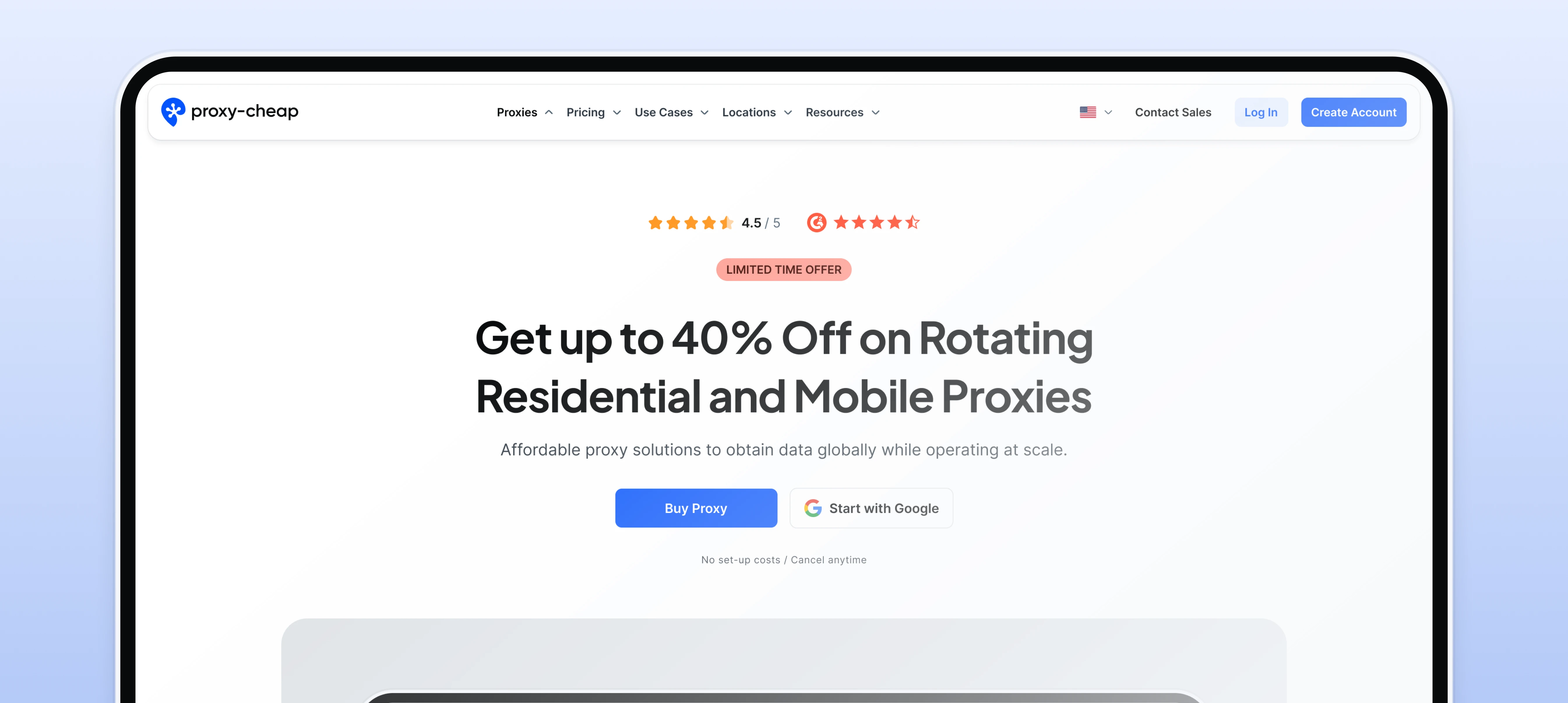
This is the best value pick if you want rotating proxies that work for real scraping and automation without forcing an enterprise spend. The key advantage is having practical rotating options that fit different tasks, plus pricing that lets you start small and scale only when results prove it. Proxy-Cheap also offers a pay-as-you-go pricing model, allowing you to pay only for what you use.
What it is best for
Large-scale scraping where you need many fresh IPs.
Automation that needs steady throughput without burning one IP.
Teams that want predictable spend and simple onboarding.
Access to residential and mobile proxies, as well as datacenter IPs, for diverse scraping needs.
Rotation options that matter
Rotating residential proxies for high-volume collection and broad coverage.
Rotating ISP proxies when you want rotation with a more stable feel for certain targets.
Proxy lists are available for easy access to large pools of IPs, simplifying integration and rotation.
Integration with third party tools and a proxy manager is supported for advanced management and automation.
Pricing
Expect bandwidth-based pricing for rotating residential plans.
Expect plan-style pricing for rotating ISP options depending on pool size and duration.
Pay-as-you-go options are available for flexible, usage-based billing.
What to check before you buy
Decide whether your main workflow needs per-request rotation or sticky sessions.
Estimate your monthly bandwidth so you buy the right tier.
Confirm you can separate sensitive workflows from aggressive scraping.
New users benefit from straightforward onboarding and customer support.
Check if a free trial or rotating proxies free trial is available to test the service risk-free before committing.
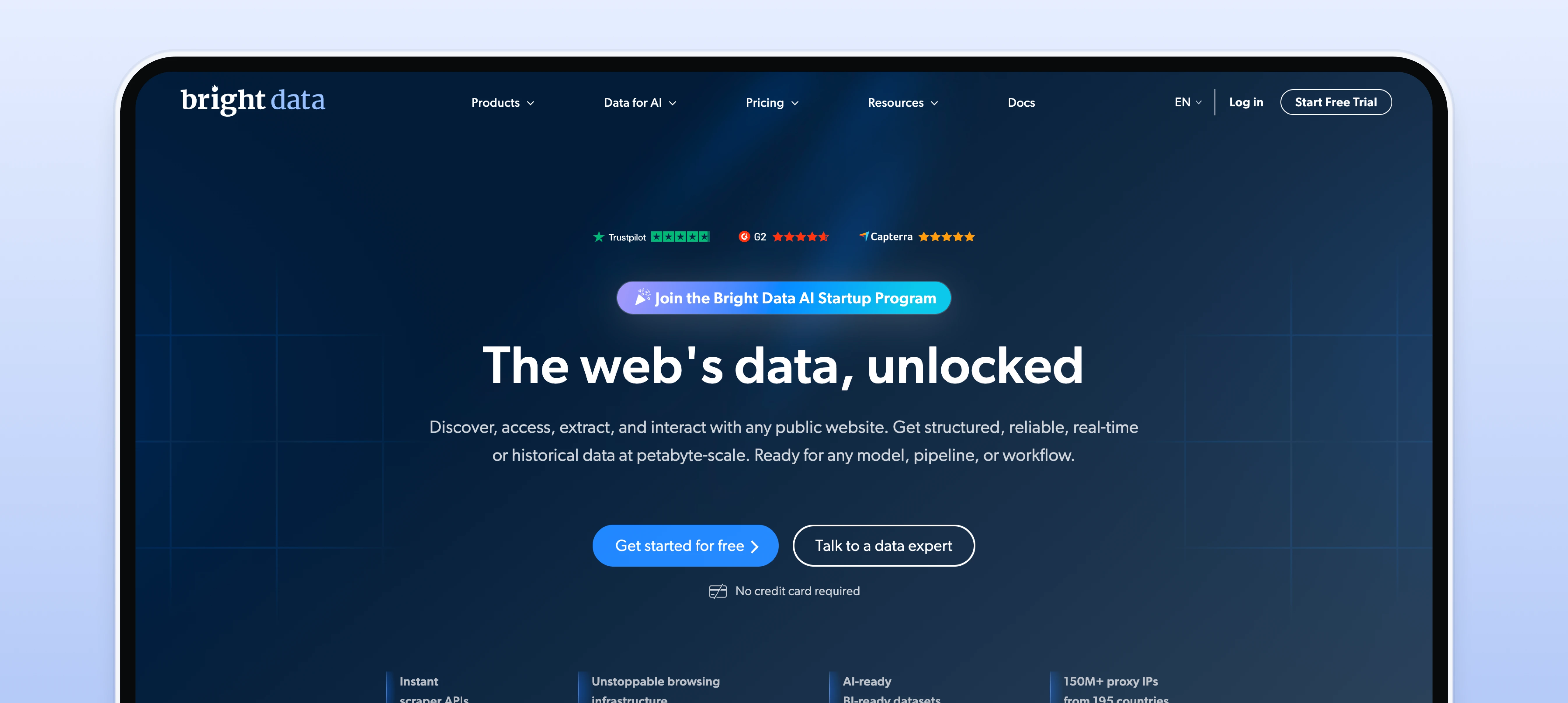
Bright Data is a strong fit if you want enterprise controls, large-scale infrastructure, and many knobs to tune. It is often not the simplest or cheapest path, but it can reduce engineering pain when you run many concurrent projects. Bright Data offers a proxy manager for easy rotation and management of various proxy types, as well as proxy lists for convenient access to large IP pools. Their proxies integrate seamlessly with web scraping tools and third party tools, supporting smooth automation and data retrieval. Users benefit from unlimited concurrent connections, allowing multiple sessions to run reliably at the same time. Extensive documentation, including API references and integration guides, is available to support developers. Additional features such as advanced rotation options, targeting, and in-depth management tools set Bright Data apart.
What it is best for
Teams that need governance, monitoring, and centralized control.
Large programs running multiple scraping and automation pipelines.
Projects where advanced controls reduce time spent debugging access issues.
Business clients who value dedicated account managers for personalized support and expertise.
Pricing
Typically priced through bandwidth-based plans and enterprise tiers.
Cost can be higher, but tooling can reduce operational work.
Dedicated account managers are available for business and enterprise clients.
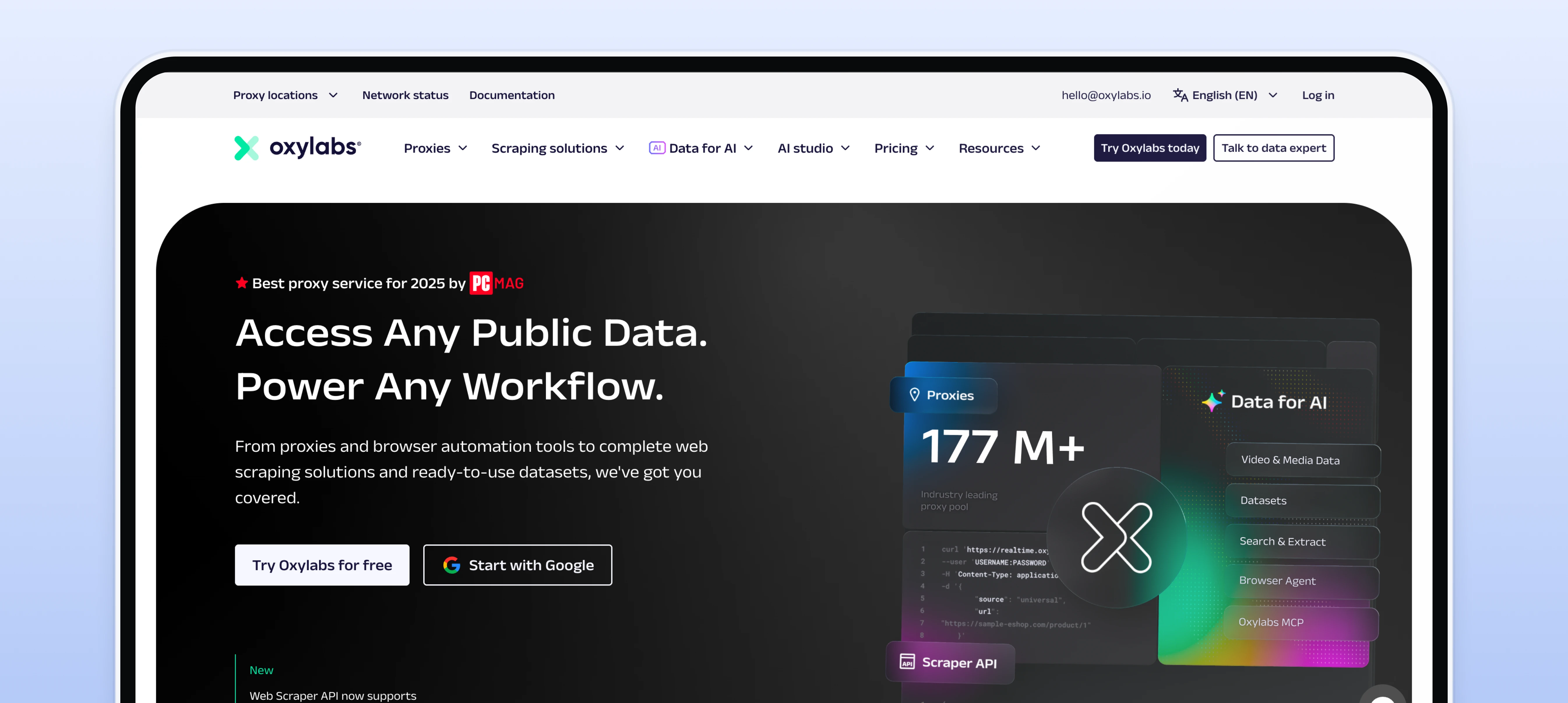
Oxylabs is widely recognized as one of the best rotating proxy networks, offering a premium rotating proxy service with a massive proxy pool of millions of IP addresses. Their network covers 195 countries and includes all four types of rotating IPs, providing strong data protection through frequent IP changes. As a premium provider, Oxylabs boasts a remarkably high success rate, making it ideal for demanding use cases where reliability and performance are critical. Users can filter proxies by country to meet specific business needs.
What it is best for
Strict targets that deny access weaker pools quickly.
Teams that need consistent success rates under load.
Workflows where failures cause direct business cost.
Pricing
Typically priced per GB with multiple volume tiers.
Lower per-GB pricing usually appears at higher monthly commits.
What to watch
Whether your targets really require premium pools.
Minimum commitments for larger tiers.
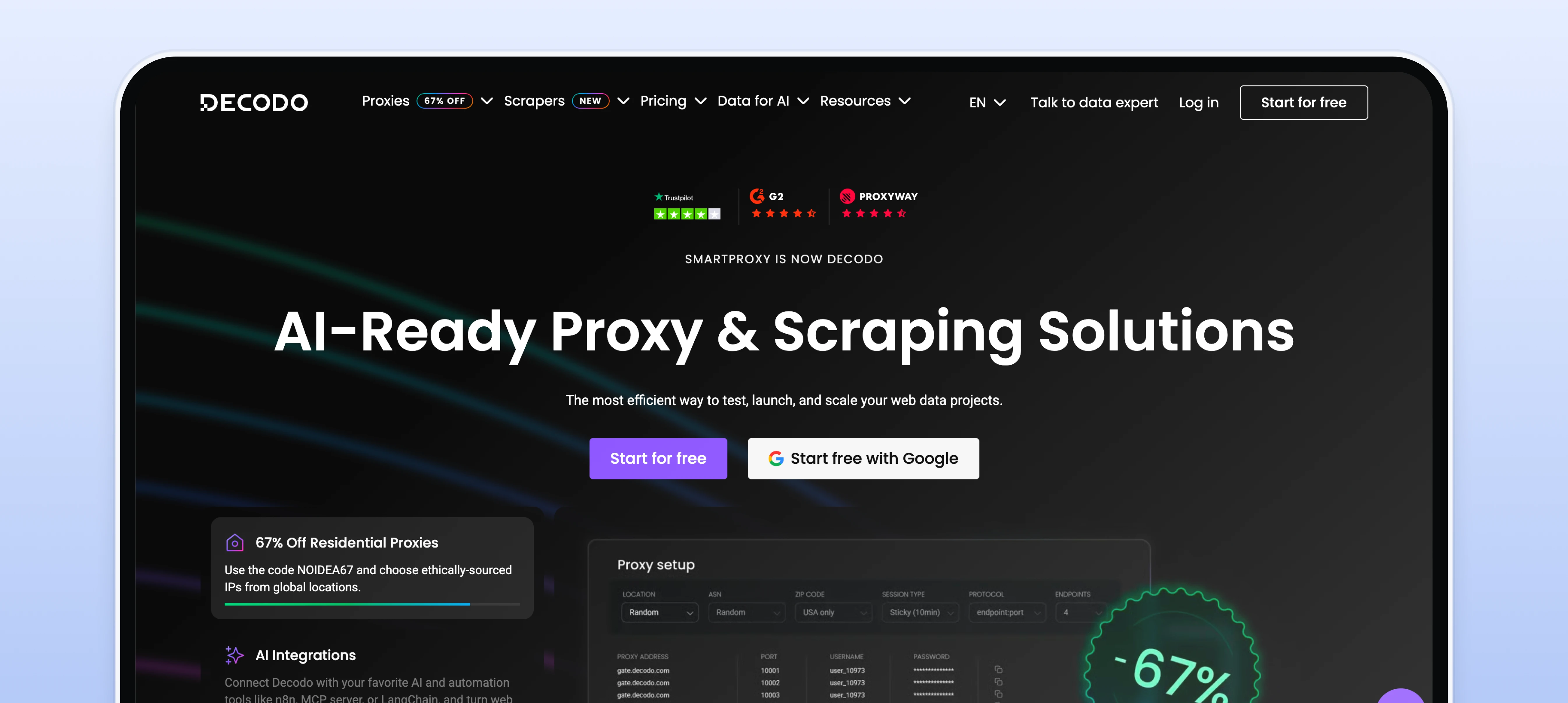
Decodo is often a strong mid-market value option for rotating residential proxies, especially if you buy enough GB to reach better tiers. It is also convenient for teams that want a packaged proxy experience.
What it is best for
Buyers that want competitive per-GB pricing as they scale.
Teams that prefer simple onboarding and predictable plans.
Projects that need a broad proxy pool for rotation, with access to extensive proxy lists for easy integration.
High-volume web scraping tasks that benefit from rotating IPs and rotating proxy servers to maximize success rates and reduce access denials.
Users who require both rotating datacenter proxies and residential and mobile proxies for diverse use cases and geographic coverage.
Pricing
Typically priced per GB with clear tier ladders.
Best value usually comes at mid to higher tiers.
What to watch
Plan limits that affect concurrency.
Differences between sticky sessions and per-request rotation.
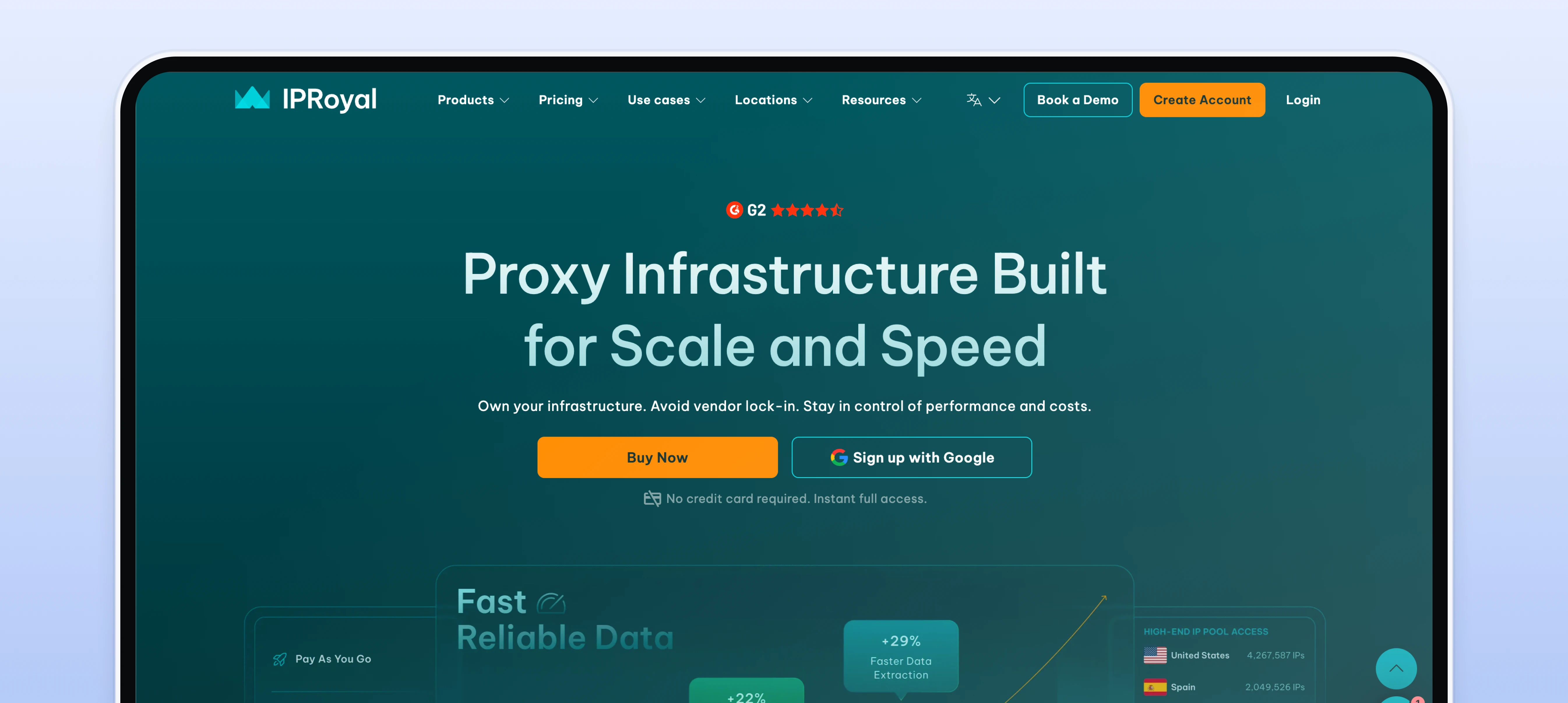
IPRoyal is a straightforward choice for smaller teams that want rotating residential proxies with clear tiers. It is usually easy to buy and deploy for standard scraping and automation.
What it is best for
SMB workflows that need rotating residential proxies, rotating datacenter proxies, or rotating mobile proxies, all supported by a large proxy pool with over 195 locations and highly specific targeting.
Teams that want predictable tier pricing, access to proxy lists, and simple scaling with rotating IPs and rotating proxy servers for efficient web scraping and automation.
Lighter automation where you can tolerate some variance and benefit from a diverse selection of residential and mobile proxies.
Pricing
Typically priced per GB with smaller starter tiers.
Per-GB often drops as you purchase larger volumes.
What to watch
Whether your targets require higher pool quality.
Availability of features like sticky sessions.
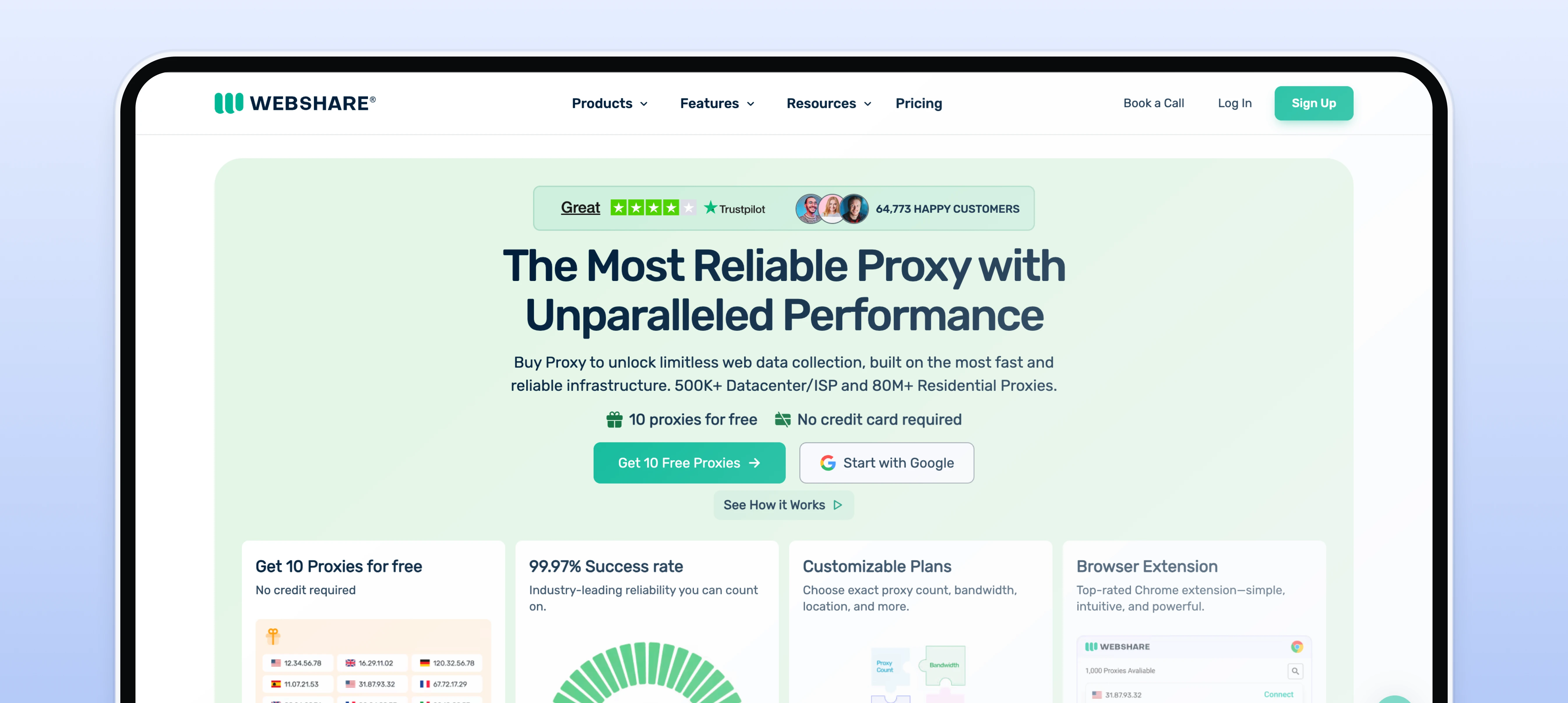
Webshare is popular for quick testing and low-cost starts, especially if you want to prove a workflow before committing to a larger vendor. Its rotating proxy network consists of around 200k IPs, which is significantly less than other providers on this list. Webshare offers access to a proxy pool with rotating datacenter proxies, rotating proxy servers, and rotating IPs, making it suitable for web scraping and automation tasks. Users can also benefit from convenient proxy lists for easy integration and management.
What it is best for
Proof-of-concept tests.
Smaller workloads where you want low setup friction.
Budget-sensitive projects with flexible scaling.
Pricing
Often positioned with low-cost entry tiers.
Some plans may differentiate by pool type and guarantees.
What to watch
Consistency under peak usage.
Feature depth if you scale up.
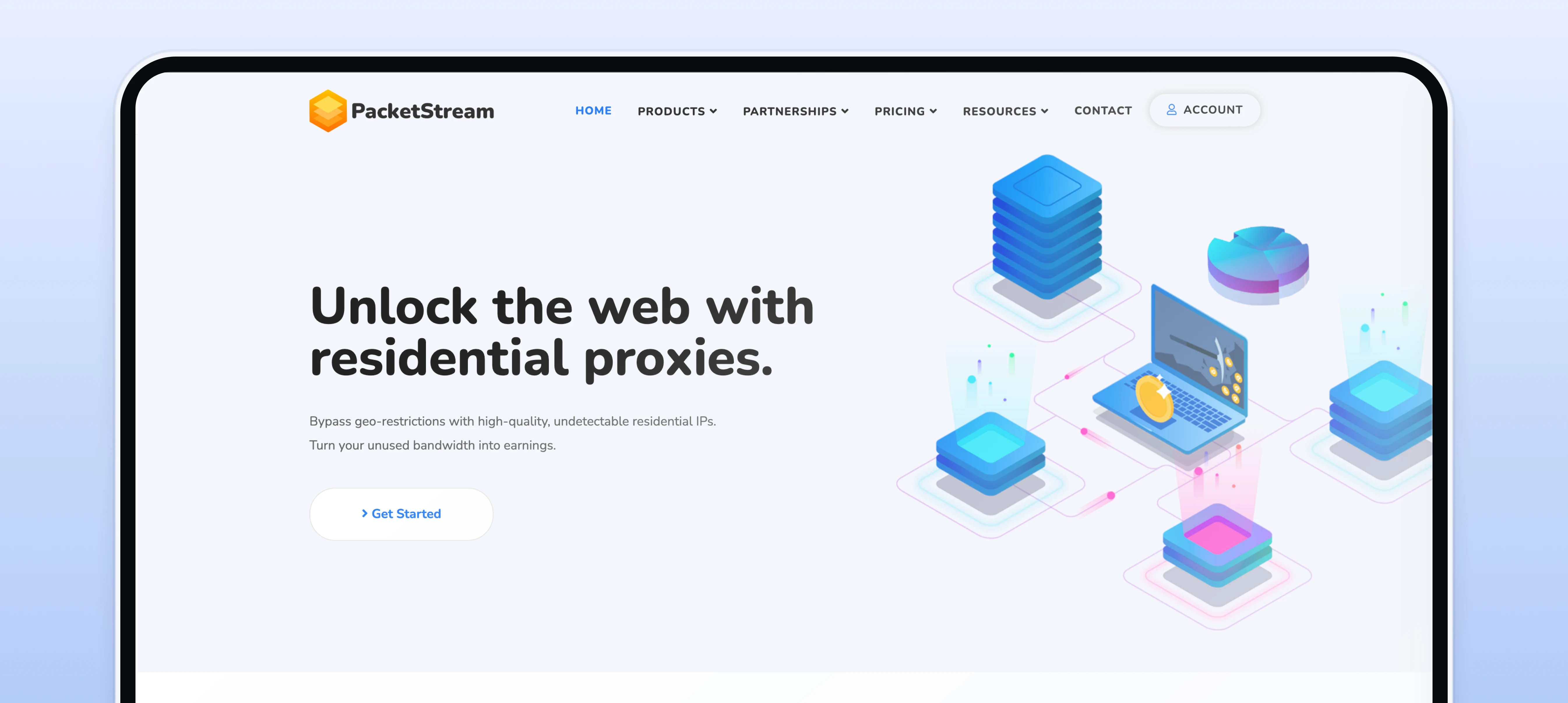
PacketStream is the baseline low-cost bandwidth option many people compare against because the model is simple and cost per GB can be very low. It can work for some scraping jobs, but it is not designed like an enterprise proxy vendor. PacketStream offers access to a large proxy pool, including rotating proxy servers and rotating datacenter proxies, which provide automatic rotating IPs for strong privacy and reduced risk of IP-based throttling and access denials. Users can also utilize proxy lists for convenient integration and scalable web scraping.
What it is best for
Large bandwidth use cases where cost per GB is the main priority.
Non-critical scraping tasks that can tolerate higher variability.
Early testing when you want the cheapest baseline.
Projects that benefit from a large proxy pool, rotating IPs, and easy-to-use proxy lists.
Pricing
What to watch
Higher variability on strict targets.
Limited support compared to premium vendors.
Rotating proxies are invaluable for a variety of online activities that require both privacy and reliability. In web scraping, rotating proxies help users collect large volumes of data without triggering IP-based throttling and access denials or rate limits, especially when you implement proxy rotation in Python. For ad verification, they ensure that ads are displayed correctly across different regions and devices, providing accurate insights for marketers. Market research and price monitoring also benefit from rotating proxies, as they enable users to gather competitive intelligence from multiple sources without being denied. Beyond these core applications, rotating proxies are also used for social media management, SEO monitoring, and brand protection, among other tasks. By providing a flexible and privacy-preserving way to access the web, rotating proxies empower users to achieve their goals more efficiently and securely.
We used a test plan built around real rotation use, not vanity benchmarks.
We tested per-request rotation, where proxies can rotate IP addresses with each HTTP request, and sticky session behavior.
We ran the same target set and request patterns across providers.
We measured success rate over time, not only the first hour.
We ramped concurrency slowly to see when failures spike.
We estimated cost per successful request using each provider’s pricing model.
Looking ahead, future improvements in rotating proxy technology and IP rotation techniques that improve privacy and reduce access failures are focused on improving efficiency in automation, integration, and data collection.
Use this checklist to avoid the most common mistakes.
Match rotation to the task. Use per-request rotation for large scraping. Use sticky sessions or static residential proxies compared with rotating options for tasks requiring persistent connections, such as account logins or data collection.
Choose the right proxy service. Select a proxy service or residential proxy provider that helps you maintain stable, reliable sessions, offers additional features like rotating datacenter proxies, static residential proxies, and access to a large proxy network with both residential IP addresses and datacenter IPs. Such proxies and proxy servers should support your specific use case, whether it's web scraping, ad verification, or accessing regional content.
Prioritize ethical sourcing. Ensure your provider uses ethically sourced IPs to comply with data regulations (like GDPR) and reduce the risk of blocklisting.
Look for premium performance. Premium providers often offer up to 99.9% uptime and high success rates (99%+) on challenging targets. strong data protection is achieved through frequent rotating IPs, making tracking difficult, while fast proxy servers with strong global coverage help keep throughput high.
Consider user and management features. Some rotating proxy services offer dashboards and management tools for one user or teams, with additional features such as targeting, API integration, and third-party tool compatibility.
Know your cost driver. For rotating proxies, the main cost driver is usually bandwidth (GB), not the number of IPs.
Keep workflows separated. Do not mix aggressive scraping with login flows in the same proxy setup.
Scale concurrency slowly. Start low, log success rate, and increase until you see rising access denials or timeouts.
Measure outcomes, not claims. Track success rate, retries, and cost per successful 1,000 requests.