Блог Proxy-Cheap
Расширьте свои знания обо всем, что связано с прокси, или почерпните несколько крутых идей для своего следующего проекта — это как раз подходящее место для этого.Proxy 101
Mobile Proxies VS Residential ProxiesMobile proxies use carrier networks, rotating residential proxies use home internet connections, and static residential (ISP) proxies use consumer-ISP addresses on datacenter hardware. Choose mobile for carrier IPs, rotating residential for large location-based pools, and static ISP when you need to keep one address. Test a small sample on your target sites before scaling up.Proxy 101
What is a native IP address?A native IP is an IP address whose registry allocation, routing origin, and geolocation records all match the country the provider claims. You can verify it by checking the IP in an RIR lookup, a BGP/ASN tool, and several geolocation databases. Matching records mean the country label is likely accurate.Proxies & Business
ISP vs datacenter proxies: key differences and when to use eachA quick guide to ISP and datacenter proxies: both run on data center servers, but they differ in where the IP comes from. Datacenter proxies suit fast, low-cost public data collection, and ISP proxies suit long sessions and account work.Proxies & Business
What is a digital footprint, and how do you reduce it?A practical guide to your digital footprint, the trail of data your online activity leaves behind. It breaks the footprint into three layers (accounts and content, tracking, and connection), explains active and passive footprints, and gives step-by-step ways to reduce yours. It also covers how to keep the footprint of professional online work separate from your personal browsing.Proxies & Business
Data security vs data privacy: key differences explainedA clear guide to the difference between data security and data privacy. Security protects data from unauthorized access and breaches, while privacy governs how personal data is collected, used, and kept. It covers where the two overlap, why privacy depends on security, how laws like GDPR and CCPA require both, and how to apply both when you collect data.Proxies & Business
Data security best practices for collecting data at scaleA practical guide to data security for teams that collect data at scale. It sorts the work into four zones (source, transit, access, and storage) and walks through 10 best practices, from data minimization and encryption to credential management, retention limits, and compliance.Proxies & Business
Data aggregation: how it works, methods, and proxy typesData aggregation means collecting data from many sources, cleaning and standardizing it, and combining it into one dataset you can analyze. This guide covers the core methods, a tiered strategy for choosing sources (feeds, then APIs, then web collection), and which proxy type fits each kind of source, so your aggregated data stays complete, current, and accurate.Proxies & Business
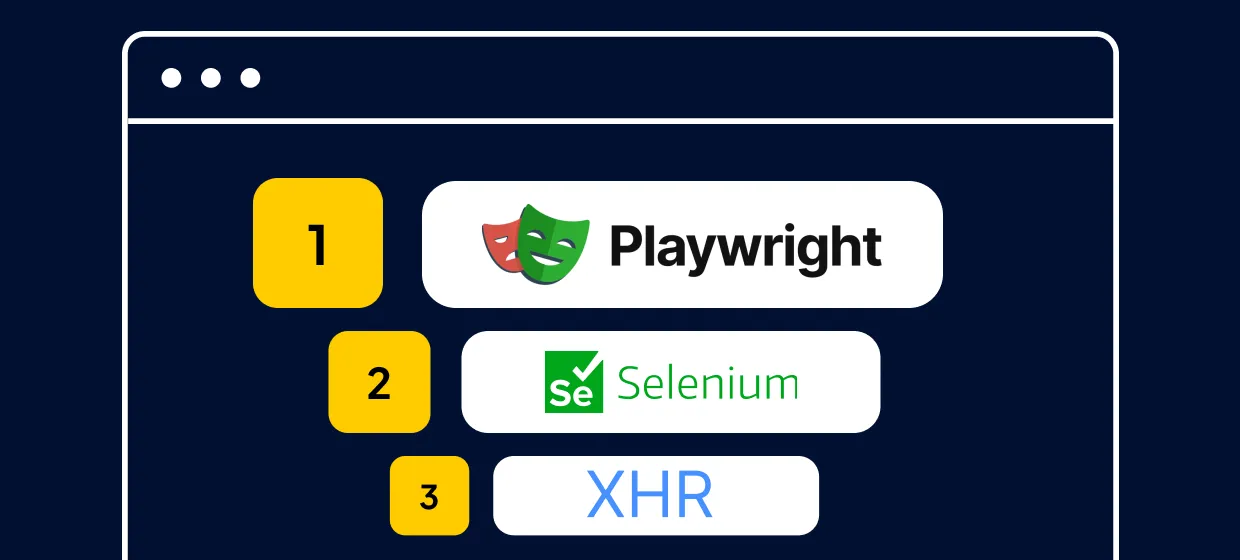
Dynamic web scraping in Python: Playwright, Selenium, and XHRThis guide covers three ways to scrape JavaScript-rendered pages in Python, rendering with Playwright or Selenium, or intercepting the page's XHR/API call directly with Requests, plus how to route each method through proxies and handle infinite scroll, rate limits, and pacing reliably.